129Azerbaijan has begun supplying natural gas to Germany and Austria, extending sales into two of Europe’s largest central markets as governments and companies continue to reduce exposure to Russian supply.
SOCAR, the state energy company, said the deliveries are moving through the Trans Adriatic Pipeline (TAP), the final European section of the Southern Gas Corridor that carries Caspian gas into the EU. The company said the additional destinations take the number of countries importing Azerbaijani gas to 16.
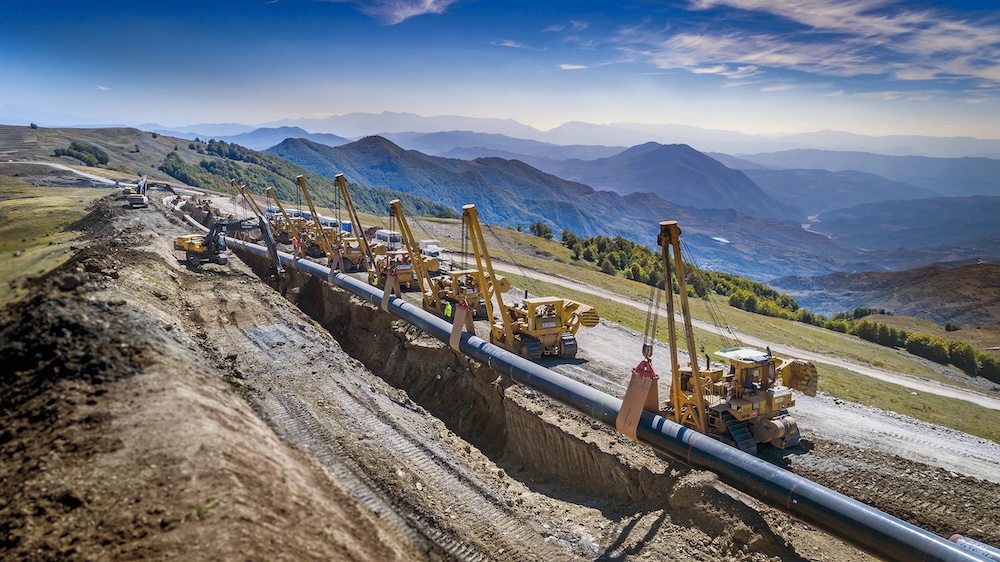
The new flows are routed through Italy before reaching Austria and Germany. TAP runs from the Greece–Turkey border across Greece and Albania and then under the Adriatic Sea to southern Italy, where it connects into Italy’s gas network and onward interconnections.
SOCAR’s entry into the German market is tied to a long-term supply agreement signed in June 2025 with SEFE (Securing Energy for Europe), a German energy trading group. Under the deal, SOCAR is expected to supply volumes rising to up to 15 terawatt-hours a year, which SEFE equated to about 1.5 billion cubic metres annually, over a ten-year period.
For Austria, a person familiar with the arrangements told Reuters that deliveries could reach up to 1 billion cubic metres per year. While the volumes are modest against overall European consumption, they are material for portfolio diversification and for building contractual routes into central European hubs.
The announcement comes as EU institutions move from policy pledges to binding measures aimed at ending Russian gas imports. In December 2025, the European Parliament backed legislation that would phase out Russian pipeline gas by 30 September 2027, alongside earlier restrictions on certain Russian LNG purchases once the regulation enters into force in early 2026.
EU governments have argued that, even if the war in Ukraine ends, the bloc will not return to Russian energy as a baseline source of supply. The phase-out plan is designed to lock in diversification achieved since 2022, when Russian pipeline deliveries fell sharply and Europe increased purchases from Norway, the United States and other suppliers.
Azerbaijan’s ability to expand exports, however, is constrained by infrastructure and upstream investment. Reuters cited official figures showing Azerbaijan’s gas exports to Europe at 12.8 billion cubic metres in 2025, slightly down from 12.9 billion cubic metres a year earlier, while total gas exports were broadly flat. SOCAR and other producers have said that higher volumes depend on both production growth and additional transport capacity.
TAP has taken steps to increase throughput. SOCAR said TAP has raised capacity by a further 1.2 billion cubic metres per year from 2026, a change linked to an expansion process previously triggered by market demand. Further growth to a nominal 20 billion cubic metres would require additional compressor stations in Greece and Albania, according to TAP’s operator.
For Germany, the deliveries sit within a broader strategy of diversifying long-term supply after the loss of Russian pipeline gas. SEFE, which is owned by the German federal government, has pursued a mix of LNG contracts and pipeline sourcing arrangements to support industrial and utility customers.
For Austria, which remains a major transit and trading point for central Europe, incremental non-Russian volumes are politically and commercially significant, even where they do not replace Russian supply on a one-for-one basis. The practical impact will depend on how the gas is nominated through Italian connections into the wider European network, and on seasonal demand and storage cycles.
Image source: iploca.com
Post Views: 1,100