(Credits: Far Out / Bent Rej / Home & Studio Recording)
Fri 16 January 2026 18:30, UK
It goes without saying that all of The Beatles had a certain sense of artistic proclivity, but John Lennon had a greater notion for the whimsy, the windswept, and the magic than most.
The cynics out there might attribute that to a level of drugs he was taking at the height of his career in the band – and they wouldn’t necessarily be wrong – but even still, there always seemed to be an idea that Lennon, from all his humble beginnings at Mendips, 251 Menlove Avenue in Liverpool, was destined for a far more stratospheric life than his suburban surroundings could offer.
The man himself put it best when he said in a 1980 interview: “A part of me would like to be accepted by all facets of society and not be this loudmouthed lunatic poet/musician. But I cannot be what I am not.” That was, most evidently, a mantra which rang true to him through every step of his life and even death. In his eyes, following the musical path was the equivalent of running off to the circus.
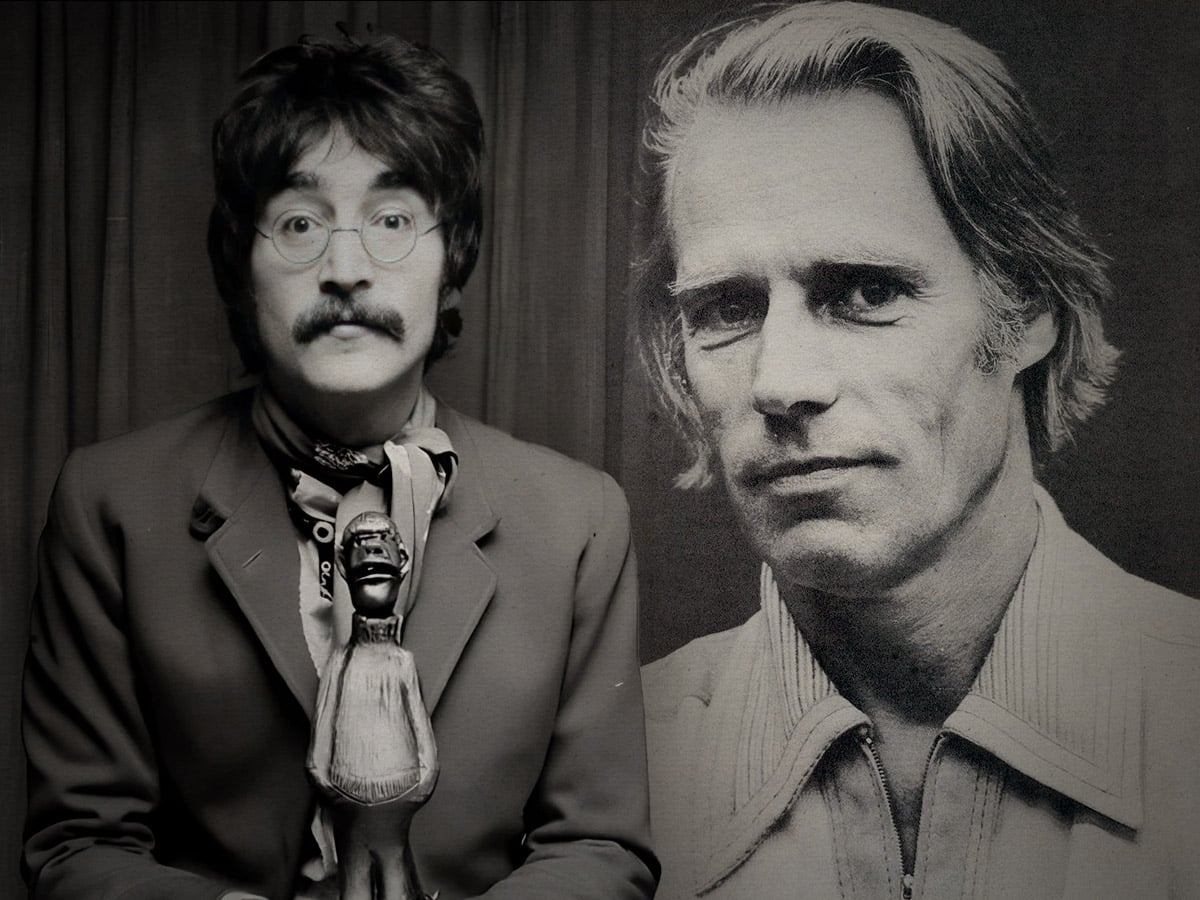
Of course, that didn’t expressly mean that Lennon lived his days raucously and with a totally rambunctious air, although he could have his moments. Instead, the self-confessed notion of the “loudmouthed lunatic” was one that allowed him to follow the trail and land in the orbits of some pretty special people along the way, not least George Martin.
As much as the producer was a bridge of a friend and a father figure to all The Beatles, he was particularly closest to Lennon, with whom he found a kindred spirit. In this sense, he intrinsically understood what made him tick and what inspired him the most, and as far as fellow musicians went, there was only ever one man leading the charge.
“I think Bob Dylan was an influence more on John than anybody,” Martin once recalled. “I’ve just been working with Bob Dylan, and I said, ‘You know, John admired what you did enormously, and you were a tremendous influence on him.’ He said, ‘Oh, so people tell me.’” You can see exactly who he learned the whimsy attitude from, then.
But peeling back the curtain even further, Martin felt that Dylan’s influence was more of a twofold affair. “But, I think that similarly, Dylan Thomas, the Welsh author, was a great influence on Bob Dylan, and I think that the kind of words that Dylan Thomas would construct came down through Bob Dylan into John Lennon,” he continued. “But I’m sure John Lennon, in turn, has influenced other people.”
In many ways, Lennon’s character assessment of being a “loudmouthed lunatic poet/musician” was the most accurate description you could ever get for people like himself, Dylan, and Thomas. They patently all hailed from different worlds, different backgrounds, and different artistic ventures, but none of that obscured their visions into heading into the cultural circus of life.
It was partly Martin’s job to sit back and watch the magic unfold as it happened, but it was equally his responsibility to keep a lid on things and contain the magic he held in his midst. Yet there was often no stopping Lennon, the rollicking, revelling maestro who led his band to the heart of the stage. He may have been a troublemaker, but they wouldn’t have it any other way.
Related Topics
The Far Out Bob Dylan Newsletter
All the latest stories about Bob Dylan from the independent voice of culture.
Straight to your inbox.