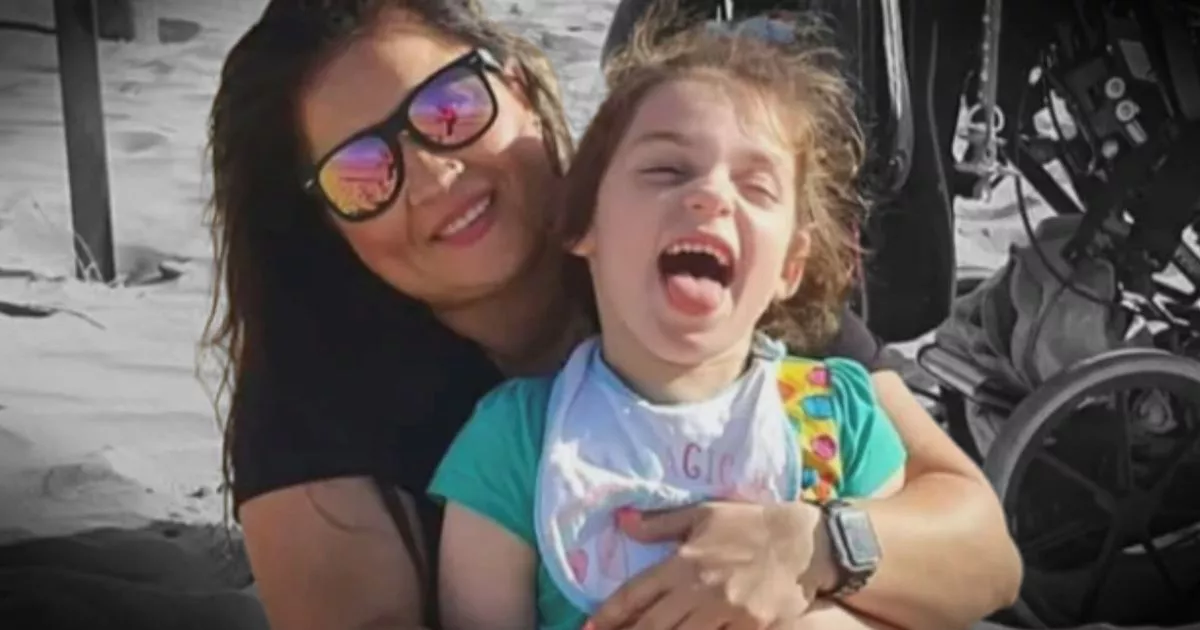
The heartbreaking case of Martina Karos and Eleni Edwards has brought into sharp focus the pressures parent carers often face. The exhausted mother was utterly devoted to her daughter. It was that devotion that led her to make the decision to end her child’s life and her own, so terrified was she of what would happen to her beloved ‘Leni’ once she was gone. Chris Slater reports.
Martina Karos and her daughter Eleni Edwards(Image: Facebook)
Isolated, craving friendship and under incredible pressure caring for the child she loved so much, Martina Karos – as one charity put it – suffered a ‘catastrophic collapse’.
When the few people who had formed a connection with the 40-year-old discovered she and her eight-year-old daughter Eleni Edwards had been found dead, they couldn’t help but fear the worst.
Kirree Marsland, who knew Martina and her ‘severely disabled’ child, said she ‘didn’t feel [Martina] would harm Eleni’, but added: “At the same time, when I found out what had happened, I know she felt very concerned that if she left Eleni, she didn’t feel secure Eleni would be well cared for.”
As the news spread, many came to the conclusion a coroner would ultimately deliver 15 months later – that Martina killed Eleni and took her own life.

Police outside Martina and Eleni’s Kersal home(Image: Manchester Evening News)
Questions about the level of support they received were raised. Fears lingered that the mother and daughter had slipped through the net; yet another tragic case with under-funded, under-resourced public services at its core.
As it was, inquests into their deaths, which concluded this week, found no agency or care professional to be at fault. A ‘comprehensive package’ of support was in place for Eleni. One boss said ‘every resource in Salford was exhausted’ in efforts to help them.
Instead, the story that emerged was one of a desperately lonely mother – longing for friendship and romantic companionship – who couldn’t go on. The thought of Eleni going into care was too much to bear.
Some believe the evidence confirmed what one friend said as police left the street Martina and her child called home. She was ‘not a monster’, but a ‘loving and devoted mother’.
A throwaway comment he later recalled took on a whole new, devastating relevance. “If I go, I won’t leave anything I love behind,” Martina had told him.
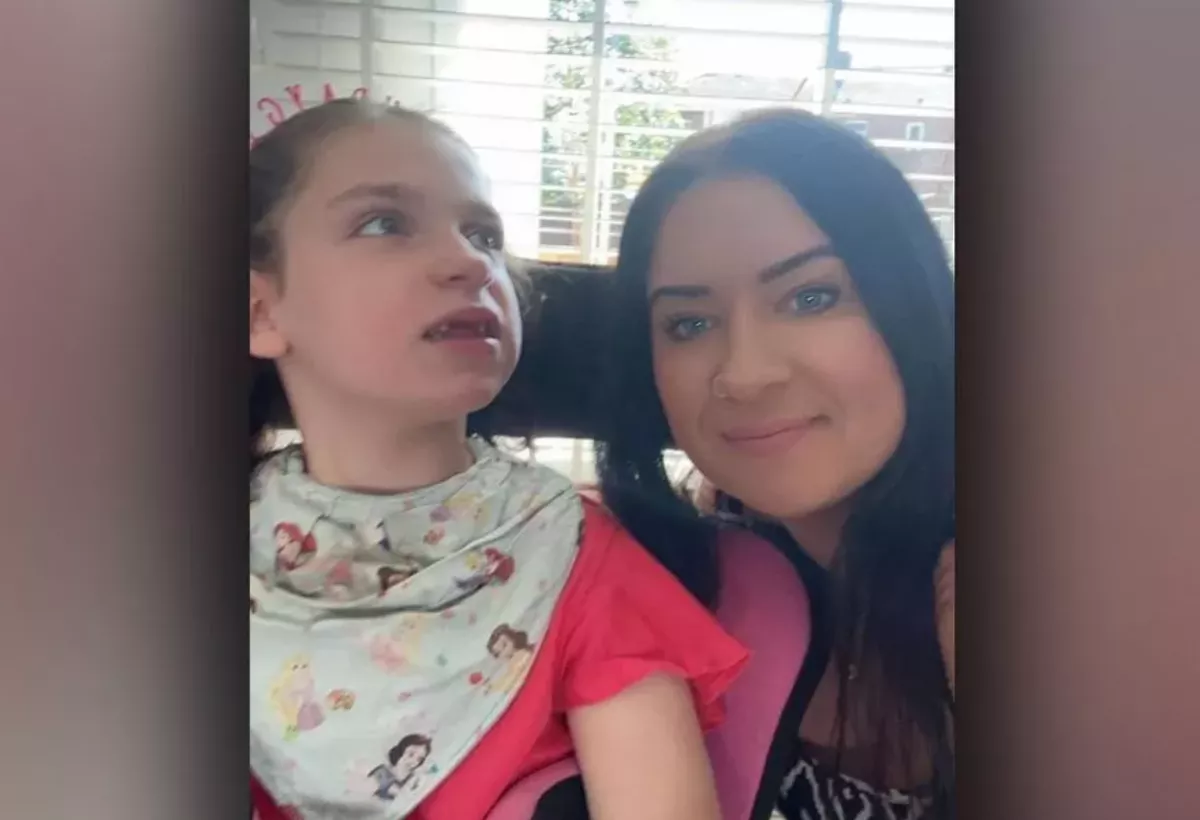
Martina Karos and daughter Eleni Edwards(Image: Facebook/M.E.N.)
“That’s the reason she took Leni with her,” he said. “She loved Leni more than anything. Martina was a great person and just got stuck in a terrible place.”
Inquest evidence was crucial in understanding the state of mind of a mother in crisis, on the verge of snapping. The contents of ‘goodbye’ notes were as tragic as they were revealing.
“I love my daughter truly, but that’s why I have taken her with me,” Martina wrote. Though the case did not identify systemic failings or missed opportunities, Martina’s mother said she hopes it will still bring about change.
“We want their deaths to change the way disabled children, but also their parents, are perceived,” Malgorzata Karos said. “May their tragic deaths change some things that will help save others before they make a drastic decision.”
Here, the Manchester Evening News looks back at the heartbreaking case and the thoughts of charities in the wake of days of painful evidence…
Martina was described by her loved ones as a ‘larger than life, funny, loving, positive and really caring’ person who was ‘very sociable’.
Born in Lublin, Poland, she spent time in Italy and identified as Polish-Italian. Martina moved to England in 2003, shortly before she was 20, initially studying and working in London.
She later moved to Greater Manchester and studied at the University of Salford. A talented linguist, Martina spoke five languages and worked as a translator for a council.
She didn’t think she was able to have children. Her family said she was ‘surprised and excited’ when she fell pregnant in late 2015 during a ‘relatively short’ relationship with Eleni’s father, haulage worker Richard Edwards.
Martina’s pregnancy ‘went smoothly’, inquests into their deaths heard. Eleni was born in June 2016. A few months into her life, it was discovered Eleni – affectionately known as ‘Leni’ – had ‘extreme difficulty with her sight’.
Following a series of tests, Eleni was diagnosed with a genetic condition that would ‘have a very significant impact’ on her health and quality of life.
She was blind, unable to communicate verbally and had ‘limited’ mobility. Eleni used a wheelchair and other equipment. Martina was her primary carer. When she was old enough, she began attending a special school. She thrived there, Bolton Coroners’ Court was told.
‘The happiest girl in the world’
Martina’s mother Malgorzata Karos her only other relative in England. The court heard that left her without an extensive support network. Eleni’s father had ‘no contact’ with his daughter and ‘did not appear to know the extent of his [her] genetic disabilities’, a safeguarding report said.
He told the author of that report ‘he would have offered support if needed and if he had been contacted’. “Just because dad’s not there, does not mean they don’t care,” he added.
Martina was described as a ‘devoted’ mum who loved Eleni ‘day and night’. In her own mother’s words, her child was ‘the reason she got out of bed in the morning’. Eleni’s grandmother Mrs Karos said she was ‘the was the happiest girl in the world despite her disabilities’ and that she loved being outside and spending time at the park.
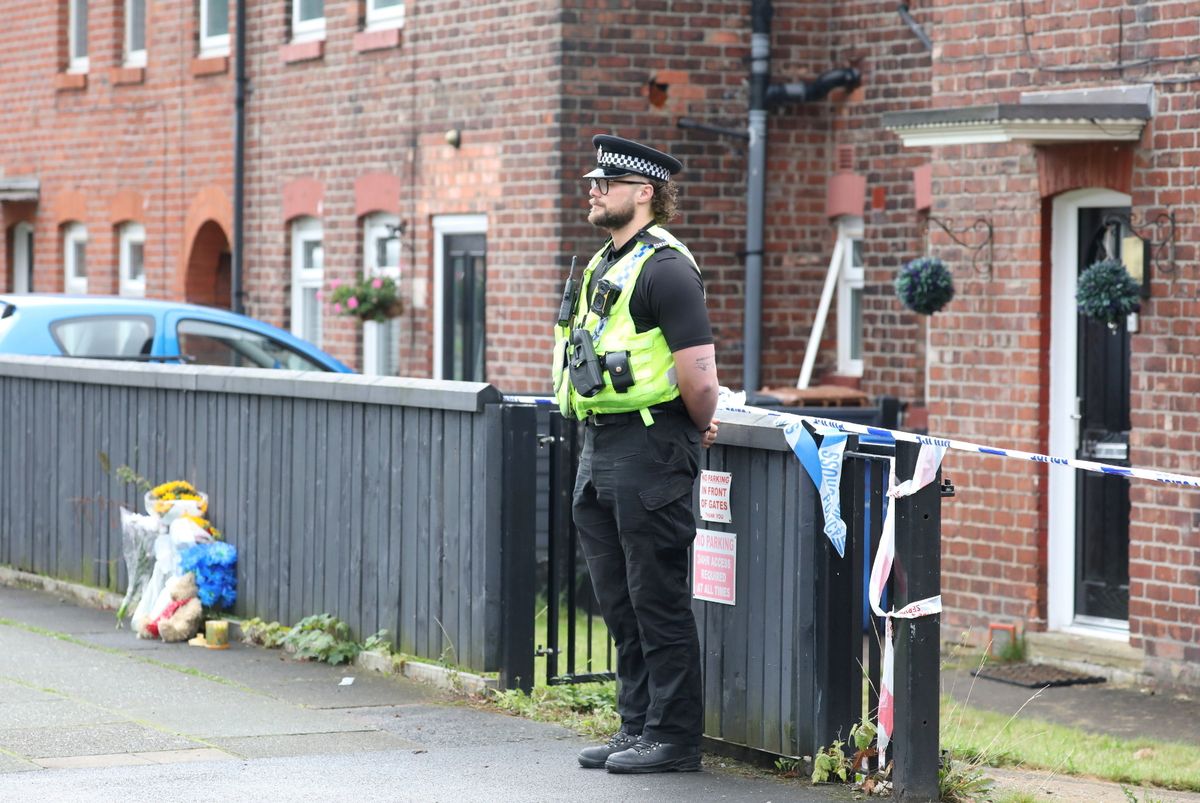
Flowers were laid as the police investigation continued(Image: SWNS)
Eleni was recognised as a ‘child in need’ by Salford council’s social services department, which was involved early on. Their home on South Radford Street in Kersal, where they were housed in October 2019, was specially adapted and included an ground floor to first floor hoist. Martina and Eleni were assigned a social worker, who worked with them for four years and built a ‘very strong’ bond.
Council support was ‘gradually increased’, according to Harriet Jones, a manager at the town hall department. It included Eleni staying overnight with a foster carer, or at Francis House Children’s Hospice, on occasion to provide respite for Martina.
Ms Jones said it was difficult for Martina to say goodbye to her daughter and that spending time apart ‘took a lot of building up’.
Things began to take a toll on Martina. The carrying and moving of Eleni, who was big for her age, became increasingly difficult. Martina began reporting symptoms of anxiety and depression in around 2019 and was prescribed anti-depressants a year later. Her GP told the inquests: “The root cause was really social isolation, being a full-time carer for a severely disabled child.”
‘A prisoner in her own home’
Mrs Karos said her daughter ‘never left the house’, adding: “Martina started saying she felt like a prisoner in her own home. She started talking about being lonely.”
Martina’s GP said she told him she ‘didn’t have many friends in the area’ and that a recent relationship had ended, which was ‘upsetting’ for her. The court heard she wanted a boyfriend.
She ‘felt she was a better parent while she was in a relationship’, it was said. Martina’s friend Mrs Marsland said she felt ‘heartbreak’, but ‘not necessarily for that individual, but for the support that came with it’.
Martina was unable to work due to her caring responsibilities. She felt lonely during the day when Eleni was at school and most people were at work. She said she wanted to meet ‘like minded’ people who were often only available in the evenings.
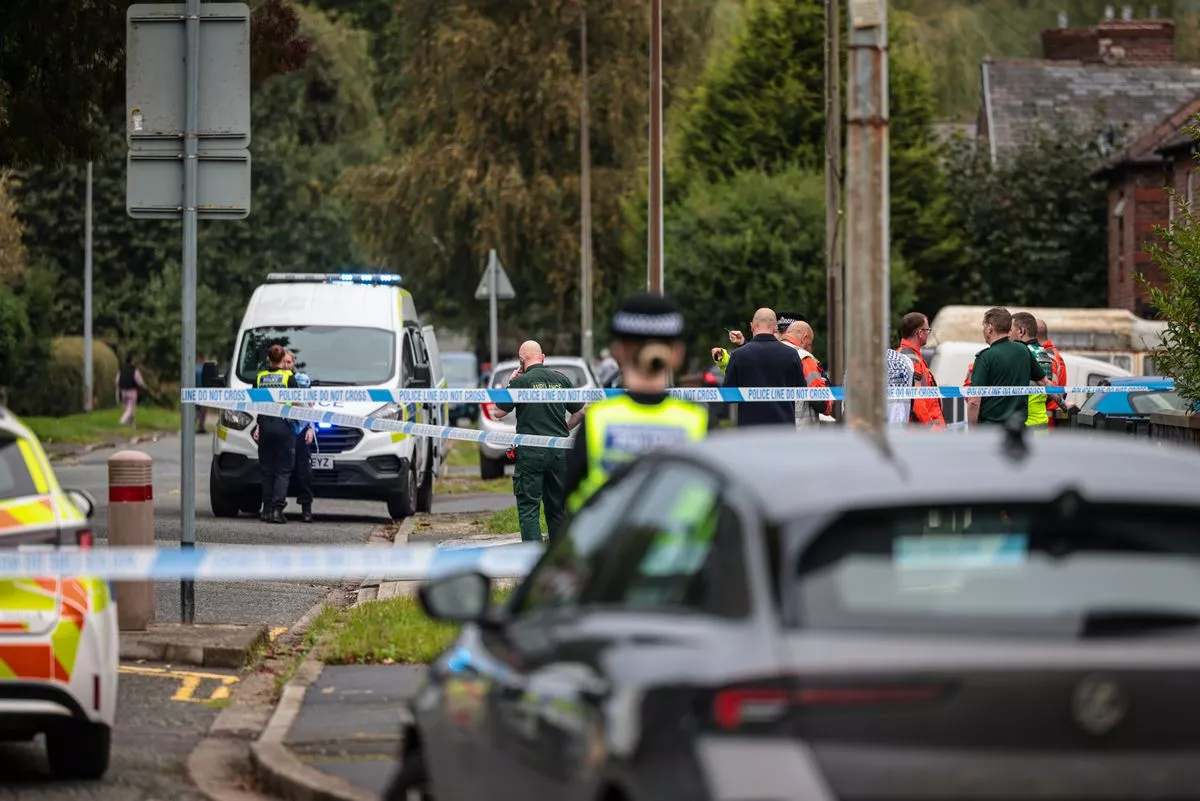
Police at the scene following the double tragedy(Image: M.E.N.)
An agency was commissioned to provide carers, the court heard. Staff visited 247 times over a period of around 14 months prior to the tragedy. Mrs Karos said her daughter felt she had to act as a ‘teacher’ to the carers, who changed regularly, and she that didn’t feel comfortable leaving Eleni alone with them.
A boss at care firm Alcedo said most changes were made as the result of ‘professional boundaries being crossed’ as Martina attempted to befriend staff. Other professionals reported similar issues, with Martina reported to have often asked to join their social circles.
In late 2023, Martina’s mental health underwent a ‘rapid decline’. Mrs Marsland said she raised concerns with social services after she began expressing suicidal thoughts. She was described as being ‘despondent, desperate and very pessimistic’. At one appointment, her GP was so concerned he rang an ambulance. Martina declined to go to hospital.
In January 2024, Eleni was made the subject of a child protection plan due to the potential for ’emotional harm’ as part of the ‘unintended impacts’ of Martina’s mental state.
Martina was referred to a community mental health service – Living Well – which, along with her GP and social worker, tried to build a relationship and pointed her to a long list of groups and activities. Martina attended some, but found them ‘difficult’, her family said.
Living Well boss Tammy Young said: “Suicidal ideation is not an illness, it’s a symptom.” She said that in her opinion, Martina wasn’t suffering with ‘severe depression’, but rather ‘psychological distress and human suffering as a result of her situation and a caring role which was overwhelming at times’.
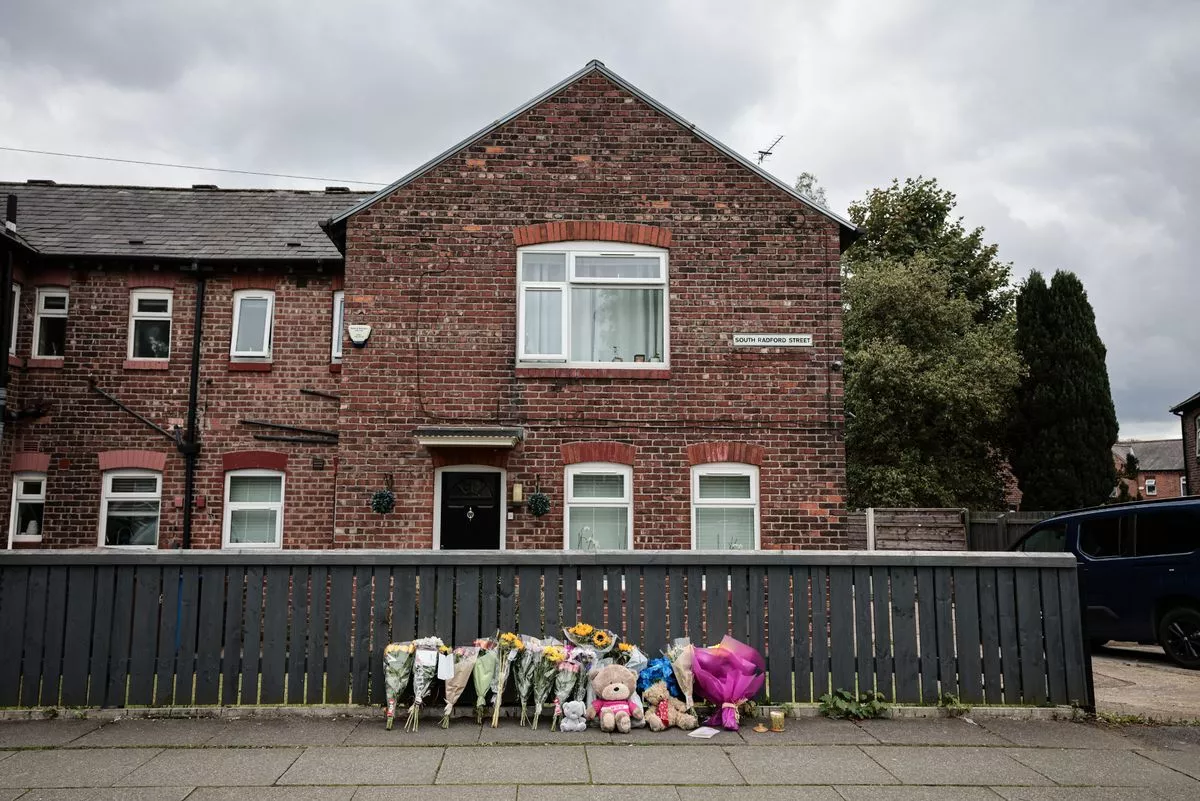
Tributes poured in for the mother and daughter(Image: Kenny Brown | Manchester Evening News)
She added: “There is no medical treatment for loneliness or lack of friendship.” Martina made ‘good progress’ and her mental health was thought to have improved by the summer and early autumn of 2024.
Her GP said she was ‘stable’ and that she denied having suicidal thoughts. None of the professionals involved reported any immediate concerns around the time of Martina and Eleni’s deaths.
Mrs Karos, who was in Italy at the time, said she spoke to her daughter over the weekend of September 20 and 21, 2024 and that Martina talked to her about an upcoming visit to Heaton Park.
The following Monday, September 23, as she stepped off her flight home at Manchester Airport, Mrs Karos was greeted by police.
Earlier that day, a social worker had raised the alarm. Eleni hadn’t been dropped off at school. Officers forced entry with the help of firefighters and found a devastating scene.
Martina and Eleni were dead, beside one another, in a bedroom.
‘Extreme loneliness and isolation overwhelmed her’
Martina, the court heard, left a series of ‘goodbye notes’. One read: “I just couldn’t live my life like this anymore. Loneliness, sadness and isolation have just taken over my life.
“I love my daughter truly, but that’s why I have taken her with me.” Martina said she didn’t want Eleni to ‘to end up in the system or as an unwanted child’.
Pathologists found they died from carbon monoxide poisoning. Concluding the four-day long joint inquests into their deaths at Bolton Coroners’ Court, area coroner Peter Sigee said: “Ms Karos had deliberately placed herself and her daughter in an environment where they were overcome by the toxic effects of carbon monoxide with the intention and effect of ending both their lives.”
He concluded Martina died by suicide and that Eleni was unlawfully killed by her mother. Reviews into Martina’s mental health care and her contact with social services identified a number of ‘learning points’ with some systems and processes having now been improved.
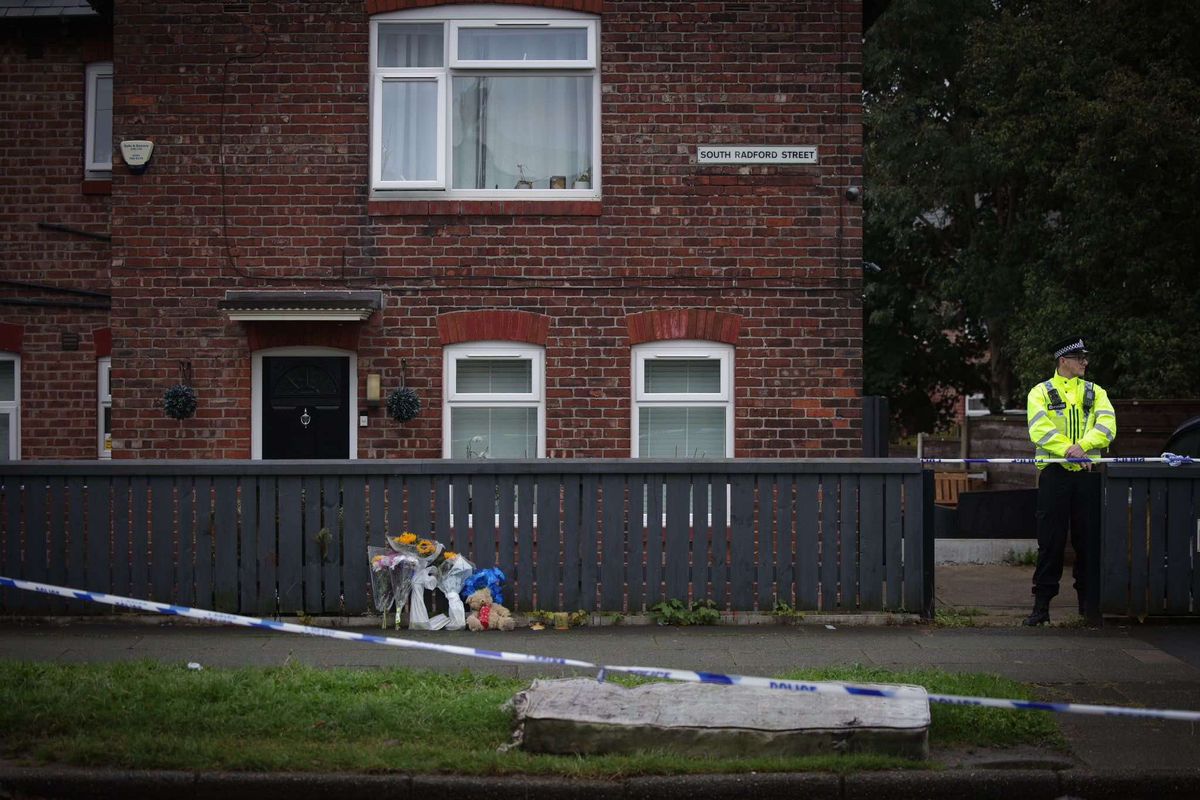
Tributes outside the home on South Radford Street(Image: MEN)
A comprehensive multi-agency and Child Safeguarding Practice Review was carried out, with an independent report identifying six recommendations for the Salford Safeguarding Children Partnership (SSCP). No major failings were found in the case.
One recommendation was that ‘parent/carers of children with special educational needs and disabilities should be recognised as as a group that may be at increased risk for mental health challenges, including suicidal ideation, due to the complex and demanding nature of their caregiving responsibilities’.
The coroner said that in his view, there were no failures in the care and support provided to Martina and her daughter. No matter in relation to the care received could have contributed to their deaths, he added.
Mr Sigee acknowledged the ‘stresses and strains’ Martina faced as she was Eleni’s sole carer, adding: “This is not an isolated or unique event. I have heard a previous inquest in similar circumstances where a young mother killed her two young children and then took her own life.
“There were differences, in every case there always is, but there were similarities as well. People who are in a caring position for someone with significant disabilities or care needs, or both, have various additional stresses and strains over and above the stresses and strains all members of society have. I recognise that’s the situation.”
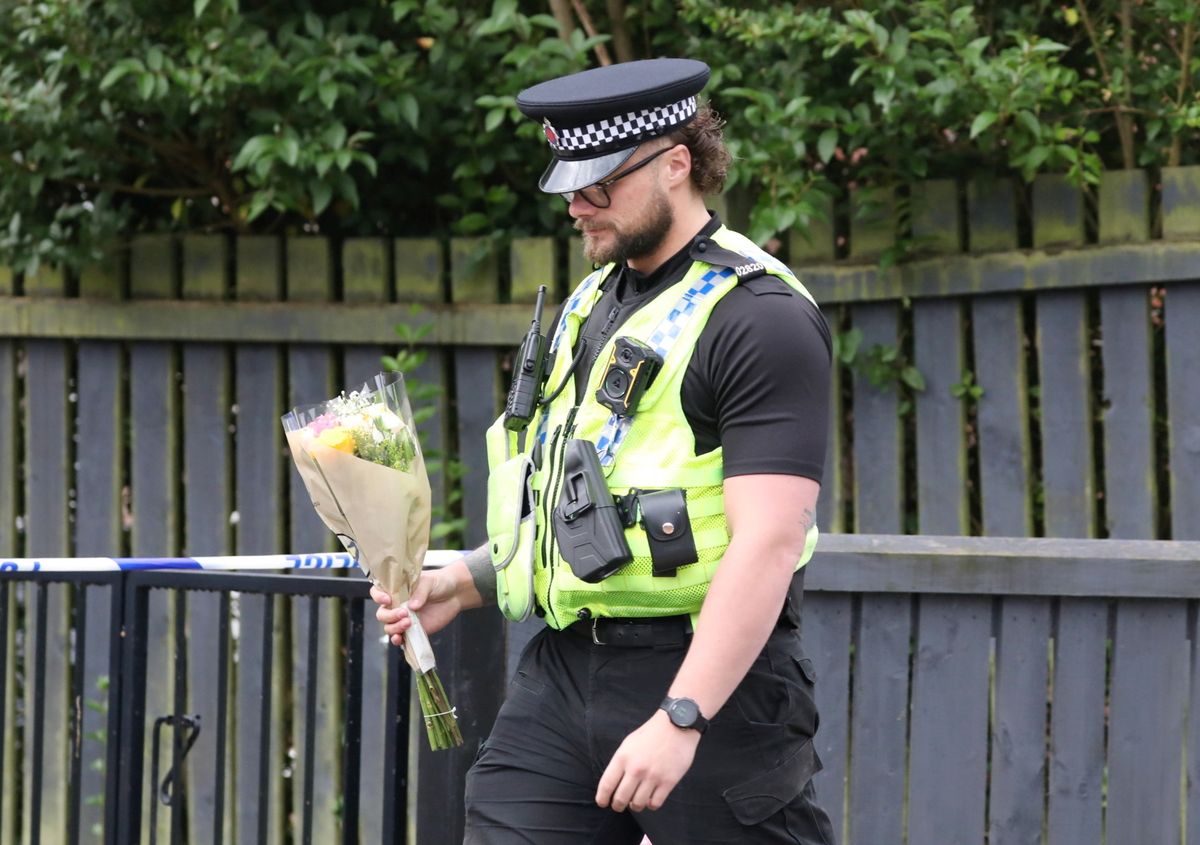
An offer holds flowers left for Martina and Eleni(Image: SWNS)
Eleni was a ‘happy child who was very much loved and very well cared for by Ms Karos throughout her life’ he said, and ‘despite a high level of good quality, focused support and care from family, her limited group of friends and professionals – including GP, specialist mental health services, social workers and carers – Martina experienced feelings of extreme loneliness and isolation which overwhelmed her’.
He said there was ‘no evidence of any suffering or any pain suffered by Eleni in her final moments’.
Grieving mother and grandmother Mrs Karos said in a moving statement issued following the hearing: “She loved her child more than life itself. Despite the hardships associated with caring for a disabled child, she did everything she could to give Eleni a comfortable life. Eleni was the love of her life. She didn’t want to leave her to anyone, not knowing what her future was.
“We want their deaths to change the way disabled children, but also their parents, are perceived. A child is better off with happy parents. Time will never heal the wound in the heart of [Martina and Eleni’s] mother and grandmother. May their tragic deaths change some things that will help save others before they make a drastic decision.”
‘Catastrophic collapse’
Charities, tragically, say it is not an isolated case. According to the Carers Trust, one academic research project found that more than 40 per cent of parent carers had considered suicide, with a third coming up with a plan to end their own life.
Simon Gunning, CEO of Campaign Against Living Miserably (CALM), said: “We are experiencing a loneliness epidemic in the UK right now, and this is a key risk factor for suicide and suicidal thoughts. We know from our own research that over half of UK adults are facing some form of loneliness, and that that figure is higher for women.
“We also know that those with caring responsibilities face higher rates of suicide. Those two things can clearly compound each other, and there is so much more we need to be doing as a society to change that.
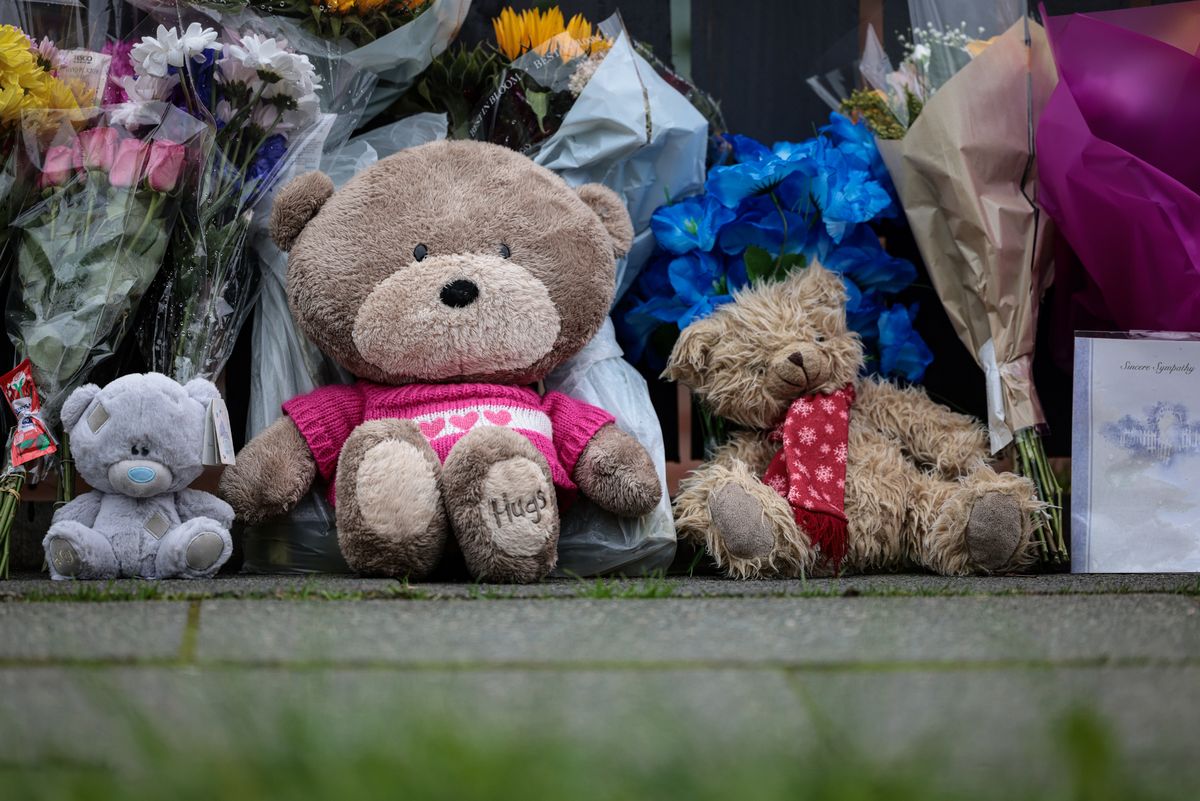
The tragedy rocked Kersal(Image: Kenny Brown | Manchester Evening News)
“If you are impacted by this story, or you’re experiencing loneliness yourself, please know that support is available. This is an exceptional tragedy and our thoughts go out to the loved ones impacted by this case.”
Andy McGowan, policy and practice manager at the Carers Trust said: “This tragic case highlights the huge pressures that parent carers can face. Sadly, this is not an isolated case – research by Dr Siobhan O’Dwyer at the University of Birmingham found that more than 40 per cent of parent carers had considered suicide, with a third of them having created a plan for ending their life.
“It is vital the government and local councils ensure parent carers are not a forgotten group of carers and should ensure they can access vital support such as respite, emotional, practical and financial support.”
Anna Bird, chair of the Disabled Children’s Partnership said: “No one can ever condone the deliberate death of a child but the devastating background to this tragedy is an exhausted mother who chose to take Eleni’s life because she was so terrified of what would happen to her after her own death.
“Birmingham University research shows more than a third of parent carers of disabled children have considered suicide because of the struggle to support their child.
“Families frequently speak to us about feelings of isolation, loneliness and complete overwhelm, made worse if they are on their own looking after children with complex needs. Parents have to become a nurse, physiotherapist, pharmacist, equipment expert and more, when they just want to be a mum or dad.
“We must honour Eleni’s memory by being much better at recognising when parent carers’ mental health is on the verge of catastrophic collapse.”
Help and support
Samaritans (116 123) samaritans.org operates a 24-hour service available every day of the year. If you prefer to write down how you’re feeling, or if you’re worried about being overheard on the phone, you can email Samaritans at jo@samaritans.org, write to Freepost SAMARITANS LETTERS (no more information needed) and visit www.samaritans.org/branches to find your nearest branch.
For support for people feeling suicidal, if you are concerned about someone or if you are bereaved by suicide see http://shiningalightonsuicide.org.uk
CALM (0800 58 58 58) thecalmzone.net has a helpline is for men who are down or have hit a wall for any reason, who need to talk or find information and support. They’re open 5pm to midnight, 365 days a year.
Greater Manchester Bereavement Service Greater Manchester Bereavement Service can help to find support for anyone in Greater Manchester that has been bereaved or affected by a death. No one needs to feel alone as they deal with their grief. www.greater-manchester-bereavement-service.org.uk
Childline (0800 1111 ) runs a helpline for children and young people in the UK. Calls are free and the number won’t show up on your phone bill.
PAPYRUS (0800 068 41 41) is a voluntary organisation supporting teenagers and young adults who are feeling suicidal.
Beat Eating Disorders: Beat provides helplines for adults and young people offering support and information about eating disorders. These helplines are free to call from all phones. Adult Helpline: 0808 801 0677, Studentline: 0808 801 0811, Youthline: 0808 801 0711. www.beateatingdisorders.org.uk
Anorexia & Bulimia Care: ABC provide on-going care, emotional support and practical guidance for anyone affected by eating disorders, those struggling personally and parents, families and friends. Helpline: 03000 11 12 13. www.anorexiabulimiacare.org.uk/
Students Against Depression is a website for students who are depressed, have a low mood or are having suicidal thoughts. Bullying UK is a website for both children and adults affected by bullying studentsagainstdepression.org
For information and links to charities and organisations that can help with substance abuse, visit https://www.supportline.org.uk/problems/drugs/