In the car park of Magee College in Derry, 62-year-old civilian prison worker Leslie Jarvis was executed by three gunmen who fired multiple shots through the front windscreen.
A young forensic pathologist, Jack Crane, was on call that evening, but he was in Belfast and it would take a couple of hours for him to arrive at the scene. He could easily have been in Derry or elsewhere in the area.
“There but for the grace of God,” says Professor Crane today as he remembers how a booby trap bomb left inside the vehicle exploded and killed two police officers, Detective Inspector Austin Wilson and Detective Sergeant John Bennison.
“There were concerns about going to the scene and I remember that one case vividly,” the former state pathologist says.
This was 1987, a year during which close to 100 people died as a result of the conflict.
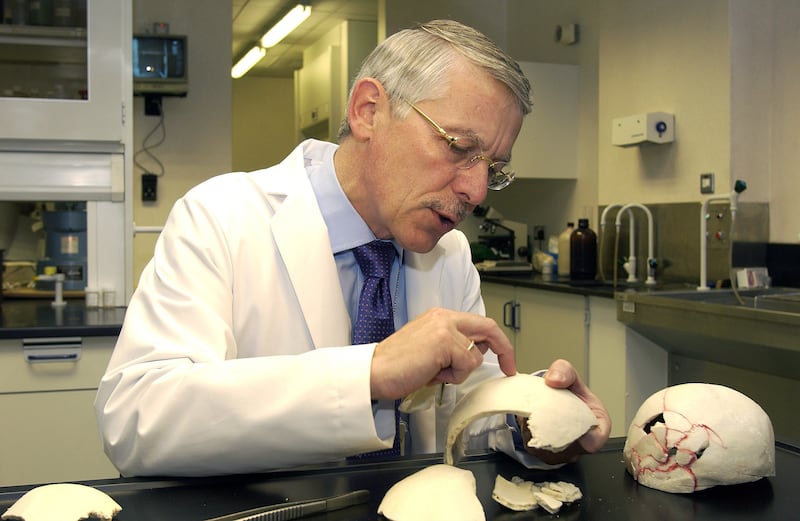 Then-State Pathologist for Northern Ireland, Professor Jack Crane, pictured in his mortuary in 2004 PHOTO: ARTHUR ALLISON/PACEMAKER
Four pathologists, including State Pathologist Professor Thomas Marshall, criss-crossed the six counties, attending the scenes of all suspicious deaths.
Murders were the most difficult cases, but they also dealt with suspected suicides, drug overdoses and road fatalities. They averaged approximately 1,300 post-mortems a year.
Weekends were always the busiest, as often there was only one pathologist on call and “you tended to get more murders at the weekend”.
“You’d become fixated with the news. You’d turn on the news and you’d hear there’s been a shooting in Strabane, there’s been an explosion in Derry,” Professor Crane said.
“And you knew exactly what you were going to be facing. So it was quite stressful. The cases were difficult.
“You have to be on your game. You mustn’t make mistakes.”
On one Sunday morning that same year, 1987, Professor Crane was driving from a death scene in Derry when he was stopped at a road check.
“And the police said to me…Dr Crane, there has been an explosion in Enniskillen. So I drove to Enniskillen.”
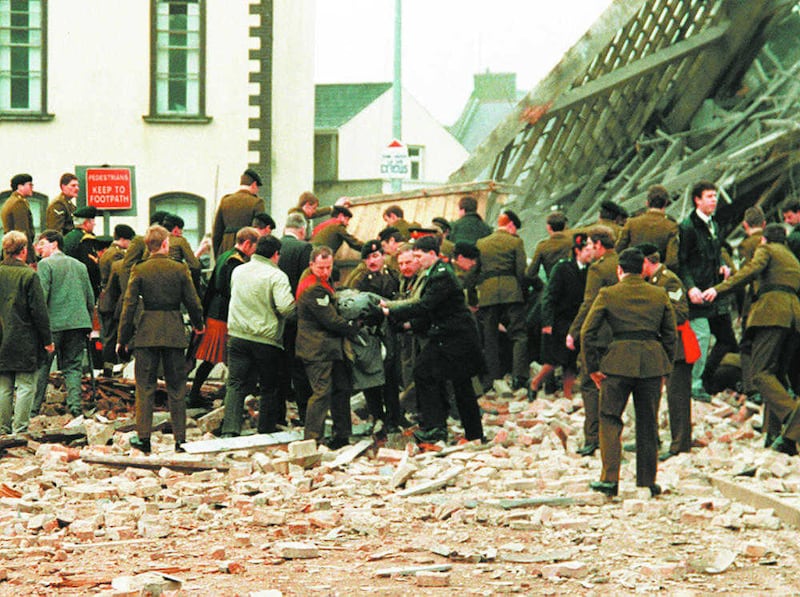 The aftermath of the Enniskillen Poppy Day bomb PICTURE: PACEMAKER
He was joined by other pathologists as they began to carry out post-mortems of 11 people blown up in the Poppy Day massacre.
“We started doing the post-mortem examinations that evening. And we finished, I think, about half of them at midnight or so.”
Everyone was getting tired “so I drove back to Belfast in the early hours”.
“Had a shower, a shave, a cup of coffee, and then drove back to Enniskillen to start doing the rest of them,” Professor Crane remembers.
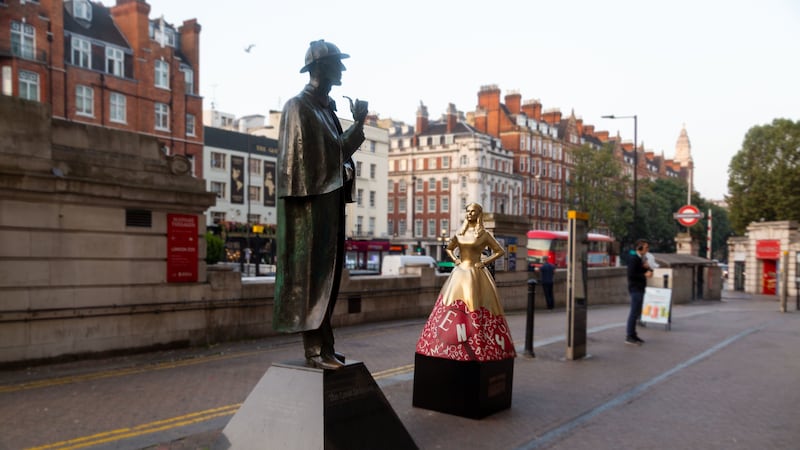 A Sherlock Holmes book bought when he was 11 stirred Professor Crane’s interest in medicine – and crime detection
As a first year student at Methodist College in Belfast he won a prize of the cost of a book from Mullan’s bookshop, which was in Fountain Street.
“And I bought a book on Sherlock Holmes…that fired my interest both in medicine, and in a way, crime detection.”
While studying medicine in Queen’s, Professor Crane gravitated towards histopathology, the study and treatment of “lumps and bumps and so forth”.
But the young medical student also took an interest in forensic pathology and came to the attention of Professor Marshall.
He began as a junior in 1980, learning under the highly experienced Professor Marshall and became a consultant in 1985.
In 1990, Professor Crane was appointed state pathologist ahead of other more experienced pathologists.
But he says: “The department had not changed much since the 1950s, this despite all the killings. It hadn’t progressed, even with the terrible events of the previous 20 years. We were still doing things the same old way. The textbooks in the department were out of date.
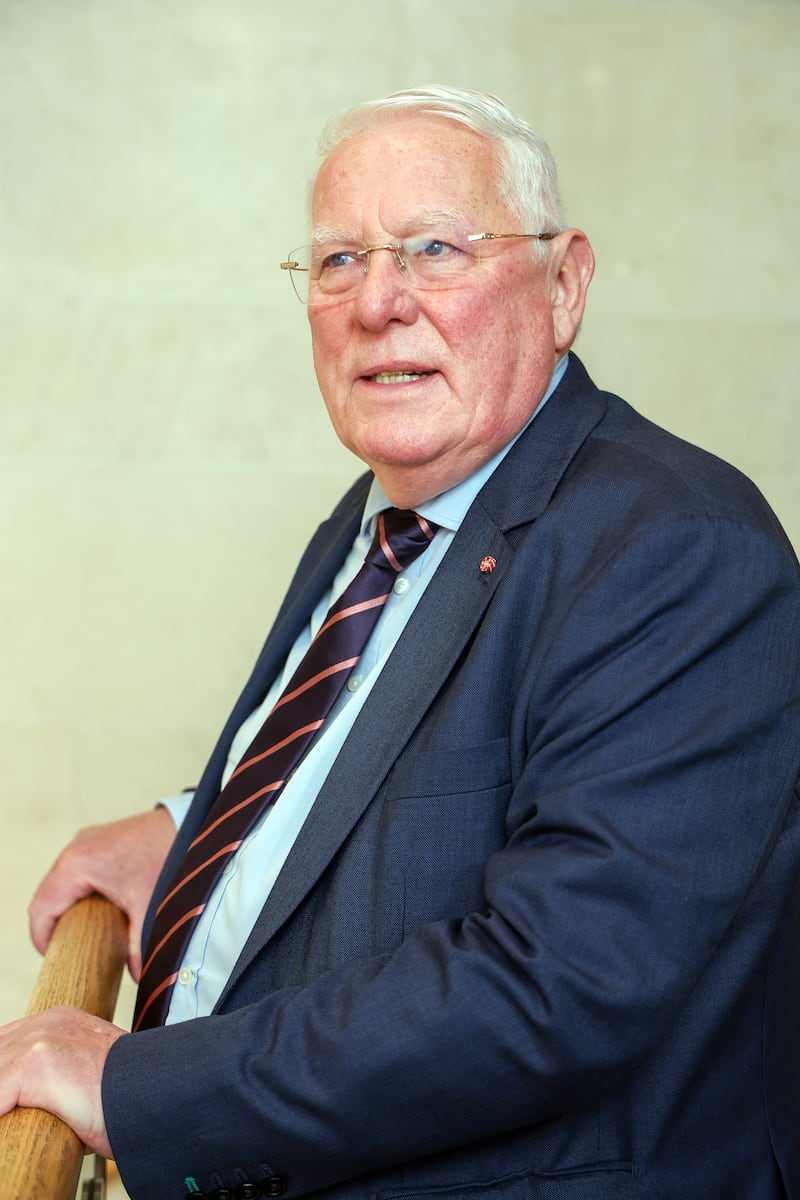 Professor Crane is still busy working as teacher and consultant PICTURE: MAL MCCANN
“So I suppose they saw me as perhaps somebody who was younger and maybe had some ideas about how the service could develop.”
Over the next quarter century, there were many changes, far less murders as the Troubles tailed off and a significant decrease in road deaths
But fatalities caused by drugs and suicides have increased. In the past, the deaths from drugs were relatively straightforward, involving alcohol, barbiturates and aspirin.
In more recent times, there is a whole array of lethal substances, including synthetics and opioids, with deaths often caused by a cocktail, he says.
Professor Crane’s tenure as state pathologist, which effectively continued up until 2017, mirrored huge advances in the technology around forensics, particularly DNA.
“Our ability to detect small amounts of trace evidence is increasing all the time,” he says.
The introduction of computed tomography (CT) scanning that can capture detailed images of the inside of bodies has helped save time and resources but also reduces the need for invasive autopsies – a comfort for many families.
There were some battles along the way for Professor Crane, particularly as he raised concerns – which went public – with delays over toxicology results.
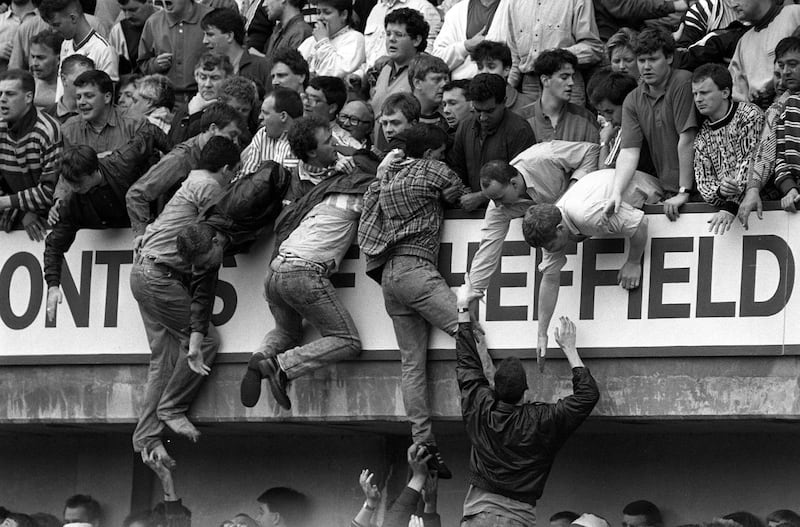 Professor Crane wrote a report that helped to establish a new inquest into the Hillsborough fatalities (David Giles/PA)
He also faced opposition from local politicians and families over the move to centralise autopsy examinations in Belfast, rather than them being carried in morgues locally.
Some “felt that the bodies should be kept in the area” but “gradually, though, people realised, this is working well”.
“The cases are being turned around quicker, the bodies are being returned quicker,” Professor Crane says.
The autopsies were also being carried out in an entirely new mortuary in the grounds of the Royal Victoria Hospital next to new offices and laboratories.
The pathologist was asked to add his considerable experience in dealing with the aftermath of bombings to the Manchester Arena inquiry into the 2017 bombing.
He, and other pathologists, also provided key evidence that led to a new inquest into the 1989 Hillsborough stadium disaster, in which 96 Liverpool fans died.
Many of the victims died after a certain time, which was the cut-off point in the original inquest after which the coroner refused to consider hearing evidence on, the pathologists concluded.
As a professor of forensic medicine at Queen’s, he has authored many papers, including on the methodology of terrorist bombings and on non-fatal child injuries.
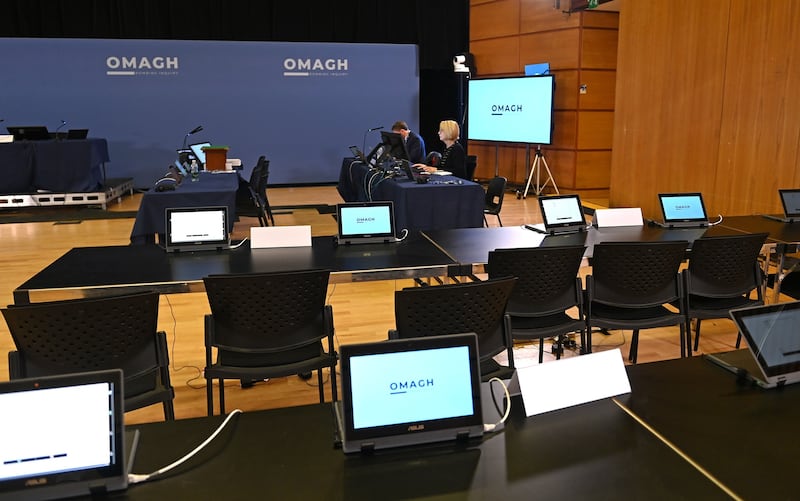 The Omagh Bombing Inquiry (Michael Cullen/Ulster Herald/PA)
He is also involved in training medical professionals on how to describe injures and in the challenging area of dealing with the justice system, particularly around court appearances.
Professor Crane has provided reports in cases where there are question marks around the deaths of individuals, including high profile ones in the south.
For all the changes and advances over the years, there is still the legacy of the conflict and the still many unsolved deaths. Professor Crane is uniquely positioned to comment as someone who was at the scene of so many.
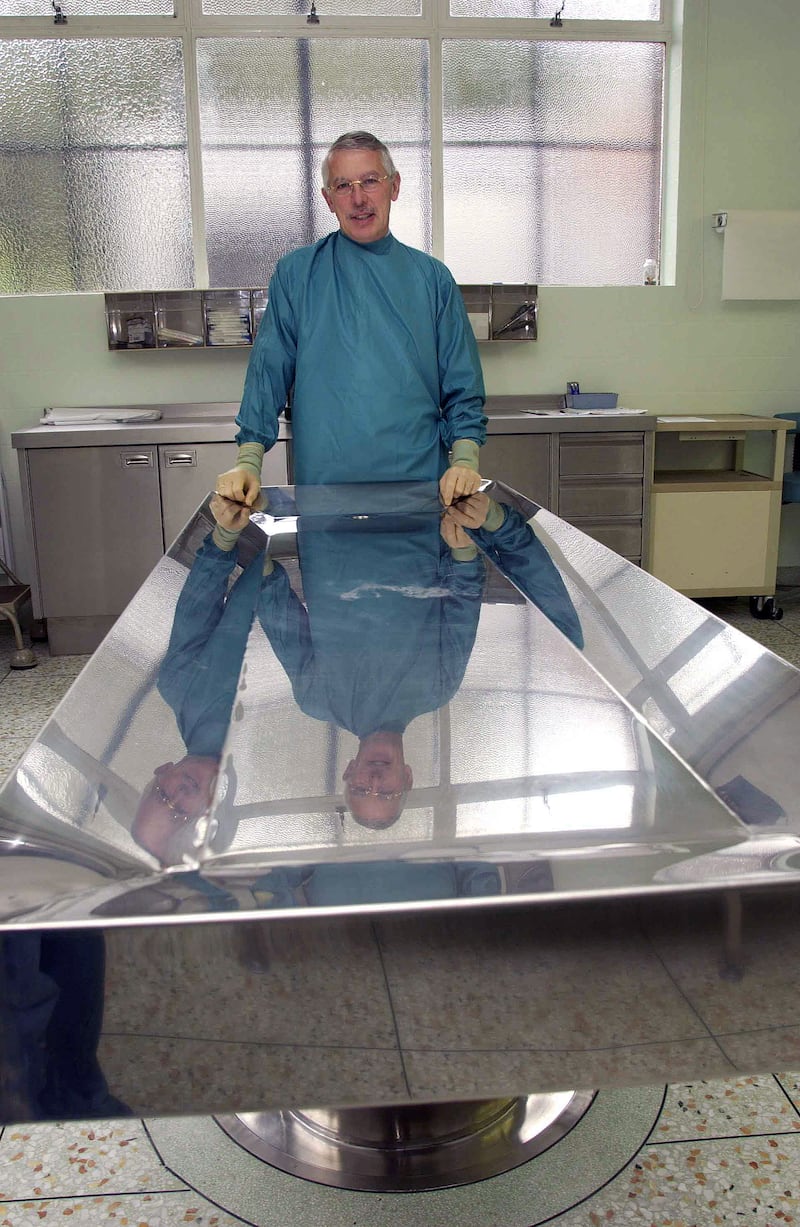 Professor Crane was state pathologist for more than a quarter of a century
PHOTO: ARTHUR ALLISON/PACEMAKER
“I think we understood the difficulties that were in bringing people to justice for these crimes,” he says.
“One area that is perhaps controversial, but which I feel strongly about, is a lot of these cases, as you know, are 50 years old. And people still haven’t got closure. And to me, that’s not right.”
He admits there is little chance of criminal charges being brought in what are thousands of unsolved cases.
But he adds: “I’m all for giving people the truth, whether it’s palatable or unpalatable, but let them know what happened. I don’t like conspiracies and secrecy. You’re much better with everything out in the open.”
Professor Crane is open about how he approached the job of dealing with so much death. It simply had to be done and emotion could not cloud the task.
“People often say to me, do you not get upset, for example, say you’re dealing with the death of a young child or something like that?” he says.
“I say you have to try and detach yourself to do this work. You have to be objective. You mustn’t let your emotions affect how you’re doing your job.
“So I suppose I may be just a rather hard person, but it’s never really affected me.”
Then Professor Crane remembers the Omagh bombing – he gave evidence to the inquiry – and one thing sticks in his mind, a conversation with the daughter of a victim who went to the chapel where the bodies were brought.
“And she said they laid my mother out on the floor in the chapel. And she said to me, would you like your mother to be put on the floor?”
He went back to the Northern Ireland Office and told them “we need trolleys”.
“I said, you know, there’s no dignity in putting someone on the floor. It stuck in my mind….something like that. To me, it was important.”