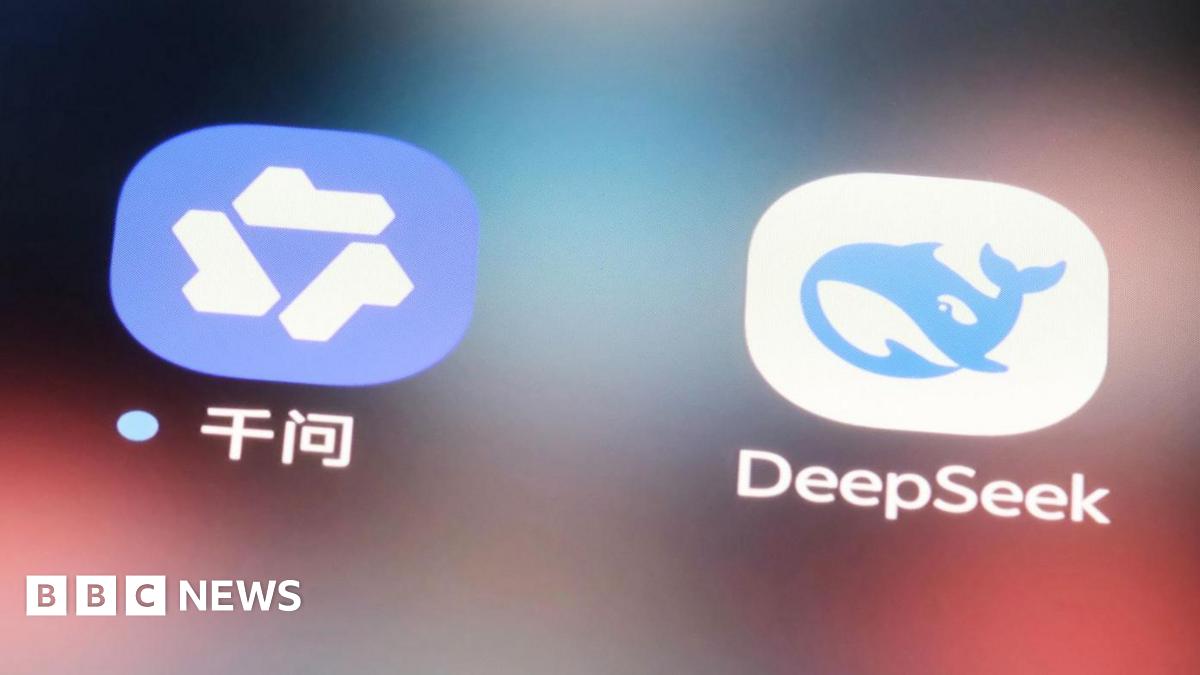
Pinterest is hardly the only US enterprise depending on AI tech from China.
These models are gaining traction across an array of Fortune 500 companies.
Airbnb boss Brian Chesky told Bloomberg in October his company relied “a lot” on Alibaba’s Qwen to power its AI customer service agent.
He gave three simple reasons – it’s “very good”, “fast” and “cheap”.
Further evidence can be found on Hugging Face, the place people go to download ready-made AI models – including from major developers Meta and Alibaba.
Jeff Boudier, who builds products at the platform, said it is the cost factor that leads young start-ups to look at Chinese models over their US counterparts.
“If you look at the top trending models on Hugging Face – the ones that are most downloaded and liked by the community – typically, Chinese models from Chinese labs occupy many of the top 10 spots,” he told me.
“There are weeks where four out of five top training models on Hugging Face are from Chinese labs.”
In September, Qwen topped Meta’s Llama to become the most downloaded family of large language models on the Hugging Face platform.
Meta released, external its open-source Llama AI models in 2023. Up until the release of DeepSeek and Alibaba’s models, they were considered the go-to choice for developers working on bespoke applications.
But the release of Llama 4 last year left developers underwhelmed, and Meta has reportedly been using open-source models with Alibaba, Google, and OpenAI to train a new model set for release this spring.
Airbnb also uses several models, including US-based ones, hosting them securely in the company’s own infrastructure. The data is never provided to the developers of the AI models they use, according to the company.