This year marks 10 years since the UK voted to leave the European Union, with the intention to “take back control” of our borders, bureaucracy and laws. That divisive decision has, ever since, affected our politics, society and indeed place in the world.
But is it now, with a dwindling economy at home and ever-shifting world order abroad, time to reconsider this decision and rejoin the EU? Columnist Ian Dunt, former CEO of Vote Leave Matthew Elliott and Brussels Correspondent Leo Cendrowicz offer their perspectives.
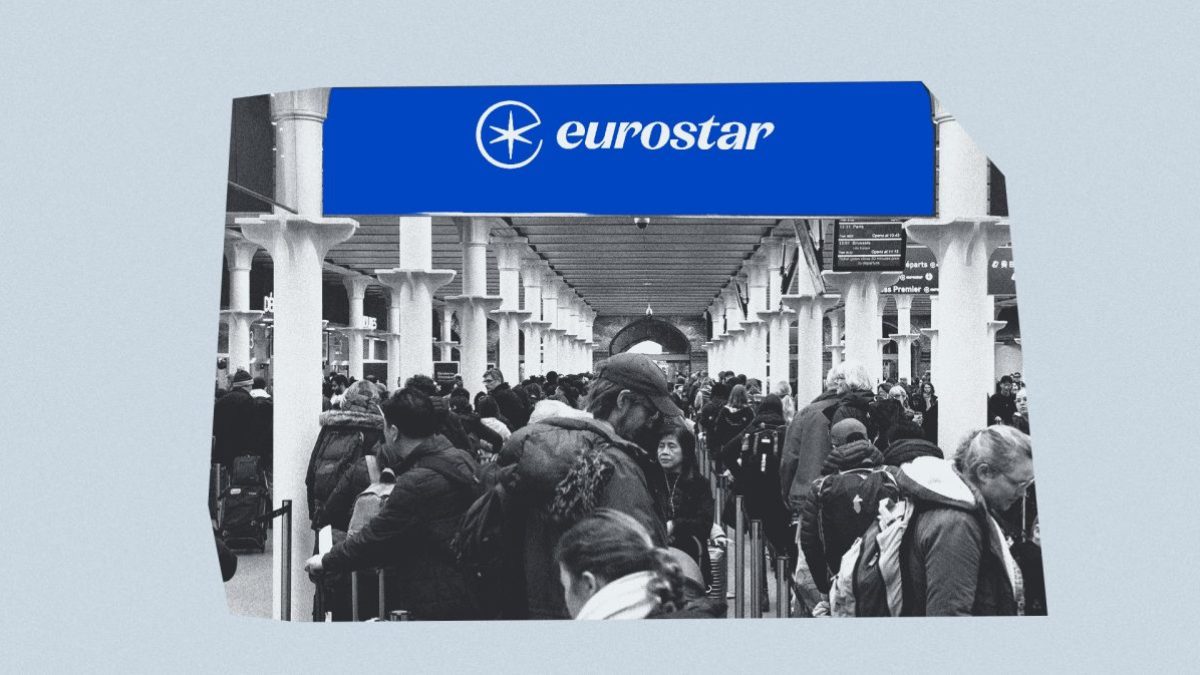
The most visible consequences of Brexit are also the most banal. They begin in airport halls and ferry terminals, in the shuffling purgatory of “third-country nationals” lanes, where British travellers now wait beneath unfamiliar signs, passports in hand, watching other Europeans glide past. What was once frictionless has become faintly awkward, then irritating, then normalised. Brexit, for many Britons, arrived not as a constitutional rupture but as a thousand small inconveniences.
Yet, those irritants are only the surface expression of something deeper. Over the past five years, leaving the European Union has altered the texture of everyday life in Britain in ways that are now impossible to ignore: at the border, in the workplace, in the cost of food and increasingly in the country’s diminished ability to shape the world around it.
Travel is the easiest place to start, because it is where the promise of Brexit collides most brutally with reality. British holidaymakers face queues, stamps and time limits. Touring musicians confront visa forms and fees. School trips quietly disappear. Business travellers lose the casual mobility that once made the Channel feel narrow rather than wide. None of this is catastrophic. But it is cumulative, and it is constant.
The same is true for trade. The slogan of “take back control” has translated, in practice, into forms, checks, certifications and delays – particularly for small and medium-sized firms that once sold effortlessly into the UK’s largest export market. Food exporters wrestle with sanitary checks. Chemicals firms duplicate regulatory systems at enormous cost. Hauliers absorb delays that shave margins to the bone. The result has not been a dynamic, swashbuckling trading nation but a more inward-looking economy, less attractive to invest in and harder to operate from.
The macroeconomic effects are now well-established. The Centre for European Reform estimated that UK GDP per capita was 6-8 per cent lower, investment 12-18 per cent lower and productivity down 3-4 per cent, leaving the country poorer than it would otherwise have been.
The trade deals signed since have failed to compensate from losing free access to a market that represented half of pre-Brexit trade. Immigration has not fallen in the way promised. Public services strain under fiscal pressure that Brexit has quietly intensified.
More damaging still is the way Brexit has narrowed Britain’s geopolitical room for manoeuvre. Outside the EU, the UK is no longer present when European rules are written – on trade, technology, climate or security – but must increasingly adapt to them anyway. In Brussels, London is no longer a partner shaping outcomes but a third country whose requests are weighed against precedent, principle and domestic politics within the bloc.
This loss of influence has real consequences. Britain has struggled to secure access to EU defence initiatives, energy markets and regulatory frameworks without being asked to “pay to play”. Even where interests clearly align – on Ukraine, on security, on supply chains – the relationship is more transactional, more conditional and more fragile than it once was.
The country that prided itself on punching above its weight now often finds itself negotiating from a position of structural weakness. As for Global Britain, the laughable notion that a post-Brexit UK could become a world influencer, how has that worked out with Donald Trump? In the EU itself, the UK has become a cautionary tale about the calamity of countries leaving: rare are the politicians still seeking to follow Britain out the door.
The case for reversing Brexit should be a no-brainer. And yet, for all this, the situation remains politically frozen. Public opinion has shifted decisively towards regret, but not towards action. There is little appetite in Britain to reopen a debate that exhausted the country and poisoned its politics for a decade. Keir Starmer’s Government, scarred by the experience, prefers the incrementalism of the EU reset: small fixes, quiet realignment and an insistence that the question itself is settled.
Nor is the EU rushing to offer a way back. Brussels has larger preoccupations: war in Ukraine, economic competitiveness, rearmament, and now, Greenland. There is also a deeper wariness. EU officials remember the volatility of British politics, the ease with which solemn agreements can be denounced as betrayal. The rise of Reform – and the real prospect of a future Nigel Farage-led government tearing up any new settlement – has hardened that caution. Why invest political capital in a reset that might not survive an election?
The result is a stalemate. Britain edges closer to EU rules in practice while denying it in rhetoric. The EU allows limited cherry-picking while insisting on discipline. Everyone knows the current arrangement is sub-optimal, yet no one is willing to grasp the nettle.
Brexit, then, has not delivered the rupture its architects promised, nor the liberation they envisaged. Instead it has produced something more insidious: a quieter diminishment. Britain is still prosperous, still influential, still open. But it is also more constrained, more brittle and less central to the systems that shape its future.
The airport queues are merely the most visible sign of that change.
Perspectives
Is now the time to rejoin the EU?