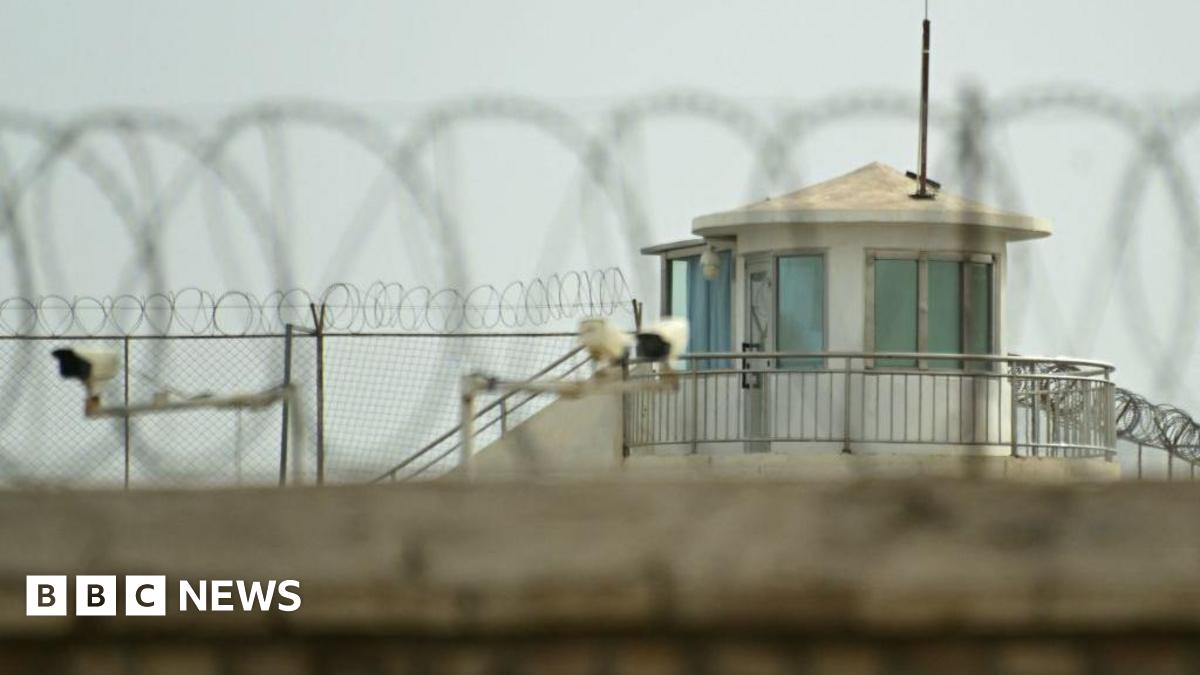
Several countries, including the US, UK, Canada and the Netherlands, have accused China of committing crimes against humanity and possibly genocide against the Uyghur Muslim population in Xinjiang.
A UN human rights committee in 2018 said it had credible reports that China was holding up to a million people in “counter-extremism centres” in the region, which is largely cut off to international media and observers.
China denies all allegations of human rights abuses in Xinjiang and describes the centres as “re-education camps” to prevent terrorism and root out Islamist extremism.
Meanwhile, Uyghurs in exile continue to recount stories of terrified or disappeared relatives.
A series of police files obtained by the BBC in 2022 revealed details of China’s use of these camps and described the routine use of armed officers and the existence of a shoot-to-kill policy for those trying to escape.
People who have managed to escape the camps have reported physical, mental and sexual torture. Women have spoken of mass rape and sexual abuse.
Guan’s lawyer, Chen Chuangchuang, said his client’s case was a “textbook example of why asylum should exist”.
The US has a “moral and legal responsibility” to grant Guan asylum, he added.
The judge on Wednesday said Guan was right to fear retaliation from the Chinese state if sent back, noting that his family had already been questioned, and said he had established his legal eligibility for asylum.
The Department of Homeland Security reserves the right to appeal and has 30 days to do so.