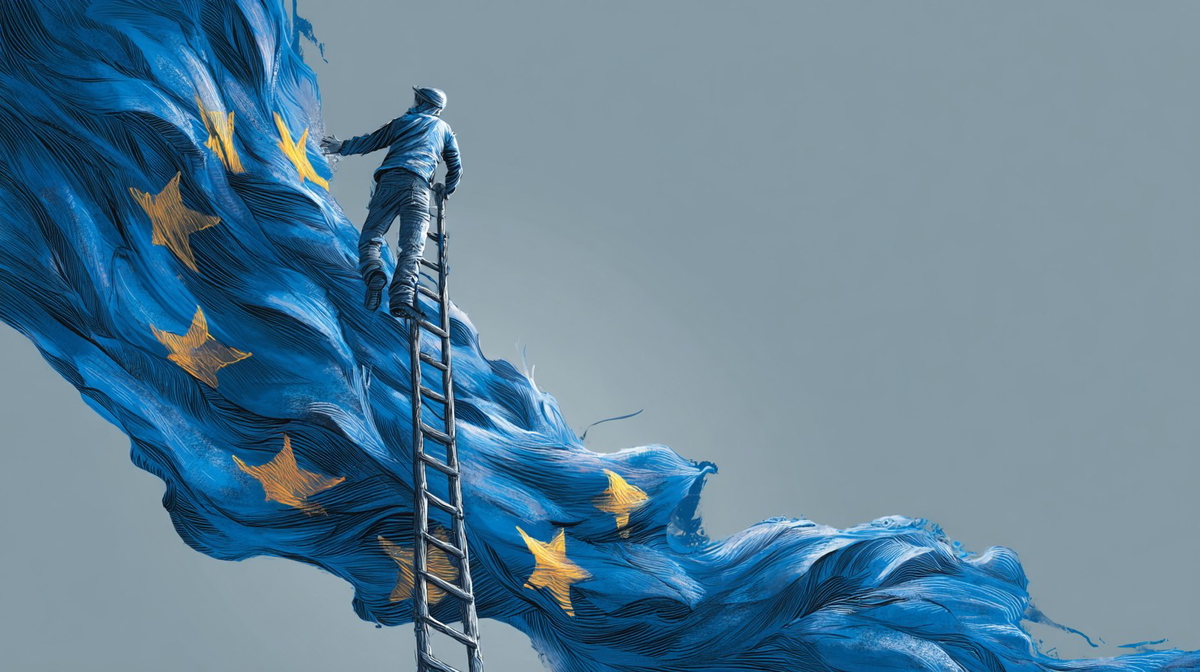
We have entered a new age. Of course, it is difficult to foresee what the emerging world will look like. But certain trends are unmistakable. The abduction of Nicolás Maduro and Donald Trump’s desire to seize Venezuela’s oil resources, like the threat directed at Greenland, are not isolated acts. They are already part of a series of actions and statements that seem to mark a lasting and profound transformation of our world system.
We are undoubtedly entering a new phase of imperial conquest and of what the economist Arnaud Orain has called “the capitalism of finitude,” marked by growing rivalry among powers over the appropriation of resources (financial, natural, labour, etc.). For how long?
What we can already glimpse of this emerging world is that gentle commerce and international law are no longer relevant within it. This new capitalist regime is instead characterized by resource grabbing and value capture, measured against national interest and the law of the strongest. It sacrifices “weak zones,” politically and economically relegated to the status of vassals or colonies on the peripheries of imperial centres. In this emerging world, the European Union (EU) appears as a lamb among wolves.
American umbrella
The shift of the United States toward the camp of Russian and Chinese autocratic powers has exposed the deception: “the European emperor has no clothes.” And what is more, he seems immobile, or almost so—because paradoxically the EU lacks the malleability that the framework of a long history confers upon empires. While it appeared to react during the recent pandemic and financial crises, it did so without changing its fundamentals, forged during the era of “liberal capitalism,” which we know legally organized a form of public powerlessness.
Smart, Progressive Thinking on the Big Issues of Our Time
Join 20,000+ informed readers worldwide who trust Social Europe for smart, progressive analysis of politics, economy, and society — free.
Overall, the EU has gradually been built on a “liberal-federal” logic: a liberal single market, free and undistorted competition, free movement of capital, an independent European Central Bank, free trade agreements, a very small budget, and the neglect of industry and sovereignty in the name of the American umbrella. The global shift we are witnessing renders this entire liberal-federalist apparatus obsolete.
In this context, the question is simple: is Europe capable of adapting to this new age? The issue here is not to save the “liberal-federalist” Brussels institutions, since this is not one of the adaptive crises that have punctuated the history of the EU.
The challenge is deeper. It is continental and civilizational in scale, and it concerns not the EU but Europe and European societies as a whole. It puts at stake their political freedom—that is, their capacity to collectively decide their own destiny—and therefore their very existence as democracies. On the other side, autocracies, relying on their public powers, appear capable of regimenting their societies and economies in pursuit of their predatory national interests.
Additional protection
The “new federalism” we are calling for must therefore move beyond the “liberal-federalist” stage and conceive the association of European democracies as a kind of democratic “central bank,” guaranteeing to all European societies the concrete conditions for the exercise of democratic ways of life—both against empires and against the nationalist forces that act as their auxiliaries within the member states.
To play its role as a democratic guarantor of last resort, this new “social-federal” logic must establish, as Altiero Spinelli advocated, a genuine European public power capable of providing additional protection and sovereignty supporting national democracies (rather than preventing them from protecting themselves).
This new social federalism largely remains to be invented—not as a supranational institutional engineering project, but as the response of democratic states to the challenge posed by empires, and as the condition for international relations, particularly with the Global South, that move beyond the relations of domination inherited from the past.
This new social-federal spirit must become the lever for a remobilization of European societies because it is precisely their weakness that allows autocratic regimes—such as Viktor Orbán’s Hungary—to lock their peoples into nationalism and to draw them into Faustian pacts with empires.
Limited capacity to respond
This “new social federalism” must therefore reconnect with the postwar determination that, at the Congress of The Hague, saw a very broad spectrum of political, trade union, business, and civic movements participate in reviving the European federal idea. Everything indicates that European peoples can rely only on themselves, as their political, economic, and other leaders have shown, since Trump’s arrival, a limited capacity to rise to the challenge.
The recent call by the historic associations of the European federalist movement for the establishment of parliamentary assemblies, bringing together national and European representatives to think through and implement the transformations required by this European turning point, may constitute a first step. They should be set up without delay, given the urgency imposed by the empires.
But to reach an objective as utopian as the great postwar federalist congresses, it is necessary to build a new transnational social alliance, starting from this shared interest in the survival of our democracies and thus bringing together all the forces favourable to such a project—forces that are today fragmented both at the European level and within national frameworks. Only such a project, and its preparation around a new Congress of The Hague, modelled on the one that launched a first wave of European unification in 1948, will be able to guide and inspire the countless mobilizations required to finally build the party of Europe.
Help Keep Social Europe Free for Everyone
We believe quality ideas should be accessible to all — no paywalls, no barriers.
Your support keeps Social Europe free and independent, funding the thought leadership, opinion, and analysis that sparks real change.
★
Social Europe Supporter
— €4.75/month
Help sustain free, independent publishing for our global community.
★ ★
Social Europe Advocate
— €9.50/month
Go further: fuel more ideas and more reach.
★ ★ ★
Social Europe Champion
— €19/month
Make the biggest impact — help us grow, innovate, and amplify change.