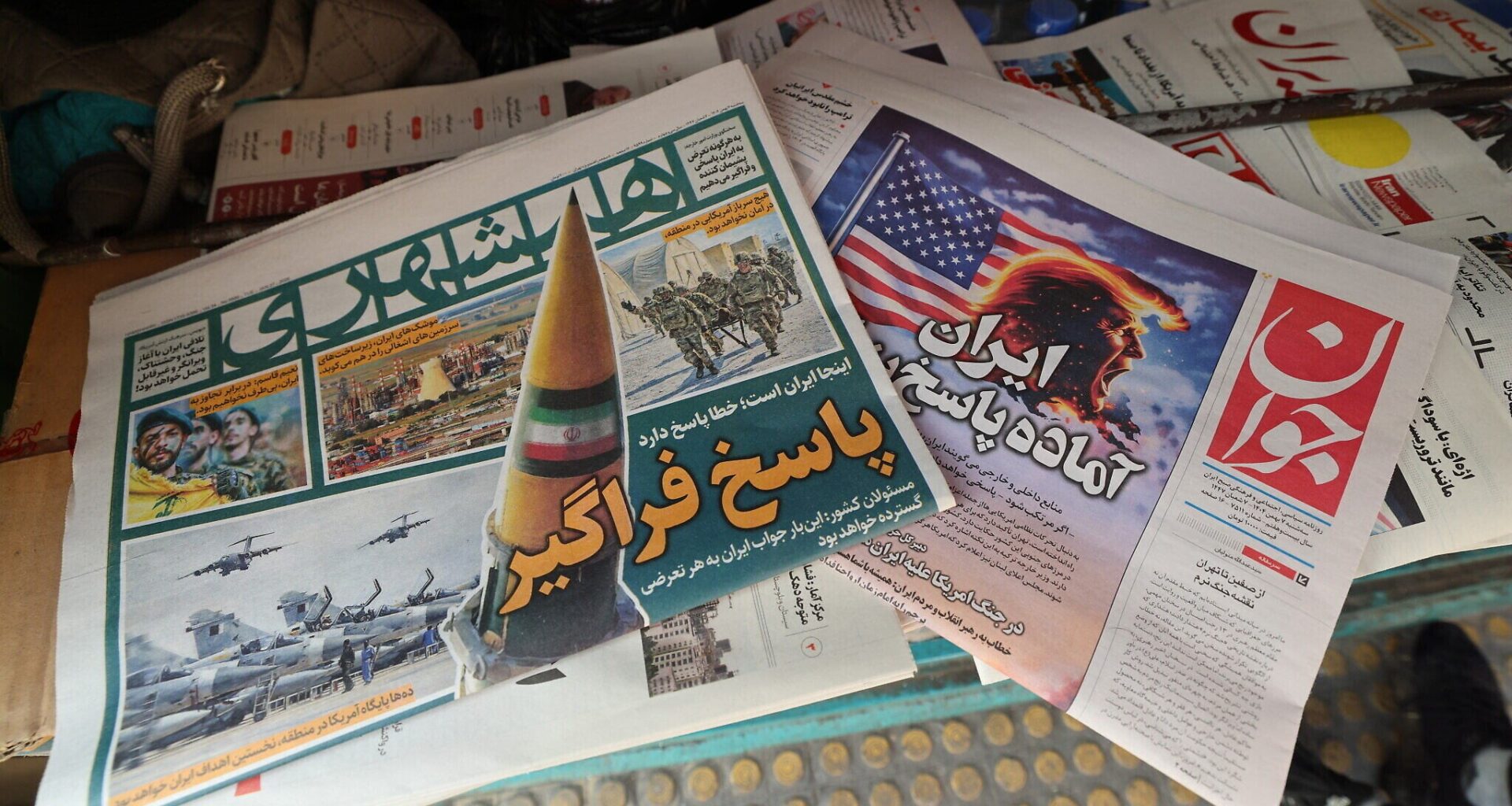
Russia and Turkey are pushing for negotiations in the standoff between Tehran and Washington after US President Donald Trump threatened new military strikes on Iran.
“It is clear that the potential for negotiations is not exhausted,” spokesman Dmitry Peskov told journalists on Thursday, adding: “Any use of force can only create chaos in the region and lead to very dangerous consequences.”
Peskov’s comments came a day after Trump urged Iran to come to the table and make a deal on nuclear weapons or face a possible US attack.
Trump has threatened military intervention against Iran over its crackdown on protests, which rights groups say killed thousands. However, rhetoric on the issue has shifted in recent days so that the threat of military action is hanging over Tehran unless it returns to the talks on the issue of its contentious nuclear program.
A US naval strike group arrived in Middle East waters on Monday with Trump warning it was “ready, willing and able” to hit Iran “if necessary.”
Get The Times of Israel’s Daily Edition
by email and never miss our top stories
By signing up, you agree to the terms
Since Russia’s invasion of Ukraine in 2022, Iran and Russia have deepened ties, with Western countries accusing Iran of providing missiles and drones for Russian attacks, though Tehran denies that.
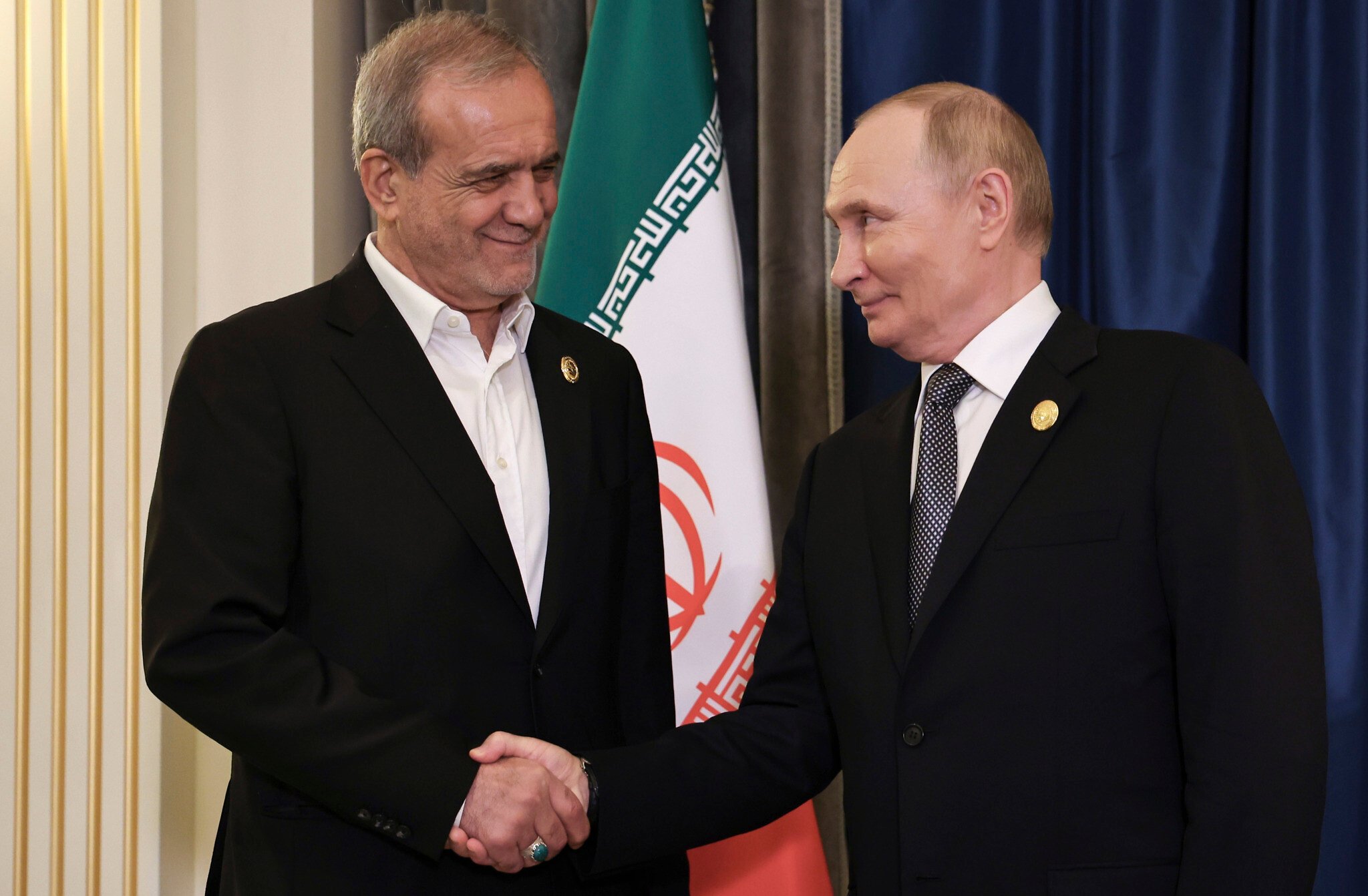
Iranian President Masoud Pezeshkian, left, and Russian President Vladimir Putin, right, shake hands during their meeting on the sidelines of the Shanghai Cooperation Organisation summit in Tianjin, China, September 1, 2025. (Alexander Kazakov, Sputnik, Kremlin Pool Photo via AP)
The two countries also signed a “strategic partnership” treaty last year.
Meanwhile, Turkey’s foreign minister will offer to mediate between the two countries during a visit by his Iranian counterpart on Friday, officials said, as Ankara considers reinforcing security along its border should the dispute escalate.
Foreign Minister Hakan Fidan will tell Araghchi on Friday that his country “is ready to contribute to resolving the current tensions through dialogue,” a Turkish diplomatic source said.
Fidan would reiterate Turkey’s opposition “to military interventions against Iran… [over] the regional and global risks such a step would entail,” said the source, requesting anonymity because of the sensitivity of the talks.
The minister had on Wednesday stressed the need for Washington and Tehran to resume discussions over the Iranian nuclear program, suggesting that it was the top priority to be resolved.
“It’s wrong to attack Iran. It’s wrong to start the war again. Iran is ready to negotiate on the nuclear file again,” Fidan had told Al-Jazeera television.
“Turkey supports reaching a peaceful solution to Iran’s nuclear program in the near term and is ready to provide assistance if needed in this regard,” the foreign ministry source said.
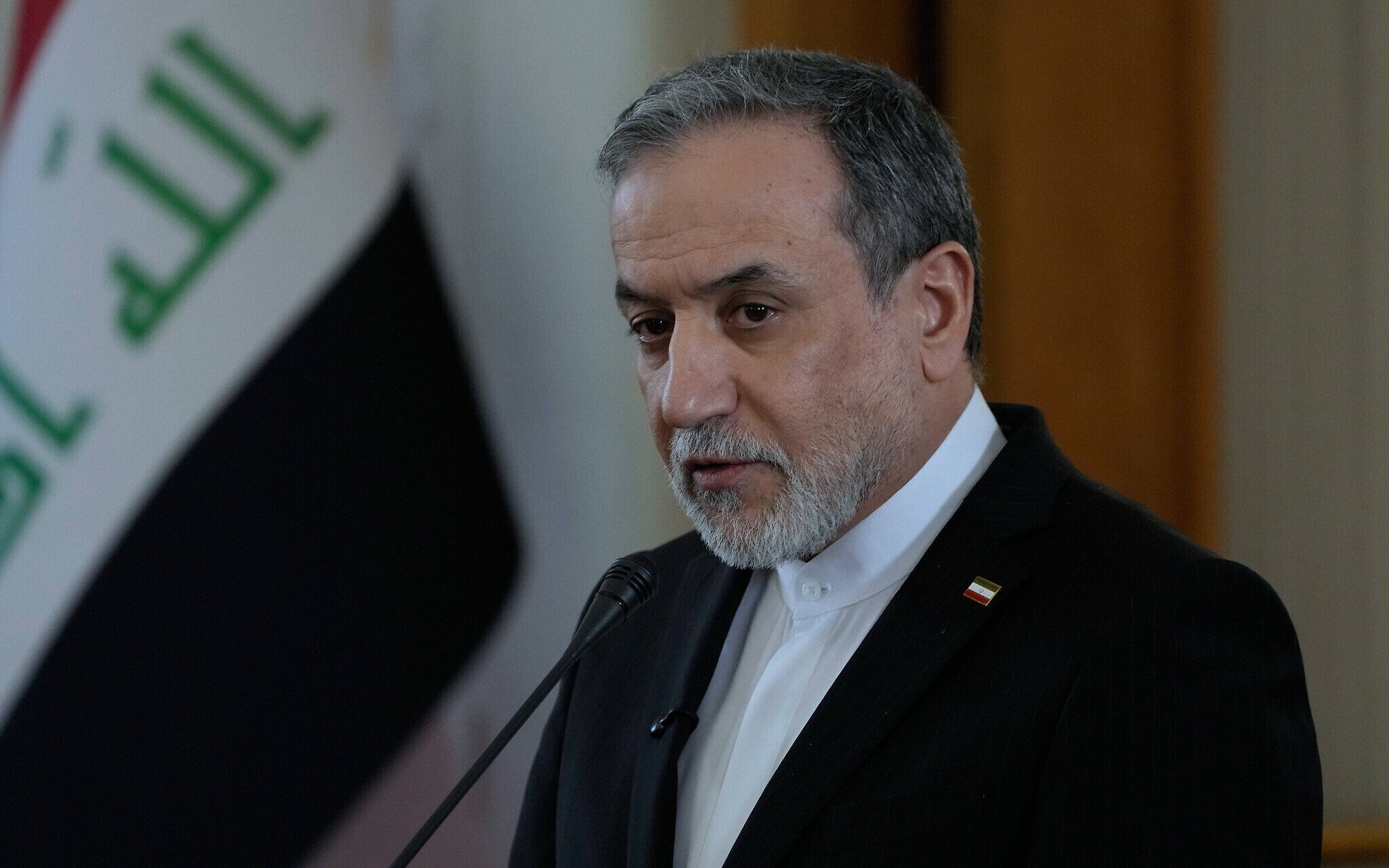
Iranian Foreign Minister Abbas Araghchi speaks in a joint press briefing with his Iraqi counterpart Fuad Hussein in Tehran, Iran, January 18, 2026. (AP Photo/Vahid Salemi)
Contingency plans
Alongside its diplomatic push, Ankara is assessing additional security precautions along its border with Iran if a US strike destabilizes the country, a senior Turkish official told AFP.
“If the United States attacks Iran and the regime falls, Turkey is planning additional measures to reinforce border security,” said the official, who also requested anonymity.
Much of the 500-kilometer (310-mile) frontier is secured by a wall, but “it has proven insufficient,” the official said.
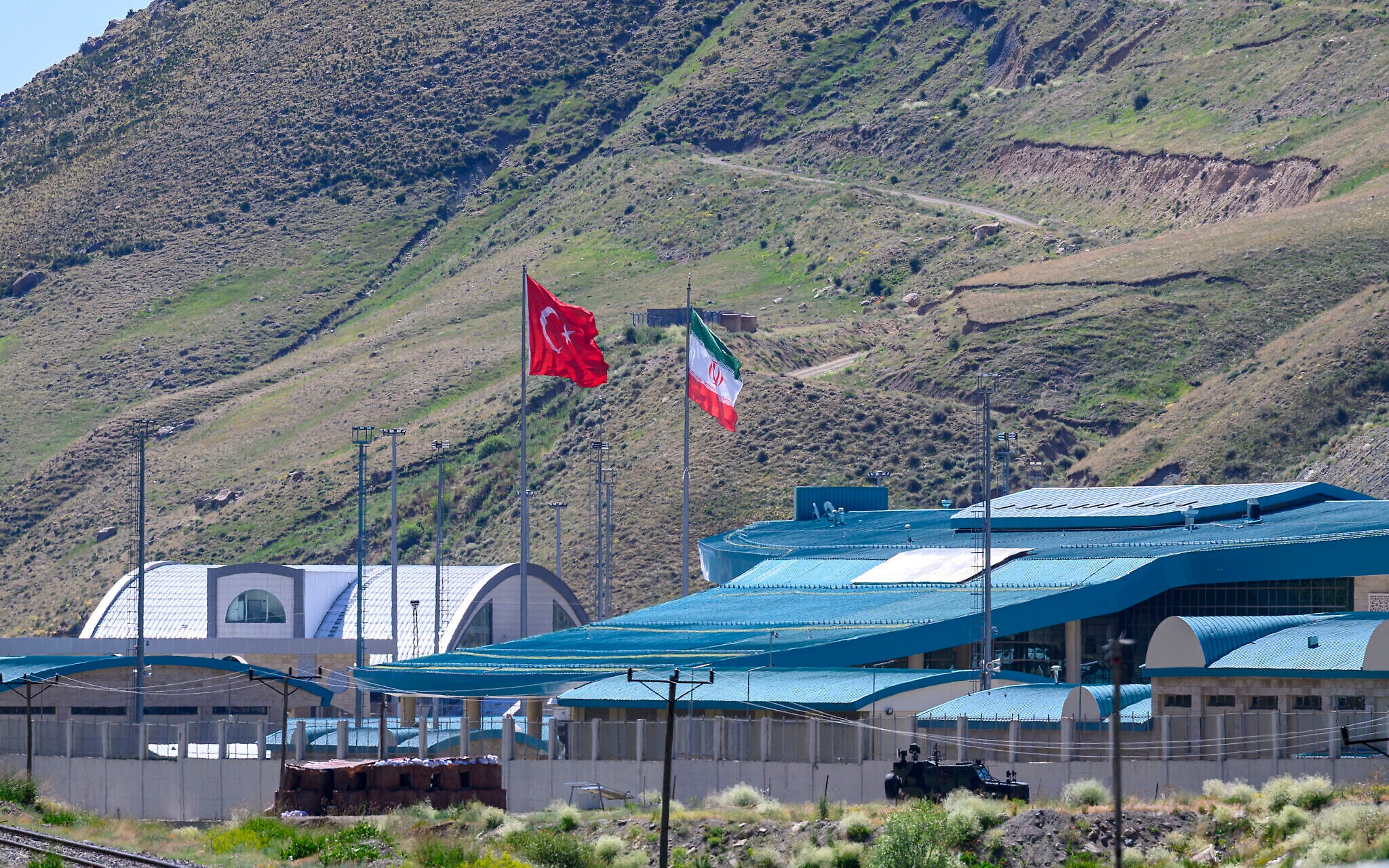
Iranian and Turkish flags fly in Turkey at the Razi-Kapikoy border crossing, north-eastern Turkey, on June 19, 2025. (Yasin AKGUL / AFP)
The Turkish authorities have so far avoided the term “buffer zone,” but options under review include deploying more troops and expanding technological surveillance systems, the official added.
Turkey began building a concrete wall in 2021 as concerns grew about a potential influx of migrants following the Taliban’s takeover of Afghanistan.
So far, officials say there is no sign of mass movement toward Turkey linked to developments in Iran. Earlier this month, the Turkish defense ministry said it had detected “no evidence” of large‑scale migration.
Unmanned aerial vehicles continue to conduct round‑the‑clock reconnaissance along the frontier.
To date, authorities have completed installation of 203 electro‑optical towers, 43 lift towers, 380 kilometers of modular concrete wall, and 553 kilometers of trenches, according to official figures.
Is accurate Israel coverage important to you?
If so, we have a request.
Every day during the past two years of war and rising global anti-Zionism and antisemitism, our journalists kept you abreast of the most important developments that merit your attention. Millions of people rely on ToI for fact-based coverage of Israel and the Jewish world.
We care about Israel – and we know you do too. So we have an ask for this new year of 2026: express your values by joining The Times of Israel Community, an exclusive group for readers like you who appreciate and financially support our work.
Already a member? Sign in to stop seeing this
You appreciate our journalism

You clearly find our careful reporting valuable, in a time when facts are often distorted and news coverage often lacks context.
Your support is essential to continue our work. We want to continue delivering the professional journalism you value, even as the demands on our newsroom have grown dramatically since October 7.
So today, please consider joining our reader support group, The Times of Israel Community. For as little as $6 a month you’ll become our partners while enjoying The Times of Israel AD-FREE, as well as accessing exclusive content available only to Times of Israel Community members.
Thank you,
David Horovitz, Founding Editor of The Times of Israel
Already a member? Sign in to stop seeing this