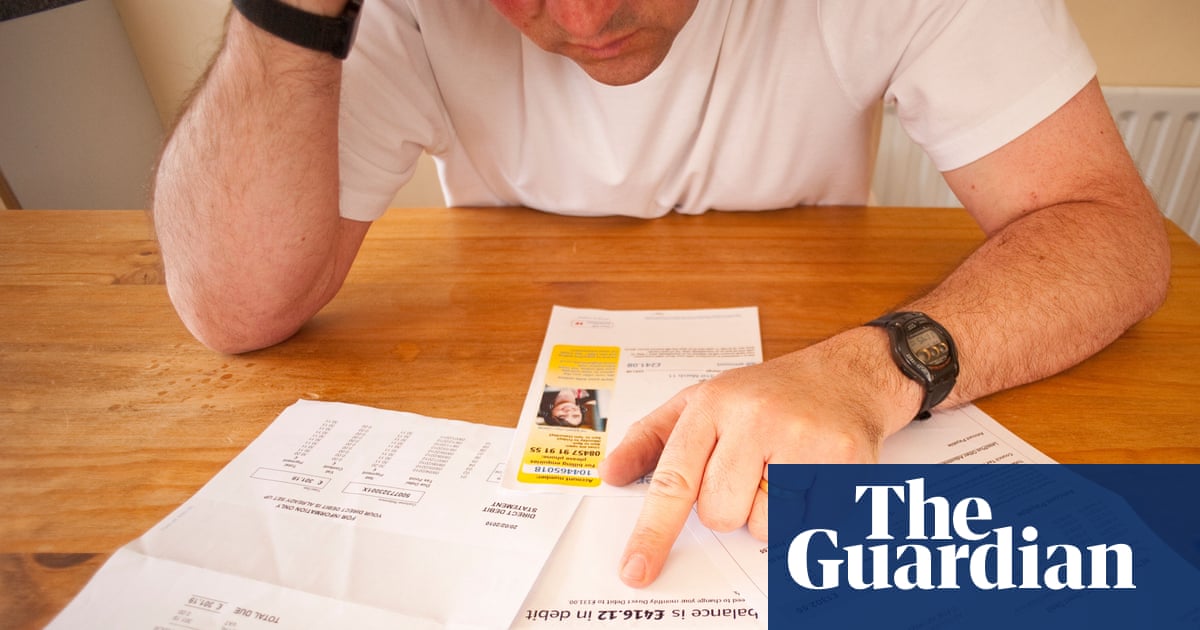
Newly retired civil servants say they are struggling to pay bills and buy food because delays at their pension scheme have left them without an income for months.
Pensioners have reported being forced to borrow money from family to pay for food and heating, with some saying they feared losing their homes because they could not afford their rent or mortgage.
The apparent crisis at the Civil Service Pension Scheme has now been acknowledged by the government, which revealed that interest-free “hardship loans” of up to £10,000 will be offered to thousands of the worst-affected people. Some are also likely to be able to access compensation.
On Wednesday, Nick Thomas-Symonds, a Cabinet Office minister, told a committee of MPs that the delays people were experiencing were “completely and utterly unacceptable”.
The pension scheme has admitted to a backlog of nearly 90,000 cases – comprising claims, valuations and other requests – that it warned could take months to resolve. Some members have been waiting since January 2025 for their pension claim to be processed.
About 3,000 civil servants retire every month, and the government has accepted that many of those who have retired since 1 December last year will not have received their first pension payment.
One former civil servant, who did not want to be named, said she was forced to apply for universal credit because she had been left without income since retiring from the Department for Work and Pensions in August.
“I used up all my savings over the first four months and have no family to help me,” she said. “The stress has forced me to take antidepressants.”
Another submitted a claim for her pension in January 2025 before retiring three months later. “I’ve yet to receive a penny,” she said. “I can’t afford to put my heating on. It breaks my heart having to ask my kids to buy me food.”
The Civil Service Pension Scheme is overseen by the Cabinet Office, which outsourced the administration to MyCSP, part of Equiniti, more than a decade ago. However, last month the £239m contract passed to Capita after a two-year transition period.
A report by parliament’s public accounts committee last October questioned whether Capita was ready to take over the scheme –which has 1.7 million members – and suggested the government explore bringing the administration in-house.
Many scheme members said they had been unable to log in to their accounts since Capita took over in December, and reported unanswered emails and long waits on phone lines.
Some reported that Capita, which was criticised for its administration of Teachers’ Pensions, had told them not to get in touch while the backlog was addressed.
One 69-year-old retiree said he feared his home would be repossessed unless his pension lump sum was paid before his mortgage term ends in April. His pension entitlement was due to start last October, and his mortgage lender will not extend his term because of his age.
He said on one occasion he had been in a queue on the phone to MyCSP for five hours without getting through. “I spent a further two hours starting at position 26, then being cut off when I reached the top of the queue,” he said.
Catherine Little, the chief operating officer for the civil service, told MPs there was no firm figure for how many scheme members were experiencing financial hardship, but that about 8,500 people had had some sort of issue with their pension payments since 1 December. She said the standard level for the loans would be £5,000, with up to £10,000 for exceptional cases.
The campaign group Civil Service Pensioners’ Alliance (CSPA) said it had been “deluged” with complaints from people facing hardship since Capita took over the administration in December.
Some scheme members had been hit with shock tax bills after Capita recorded incorrect tax codes, it said.
Capita said it was aware of problems with tax codes affecting a limited number of members and was working with HMRC to resolve them.
It blamed MyCSP for the delays experienced by claimants and said it had increased staffing levels.
“At the time of contract signature [in 2023], the volume of work-in-progress items left by the previous provider was agreed to be 37,000,” a spokesperson said. “Once we took over the scheme in December, however, we discovered that the backlog we were inheriting was in fact 86,000. As a result we have experienced several times the normal volume of member queries since launch.”
A spokesperson for MyCSP said: “All outstanding work items were fully disclosed and agreed with Cabinet Office senior management prior to commencement of the handover process. Over the course of its tenure administering the scheme, MyCSP consistently met the service levels set by the Cabinet Office.”
The Cabinet Office said it was aware of the problems faced by members and their impact.
“We have strong contractual levers in place to ensure Capita delivers, alongside strengthened controls over the scheme, to ensure a more reliable and efficient service for both members and taxpayers,” a spokesperson said.