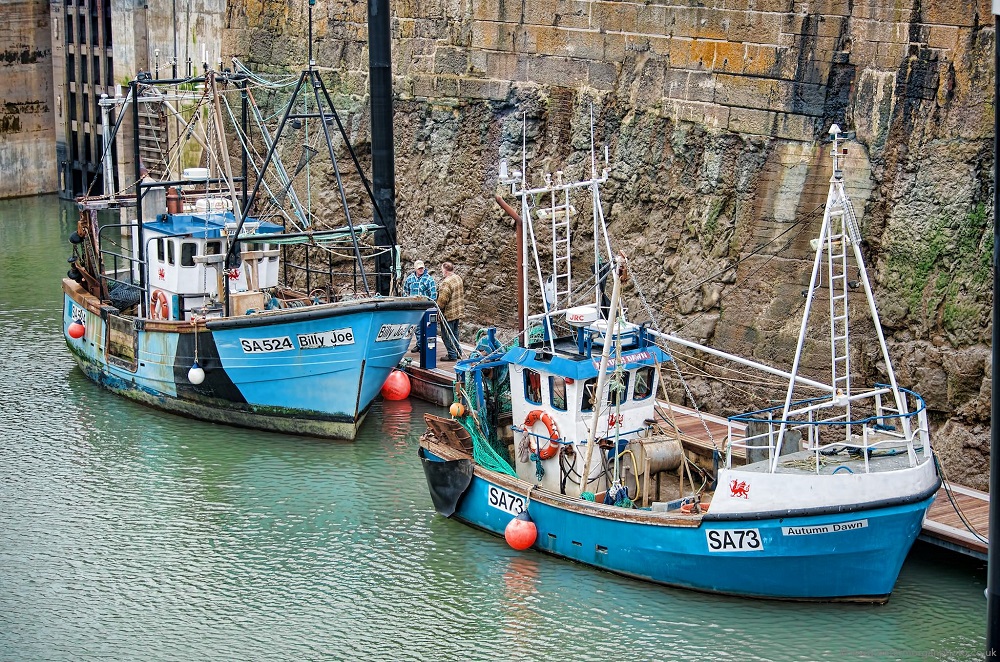
 Fishing boats. Photo by Mooganic is licensed under CC BY-NC-ND 2.0.
Adam Johannes
Fishing in Wales is being run in a fairer and more sustainable way, the Welsh Government says, after a year of changes aimed at protecting fish stocks while supporting the coastal communities that rely on the industry.
Deputy First Minister Huw Irranca-Davies has published a 12-month progress update on the Welsh Government’s Strategic Approach to Fisheries and Aquaculture, first launched at the end of 2024.
He said the aim was simple, “getting the fundamentals right” and building “a strong base of sustainable fisheries and aquaculture management to take us into the years ahead”.
The approach includes three main goals – rolling out Fisheries Management Plans, delivering day-to-day duties such as monitoring and enforcement, and ensuring Wales meets its national and international obligations.
Irranca-Davies said: “The 12-month review sets out the significant progress made against each of these priority areas. I met with the Ministerial Advisory Group for Welsh Fisheries again this week and we reflected on our achievements, made by taking a collaborative approach.”
One of the biggest steps forward has been progress on Fisheries Management Plans (FMPs), which set long-term rules to protect fish stocks. He praised industry and stakeholder groups for their role in shaping plans that support “the long-term sustainability of our stocks”.
A public consultation will soon launch on Wales’ first Wales-only FMP, covering crab and lobster fisheries. Wales has also helped develop five joint UK plans. A separate consultation on improving scallop fishing management, following the King Scallop FMP, closes on January 31.
The minister also highlighted tough enforcement action to protect Welsh waters. “We continue to ensure both domestic and international vessels fish sustainably,” he said, pointing to eight successful prosecutions for misreporting Dover sole, with almost £1 million handed out in fines and costs, alongside 20 fixed-penalty notices.
Changes have also been made closer to shore, including a new adaptive cockle management system, updated rules for the whelk fishery and the launch of a recreational bluefin tuna fishery.
Investment
Investment has followed. In 2025 alone, more than £1.1 million was awarded through the Welsh Marine and Fisheries Scheme, with a further £430,000 for coastal communities and an extra £1.29 million planned for 2026-27.
Last year also brought further progress, including £194,000 given to fishers to help install vessel monitoring systems on their boats, longer-term science projects being launched, and new research into how fishing affects jobs, communities and the environment in Wales, alongside a study measuring the climate impact of Welsh fishing vessels.
Irranca-Davies added that wellbeing projects, seafood supply-chain support and free health checks for fishers and their families were all part of efforts to make the sector more resilient in the years ahead: “We have delivered on our promises, with a stronger foundation in place to build on for the future.”
Support our Nation today
For the price of a cup of coffee a month you can help us create an
independent, not-for-profit, national news service for the people of Wales, by
the people of Wales.