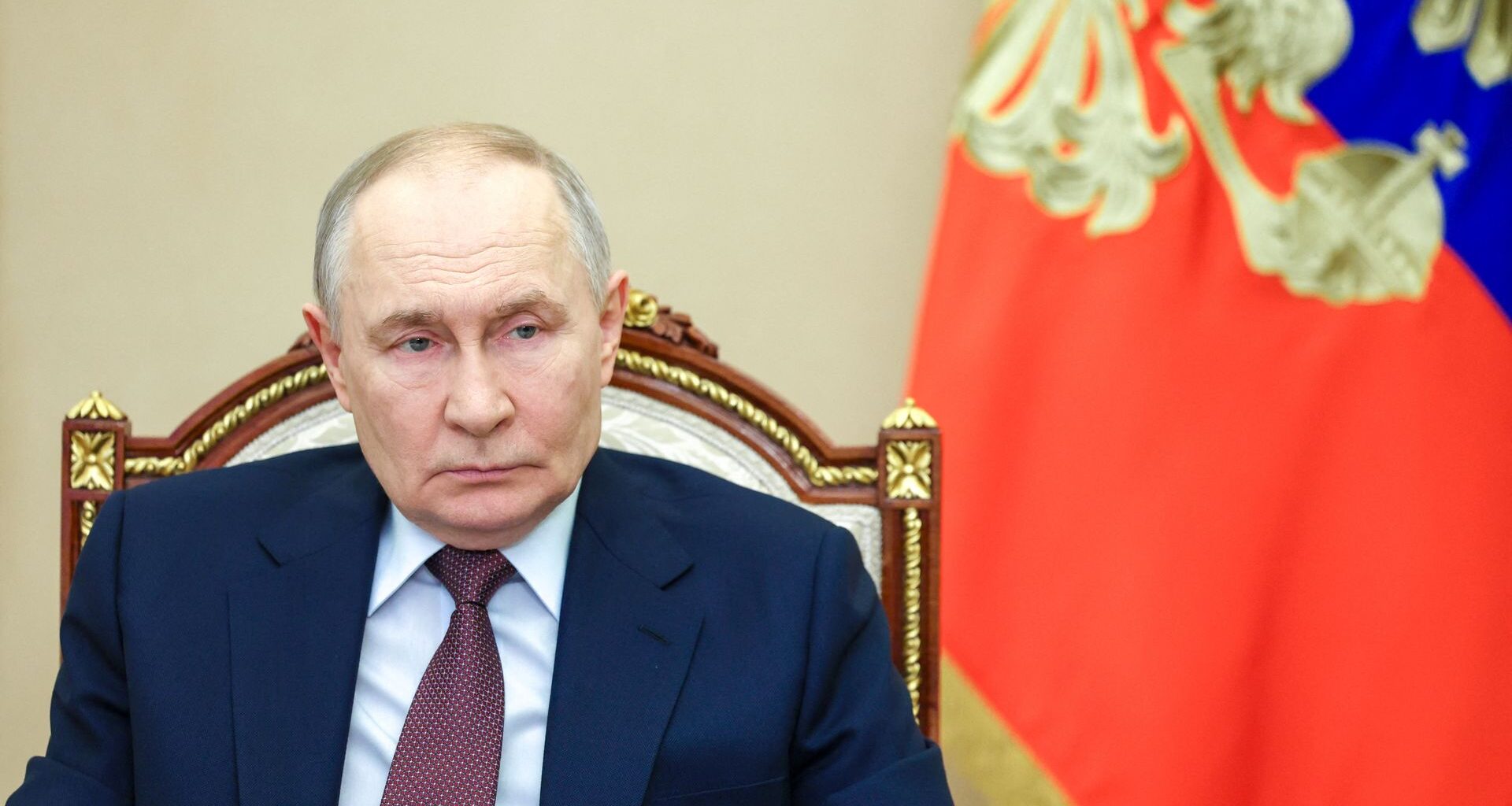
Russia’s President Vladimir Putin in Moscow on Jan. 21, 2026. (Vyacheslav Prokofyev / POOL / AFP via Getty Images)
Under immense pressure by weeks of Russian missile strikes, blackouts, and freezing cold, Ukrainians may get a few days of reprieve — at least, according to Washington.
Trump surprisingly announced on Jan. 29 that Russian President Vladimir Putin agreed not to strike Ukrainian cities for a week, though Moscow said that this would concern only Kyiv, and last only until Feb. 1 — just before another cold snap.
The halt on strikes — provided it would be prolonged — could indicate Russia is feeling the sting of Ukrainian strikes on its oil infrastructure and is open to the long-debated energy truce. Experts and lawmakers who spoke with the Kyiv Independent, however, see it is far more likely that Russia is simply buying time.
“The peace process is at a dead end,” says Ryhor Nizhnikau, a Russia expert at the Finnish Institute of International Affairs.
Putin “needs to placate Trump, buy more time, and ideally convince him that another failure of the peace process is mostly not Russia’s fault.”
Putin’s games
After the latest rounds of peace talks, U.S. diplomats were brimming with optimism — a stark contrast with the harrowing conditions Ukrainians have experienced in recent weeks due to Russian attacks.
The disparity was inescapable during the Abu Dhabi talks last weekend, when Russia hammered Kyiv with missiles and drones even as the negotiations continued.
Therefore, as Ukrainian political analyst Volodymyr Fesenko says, Trump likely realized he needed to act on the unfolding humanitarian crisis in Ukraine and asked Putin to pause the attacks.
President Volodymyr Zelensky later confirmed that a mutual pause on strikes against energy infrastructure was on the table in Abu Dhabi, but said no concrete agreement was reached with Moscow.
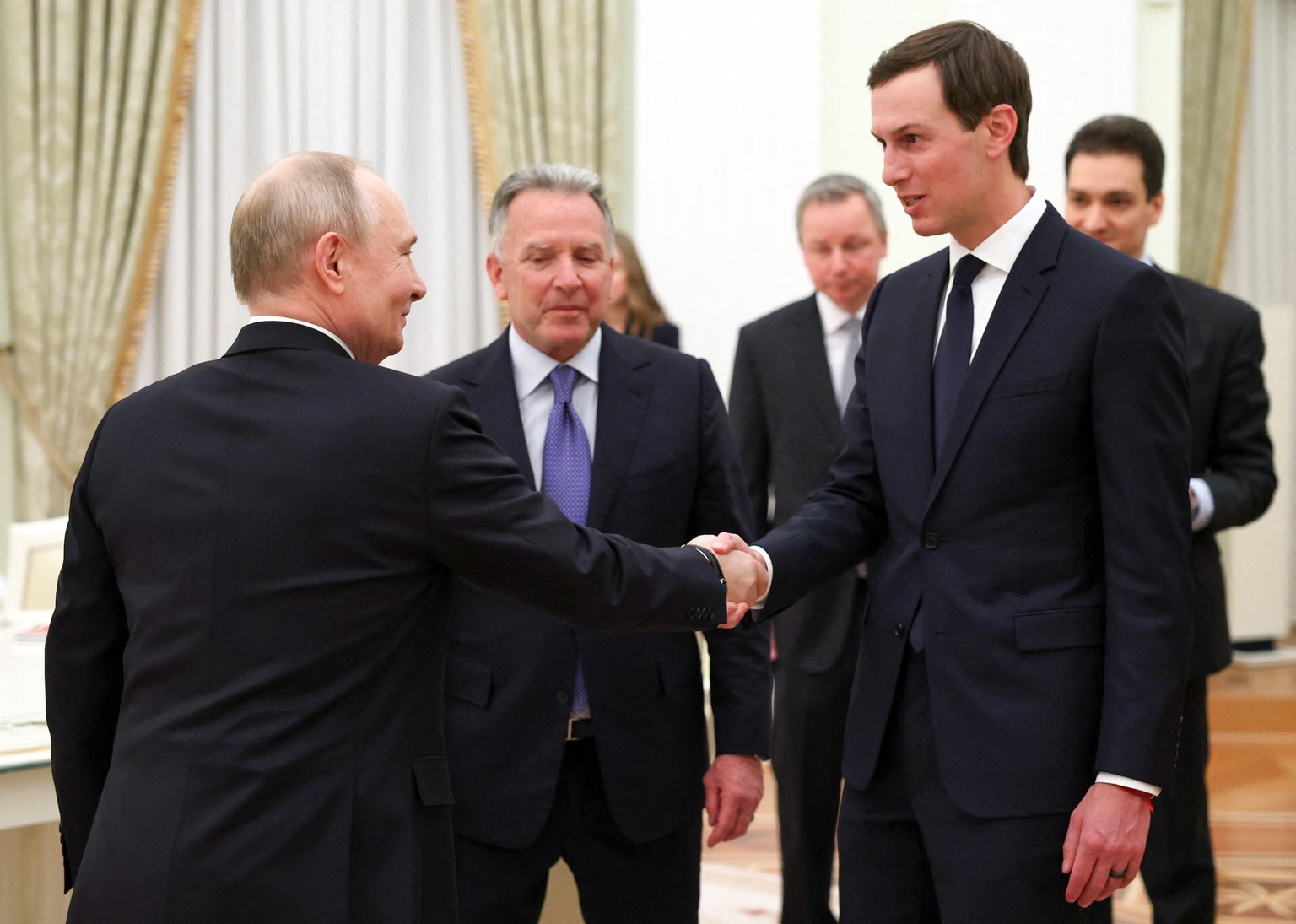 Russia’s President Vladimir Putin (L) welcomes U.S. Special Envoy Steve Witkoff (C) and U.S. President Donald Trump’s son-in-law Jared Kushner (R) during a meeting at the Kremlin in Moscow on Jan. 22, 2026. (Alexander Kazakov / Pool / AFP via Getty Images)
“The truce was apparently Trump’s idea, and by agreeing to it, Putin is able to flatter Trump and make the American president feel that his intervention in this war is making a difference,” international politics expert Jenny Mathers told the Kyiv Independent.
But this brief and partial halt of strikes is a far cry from an actual ceasefire that Trump once demanded as part of his peace-brokering strategy, only to drop it after Moscow’s obstinate refusals.
Oleksandr Merezhko, head of the parliament’s foreign affairs committee, calls it a major error that Trump abandoned the original demand and agreed to play Putin’s game of unclear, tenuous truces.
“A huge mistake that diplomats can make, especially when it comes to communicating with the Russians, is playing by their rules,” the lawmaker from Zelensky’s party told the Kyiv Independent.
No ceasefire in place
This is not the first time Moscow has agreed to a temporary and limited break in fighting.
Last spring saw the so-called Easter ceasefire, the Black Sea ceasefire, and another energy ceasefire. Ukraine has said that hostilities had never fully ceased during those periods.
While the latest agreement was supposedly concluded last weekend, Russian forces struck Odesa, Kyiv, and other cities earlier in the week.
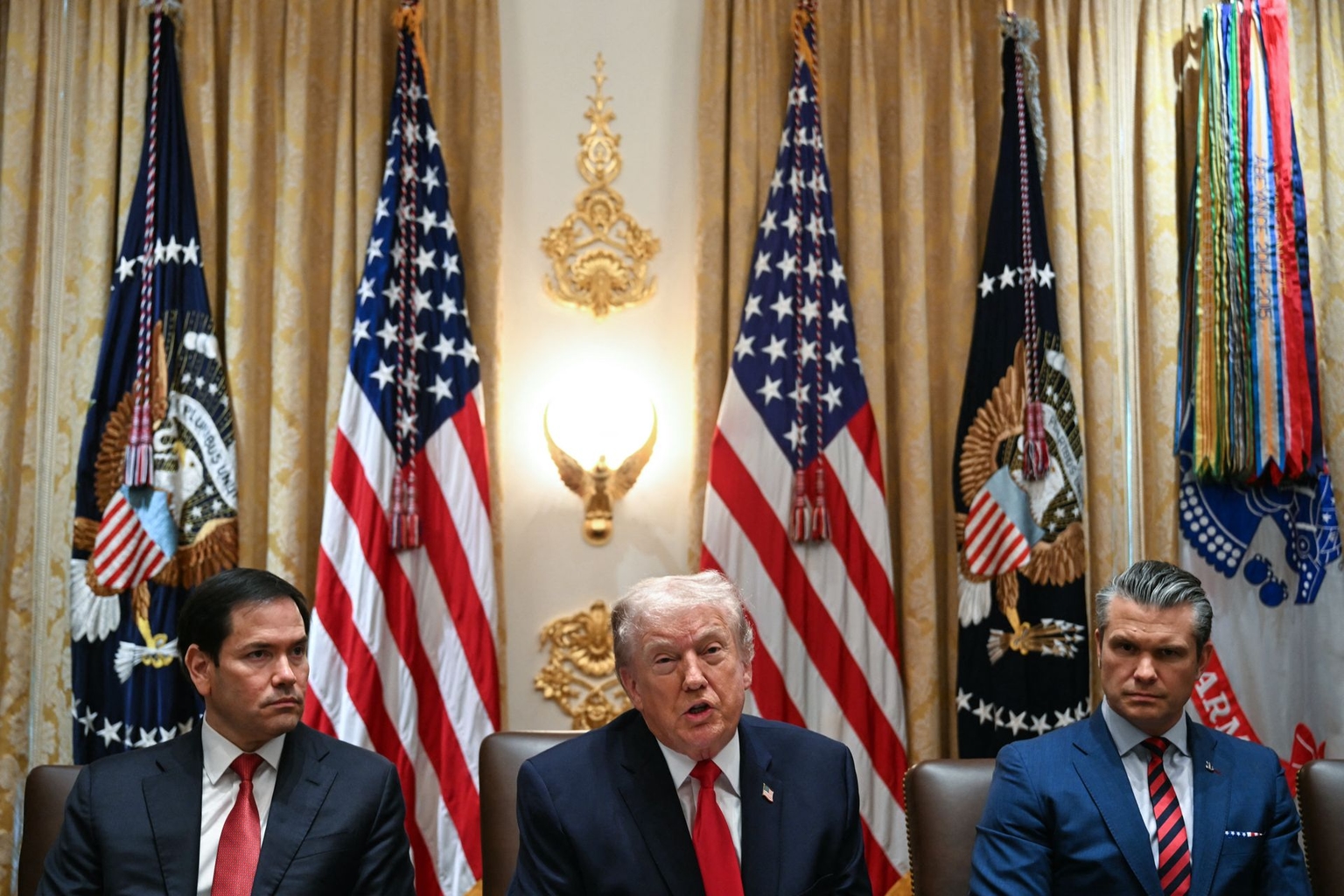 U.S. President Donald Trump (C) speaks alongside Secretary of State Marco Rubio (L) and Defense Secretary Pete Hegseth (R) in Washington, D.C., on Jan. 29, 2026. (Brendan Smialowski / AFP via Getty Images)
Overnight on Jan. 30 — the first night since Trump announced the alleged proposal — Russia launched 111 drones of various types and one ballistic missile, though there were almost no reports of strikes on energy infrastructure.
Putin has yet to show clear signs that he is ready to end his war of aggression.
Mathers and Nizhnikau agree that the possibility that Russia seeks relief for its own energy infrastructure is not off the table.
Ukraine has successfully targeted Russian oil and gas refineries throughout the war, seeking to cut off a vital revenue stream that helps finance Moscow’s war effort. If this is the case, there is at least some chance that the halt on strikes may develop into more robust peace-building efforts, experts say.
“A week without strikes is better than a week with strikes. Perhaps this pause will provide an opening for progress on the diplomatic front,” says Charles Kupchan, a senior fellow at the Council on Foreign Relations.
“But I doubt it. Putin has yet to show clear signs that he is ready to end his war of aggression.”
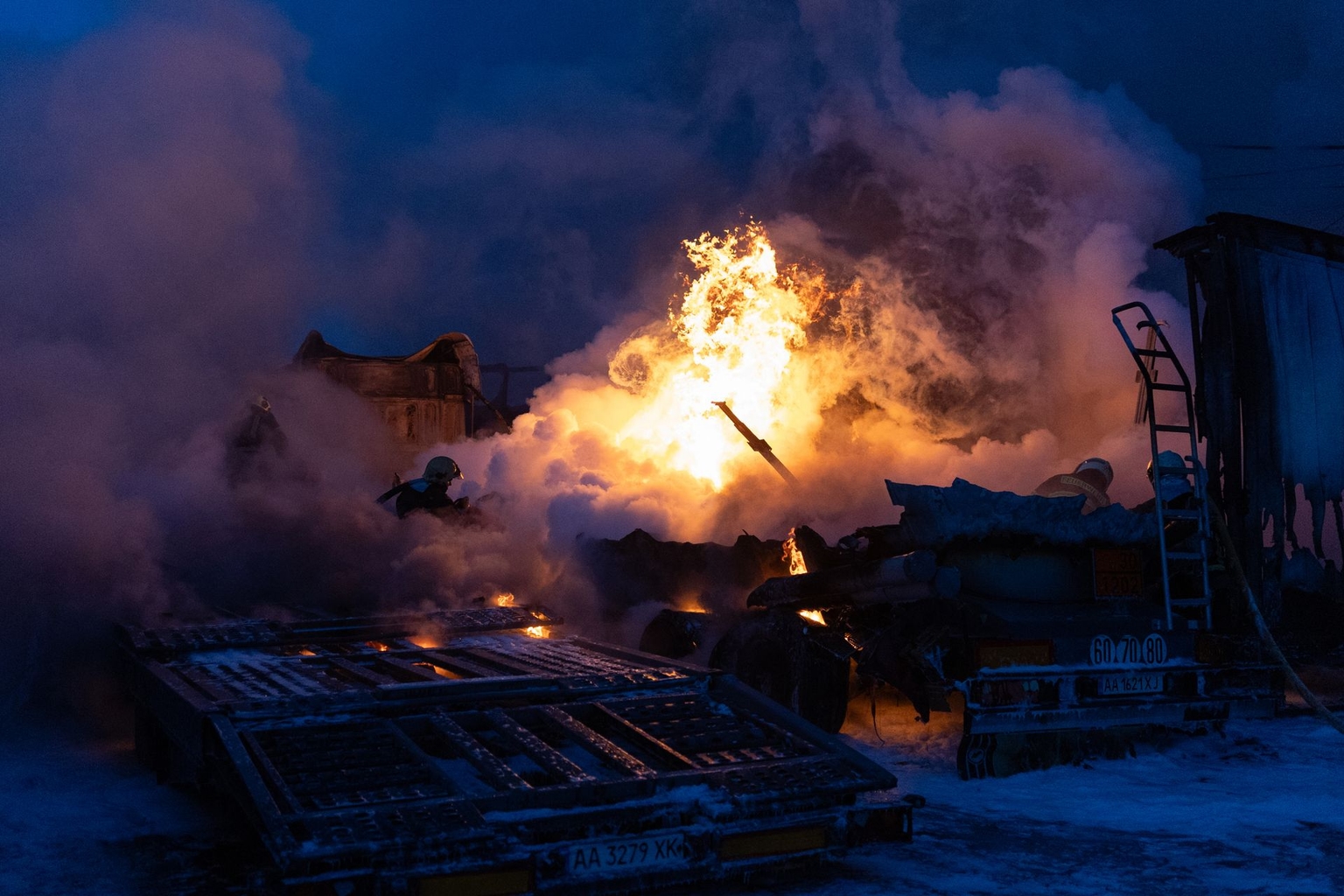 Ukrainian emergency personnel work to extinguish a fire at the site of an air attack in Kyiv, Ukraine, on Jan. 24, 2026, amid Russia’s invasion of Ukraine. (Oleksandr Magula / AFP via Getty Images)
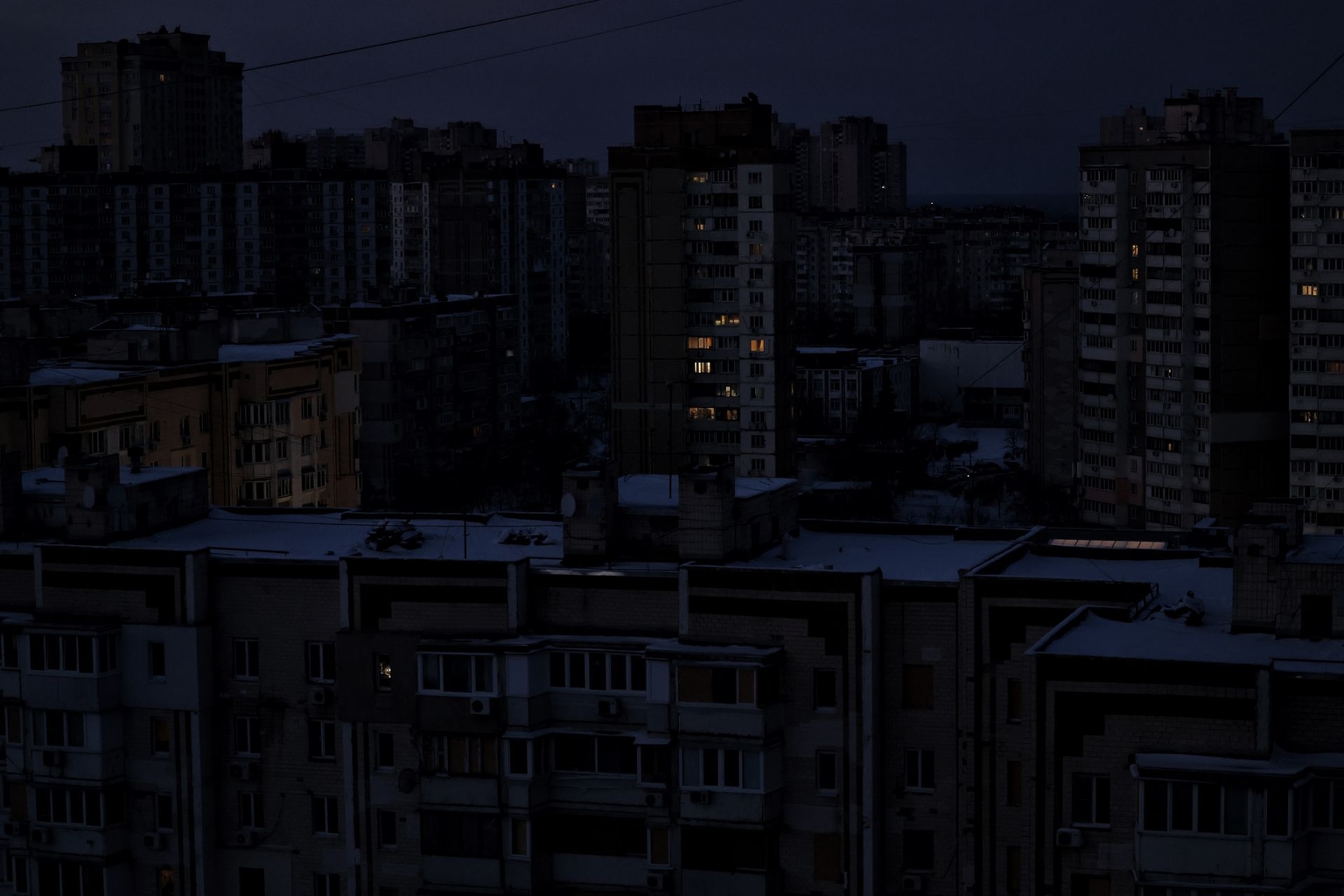 Kyiv faces a power outage after strikes damage energy infrastructure in the capital in Kyiv, Ukraine, on Jan. 10, 2026. (Yan Dobronosov / Global Images Ukraine via Getty Images)
As the next round of talks, originally scheduled for Feb. 1, may be delayed, Ukraine and Russia seem no closer to an agreement on the most crucial issue — the fate of Ukraine’s territories in the east and south.
The Kremlin has been confident that its army can eventually seize Donetsk and Luhansk oblasts by force, regardless of the outcome of negotiations.
“Putin is clearly still steering between the desire not to alienate President Trump, on the one hand, and the desire to keep putting pressure on Ukraine to force Kyiv to accept more maximalist terms, on the other hand,” says William Wohlforth, an international relations professor at Dartmouth College.
What comes next?
After the supposed truce ends on Feb. 1, temperatures in Kyiv are expected to drop to about –20°C(-4°F) at night. Zelensky warned earlier that Russia had been preparing yet another massive attack in the near future.
In light of this, Merezhko provides another, somber explanation of Russia’s so-called pause.
Russian forces “already used up all their stock of missiles and drones, and are now accumulating more,” the lawmaker said.
“The goal (of the ceasefire) is to accumulate more and strike again,” he said, adding: “This week means nothing, absolutely nothing.”
While Russia attacks Ukraine with drones effectively on a daily basis, there are usually pauses before mass combined strikes as Moscow musters its aircraft, missiles, and warships.
As long as the Russian strikes are met with only a lukewarm response from Trump, Putin is bound to feel little pressure not to continue the onslaught while delaying the talks.
Note from the author:
Hi, this is Martin, the author of this article.
The past weeks have been especially difficult in Ukraine, as Russian strikes, blackouts, and freezing temperatures have taken a heavy toll. Our reporting — and our ability to hold those responsible to account — is only possible thanks to reader support. If you value our journalism, please consider joining the Kyiv Independent’s community.
Thank you.