It’s the year of the TTT, which means teams are paying extra attention to the discipline … enjoy!

Cor Vos
2026: the year of the team time trial! Every few years, the Tour de France includes a team trial. When it does, as it will this year, teams, manufacturers, and riders pour stacks of research, training, optimisation, and attention into the discipline. Not to mention other race organisers, who may opt to include a TTT stage in a bid to tempt the big names onto their start lines in preparation for July.
With the general upsurge in attention to the details of optimisation over recent years and this year’s TTT, the first at the Tour since 2019, expect 2026 to bring time trial upgrades thick and fast.
Unfortunately, the TTT is less common these days than it once was. It doesn’t feature often in the Tour, and the discipline’s short-lived status at World Championships has disappeared. (Believe it or not, kids, it was once an Olympic event.) As such, we need to enjoy every minute of them this year, starting with the 19th Trofeo Ses Salines in Majorca … a TTT for the first time in its history. Next up: a TTT at Paris-Nice in March.
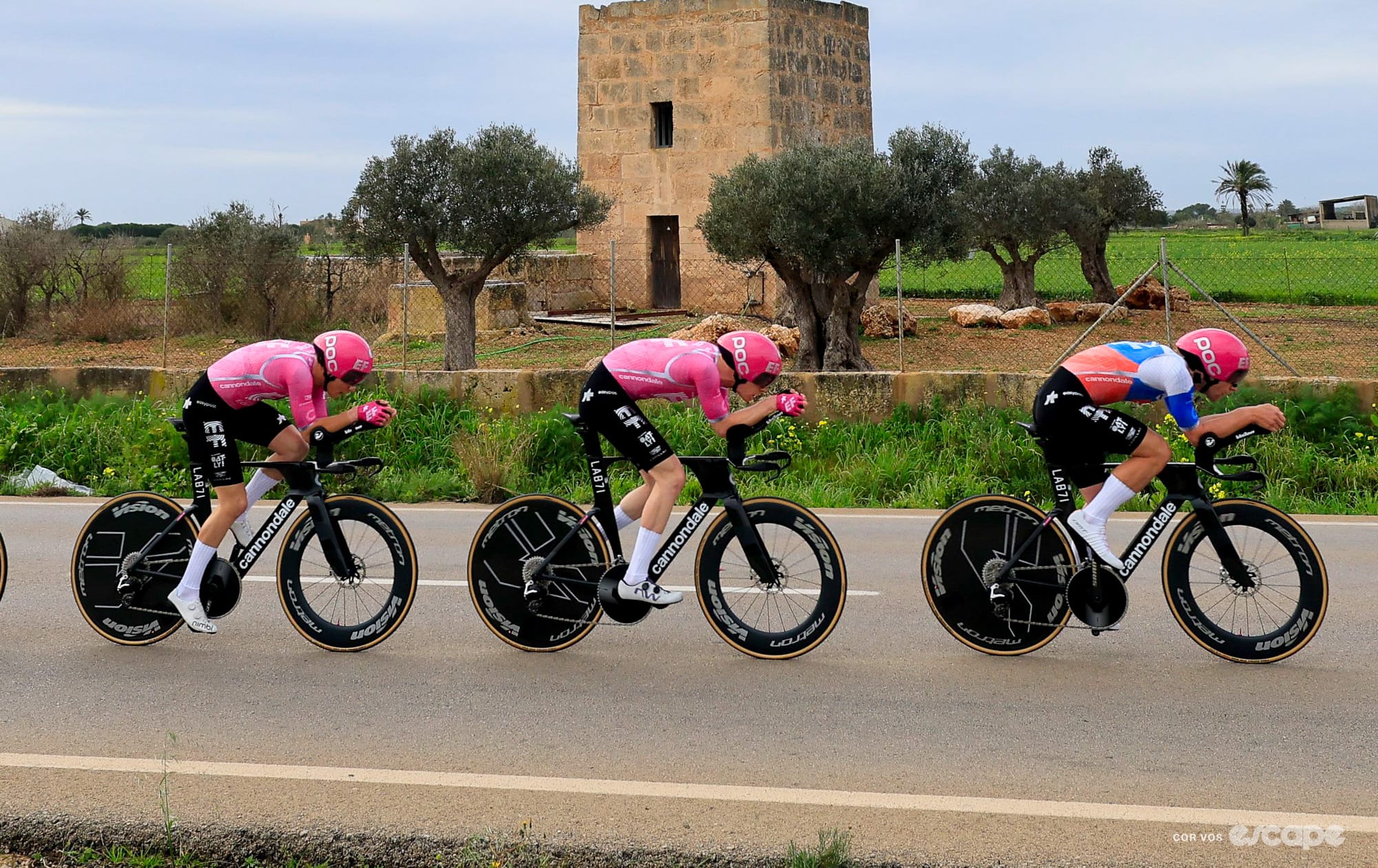 New bike day. EF Education-EasyPost riders were aboard a fleet of new Cannondale Slice TT bikes. I can’t pretend I don’t know what I’ve already been told under embargo, so you’ll have to take a closer look at this one for yourself.
 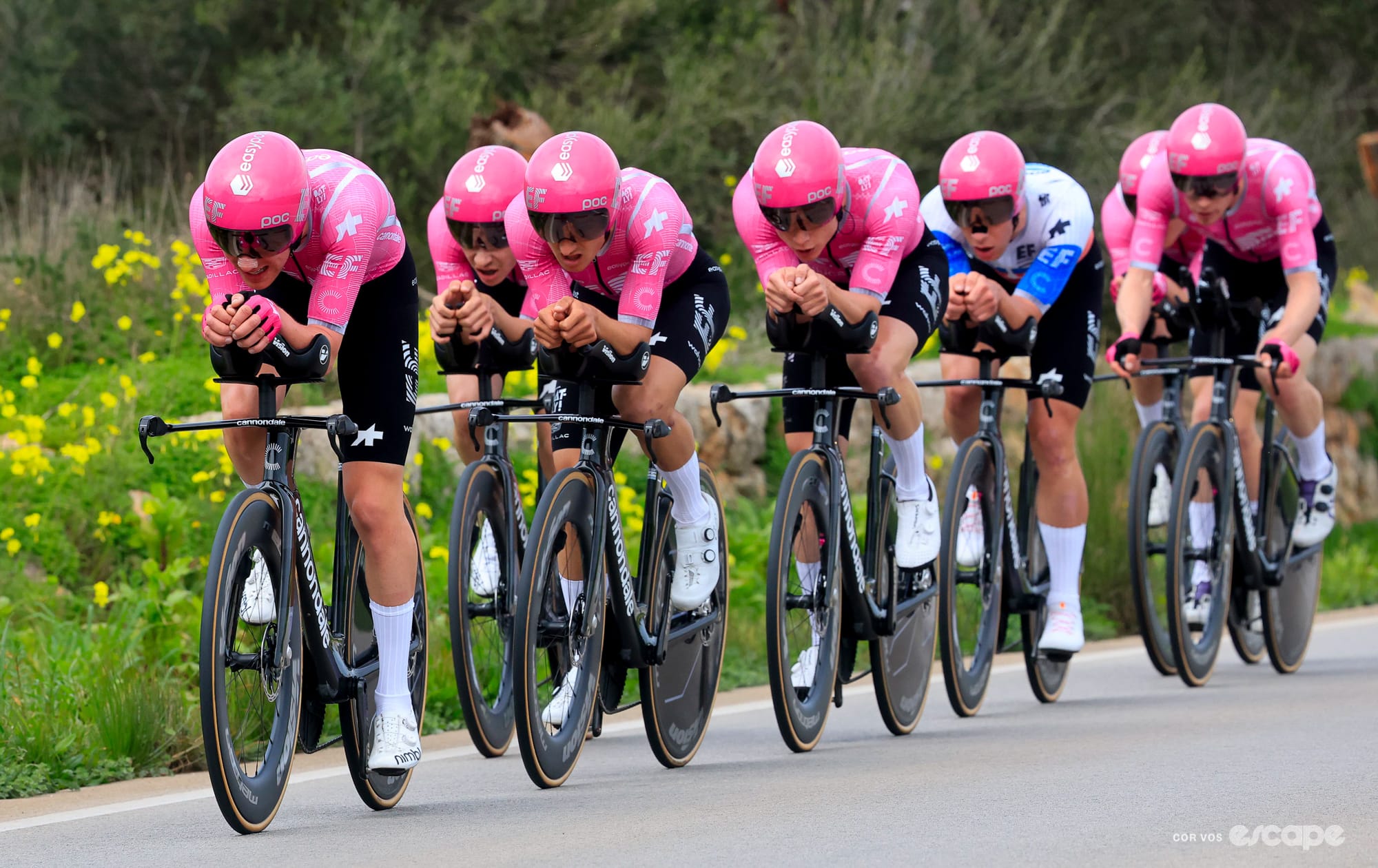 Interestingly, not one of the EF riders wore aero overshoes for the TT. While it’s not unusual for a rider or two to forgo overshoes, an entire team opting out is unusual. The team has switched to Assos apparel for 2026, and has these new Assos Chronosuits with dual-layer technology (more on this in a bit) for time trial days.
 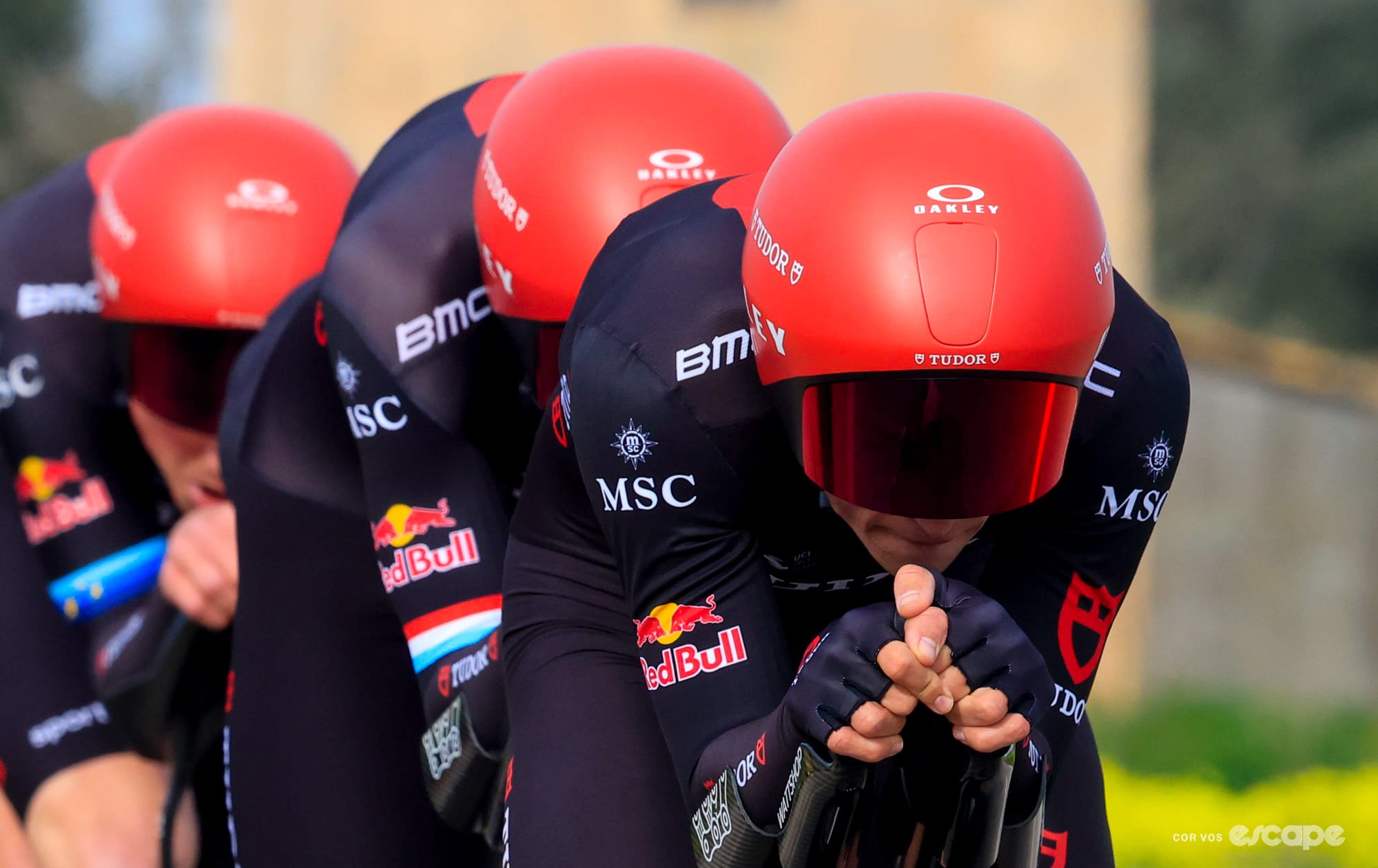 Tudor riders have been seen using two configurations of Oakley’s Velo TT helmet. This wider setup with a wrap-around visor has appeared in Majorca, while a narrower visor configuration was used at the Tour Down Under prologue. Note also the sleeves on the leading two riders’ arms. Yes, the leading riders’ are a little wrinklier than perhaps ideal, but it’s a visual reminder of how skinsuit thinking has changed in recent years. Gone are the days of squeezing into the tightest suit possible. While logic suggests tighter is smoother and smoother is faster, the technical fabrics used in modern suits are designed to help keep the flow attached. Stretching deforms the fabric, altering surface geometry, rib spacing, and yarn orientation. That can move the textile out of its intended operating window, changing how it interacts with the airflow and how pressure develops, ultimately reducing the expected gains. Current thinking has suits, especially on the sleeves, a little looser, allowing the ultra-smooth outer fabric to work in combination with a ribbed structure, either via a base layer or an integrated second layer. That structure deliberately trips the boundary layer on the arm, helping the flow stay attached for longer and reducing the size of the wake behind the arm, which in turn reduces overall drag.
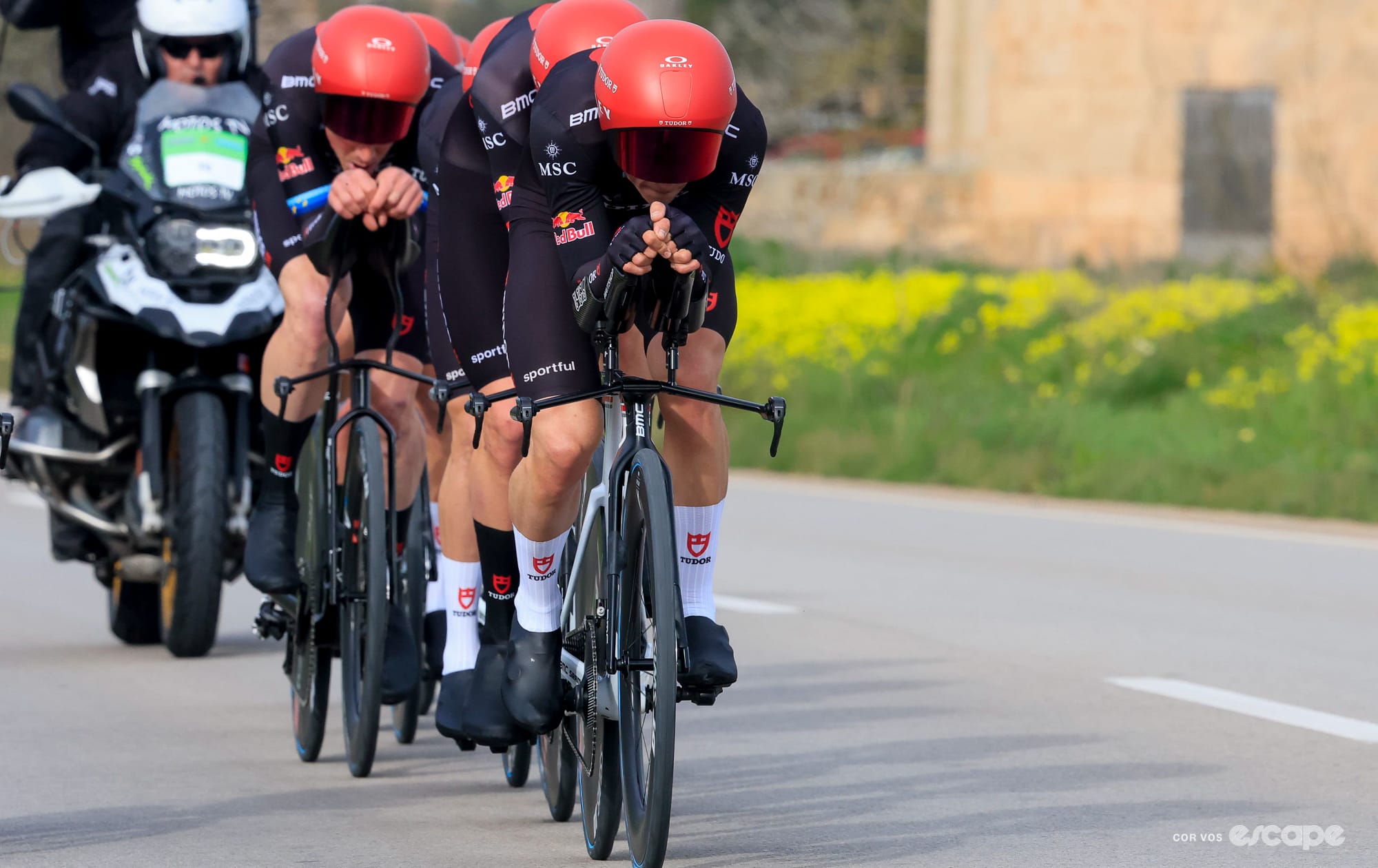 Sportful has come in as Tudor’s official team clothing supplier for 2026. The two pairs of fully black overshoes are certainly different, but it’s impossible to garner any detail from the images we have.
 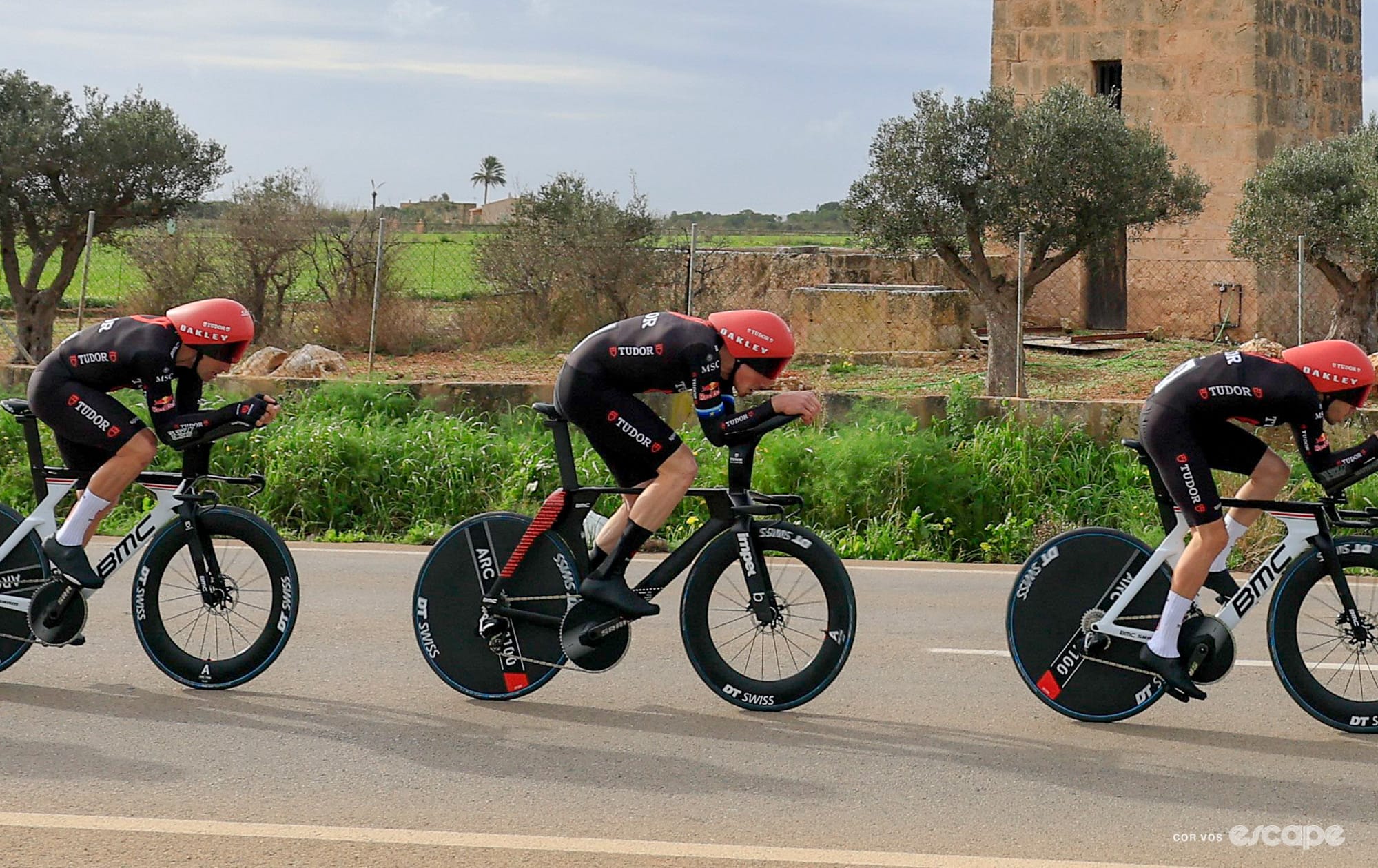 Stefan Kung raced on BMC’s new, still-unreleased Timemachine TT bike. I’m not going to go into any detail on that one here because we already have the first two parts of a three-part series detailing its development with exclusive access behind the scenes, live. Part one and part two.
 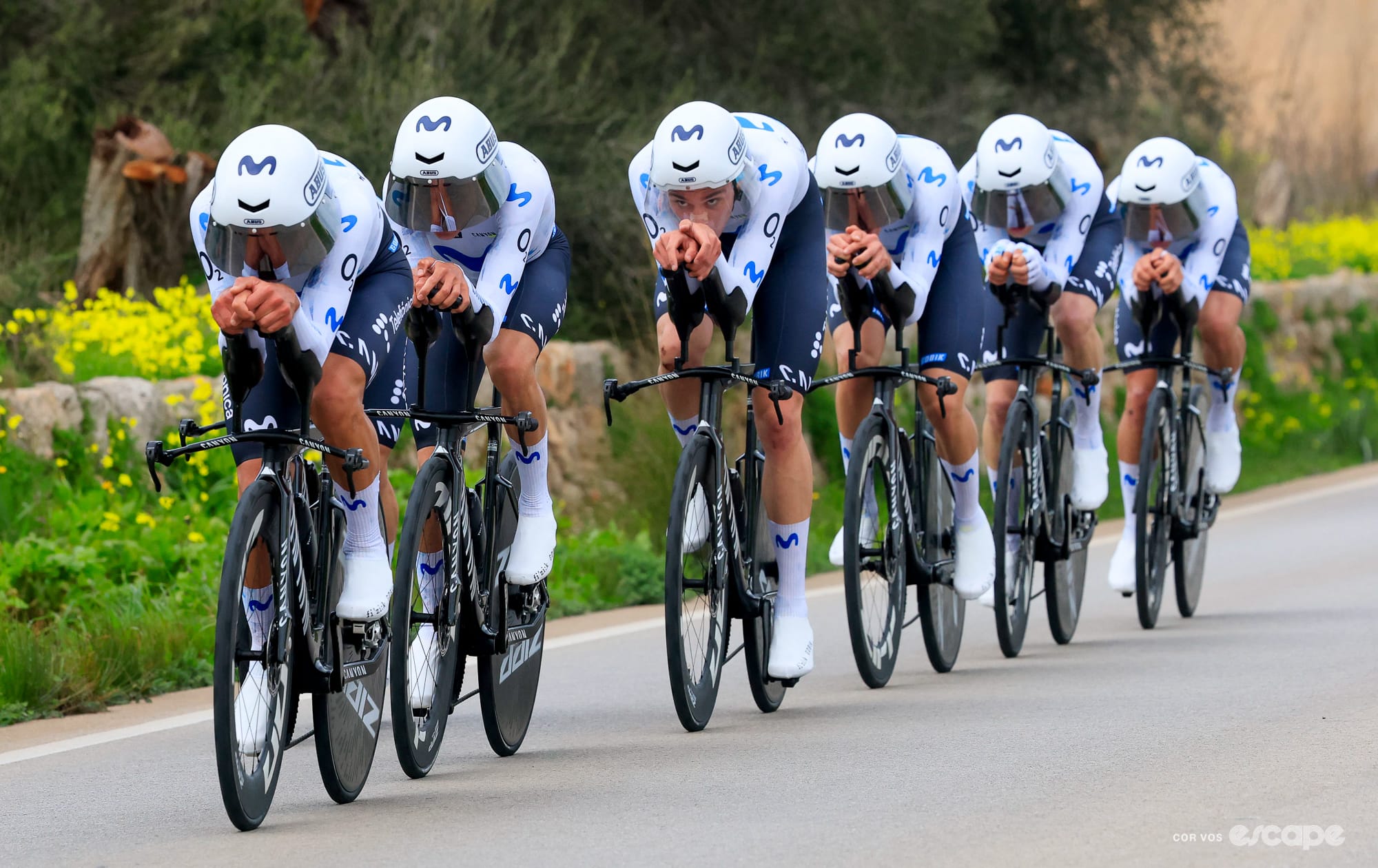 When two become one. Speaking of visors, the new Abus Timeshifter helmet incorporates an exceptionally wide visor. The design is yet another take on the broader trend toward managing airflow around the head and upper shoulders, an especially drag-sensitive region, by smoothing the transition and influencing how air is guided around the rider rather than directly onto the shoulders. The leading rider provides the clearest visual example of how this may work: the visor shields much of the shoulder area and extends close to the hands, effectively narrowing the opening between the upper arms. That region would otherwise allow airflow to enter and stagnate, potentially increasing pressure on the chest and contributing to drag.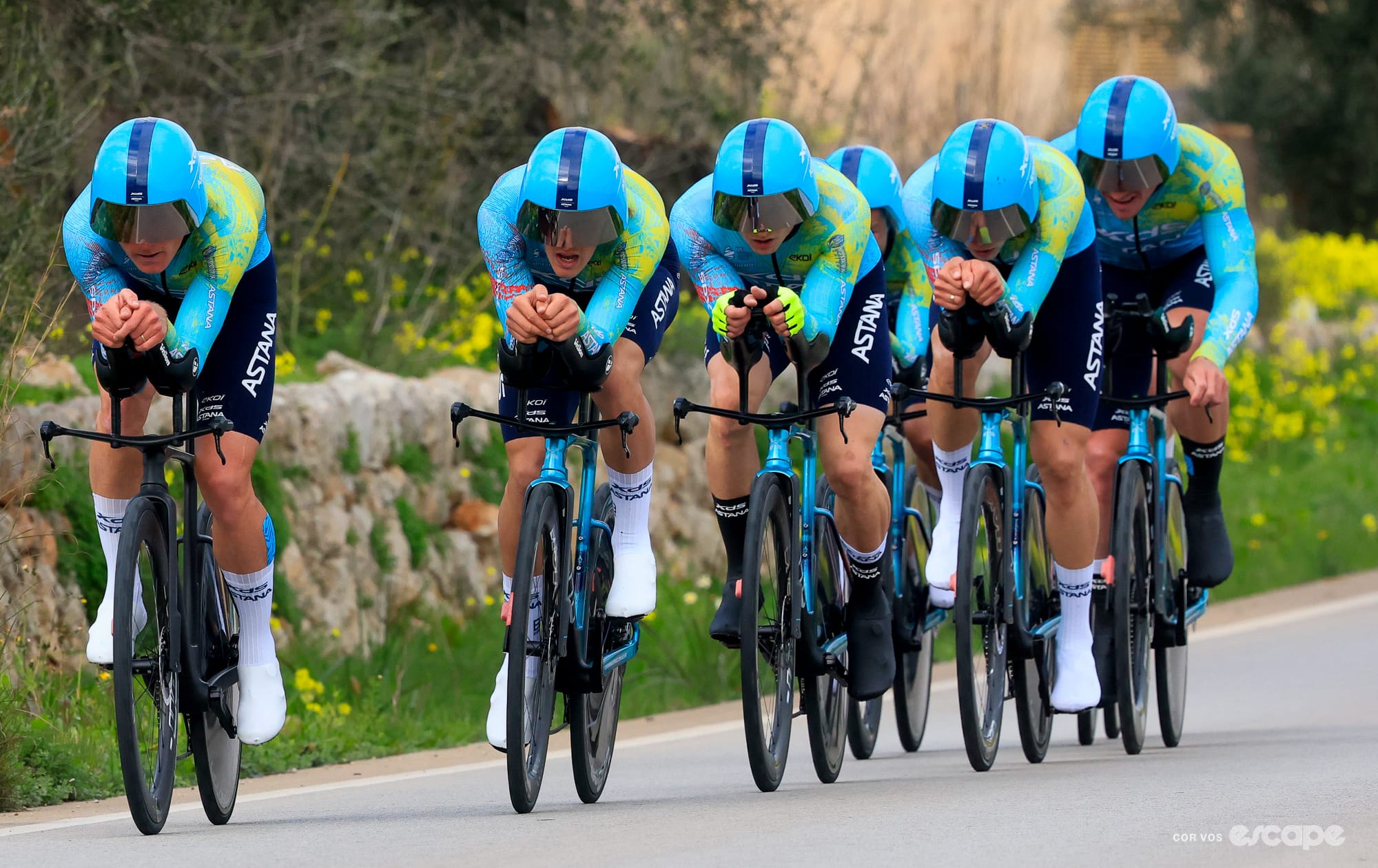
Astana’s helmets are “the same but different” both in width and utilisation. The team also ditched its different-coloured gloves and overshoes that were used in last year’s Paris-Nice in a bid to make it easier for riders to spot when to move back into the line when rotating under pressure.
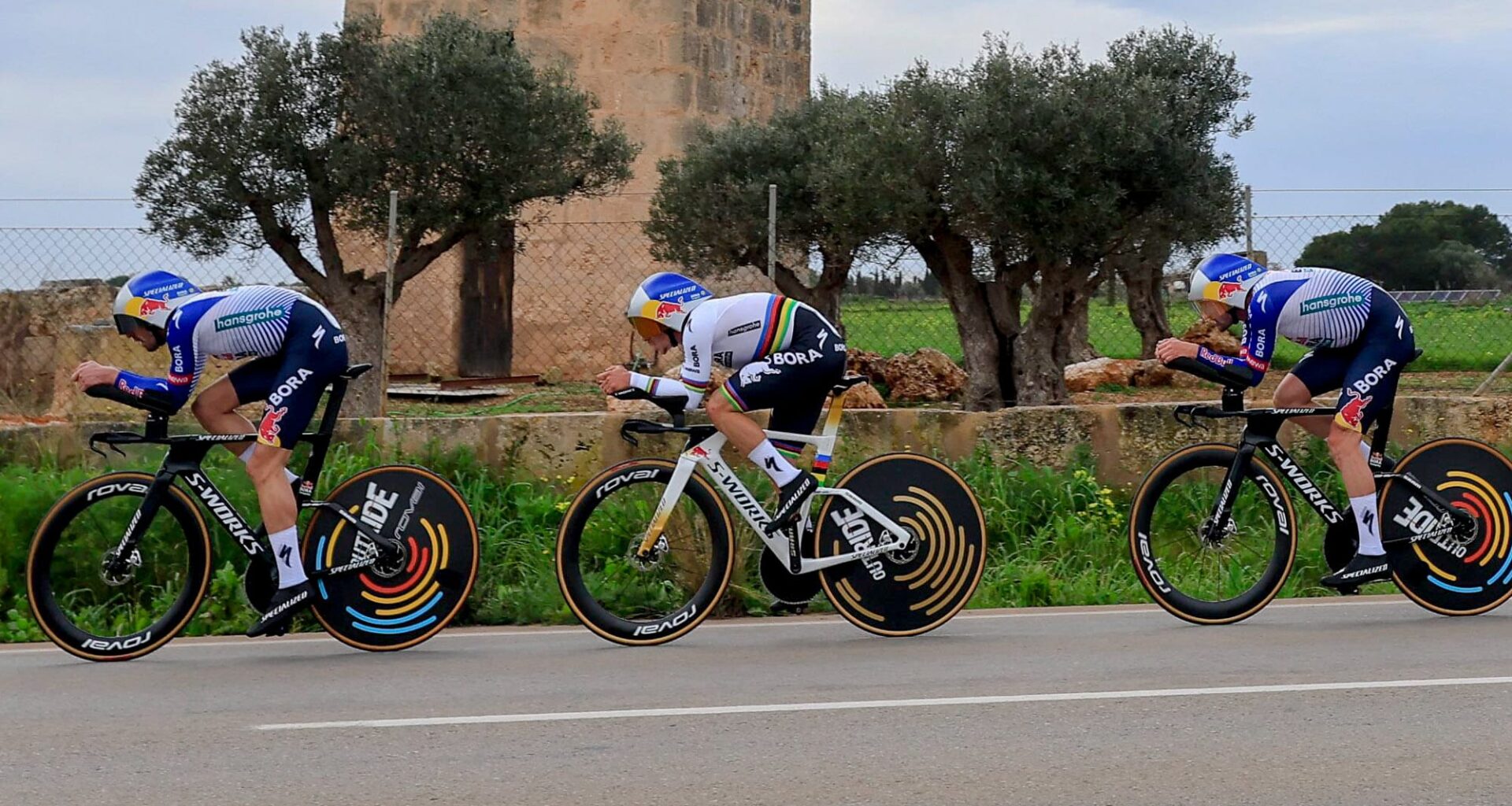
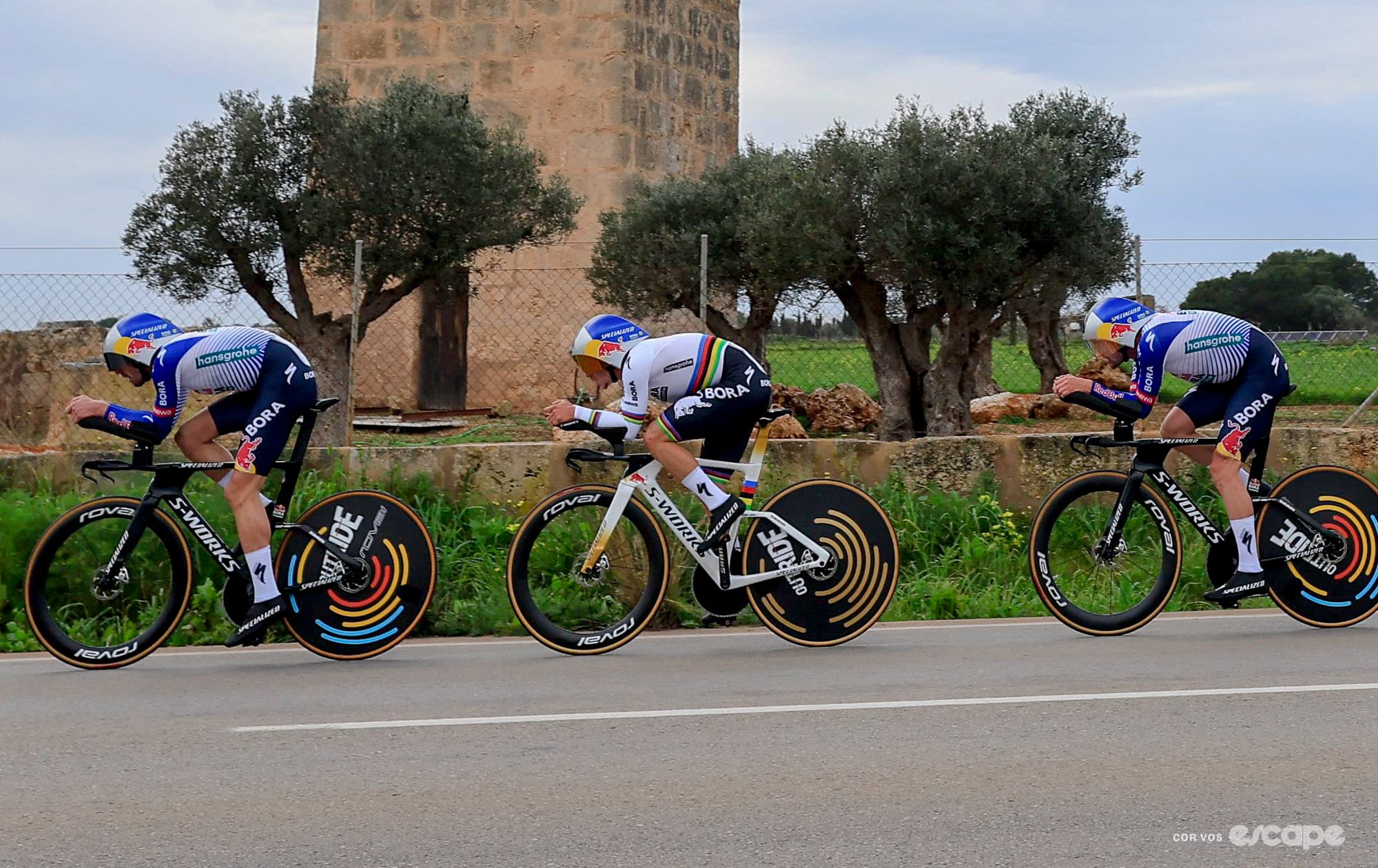
Specialized is supplying Red Bull-Bora-Hansgrohe’s kit and is making an extensive effort on the aero characteristics of the team’s kit. Comparing with the Pissei suit used by UAE Team Emirates-XRG in the next photo, we can see Specialized’s suits take on a very different construction. The main panel wraps around the torso, meeting at the zip on the front rather than having a seam down the sides. The shoulder panels run up and over the shoulders, wth separate set-in sleeves. While much of the hype of late is focused on integrated dual-layer sleeve technology with the rib structures integrated into a second layer on the sleeve, Specialized is sticking with the separate aero base layer approach. The optimal rib spacing is highly speed-dependent and even rider-dependent. Using a separate base layer offers the added benefit of allowing the team to adjust the base layer and rib spacing for different conditions and riders.
This post is for paying subscribers only
Subscribe now
Already have an account? Sign in
Did we do a good job with this story?
👍Yep
👎Nope