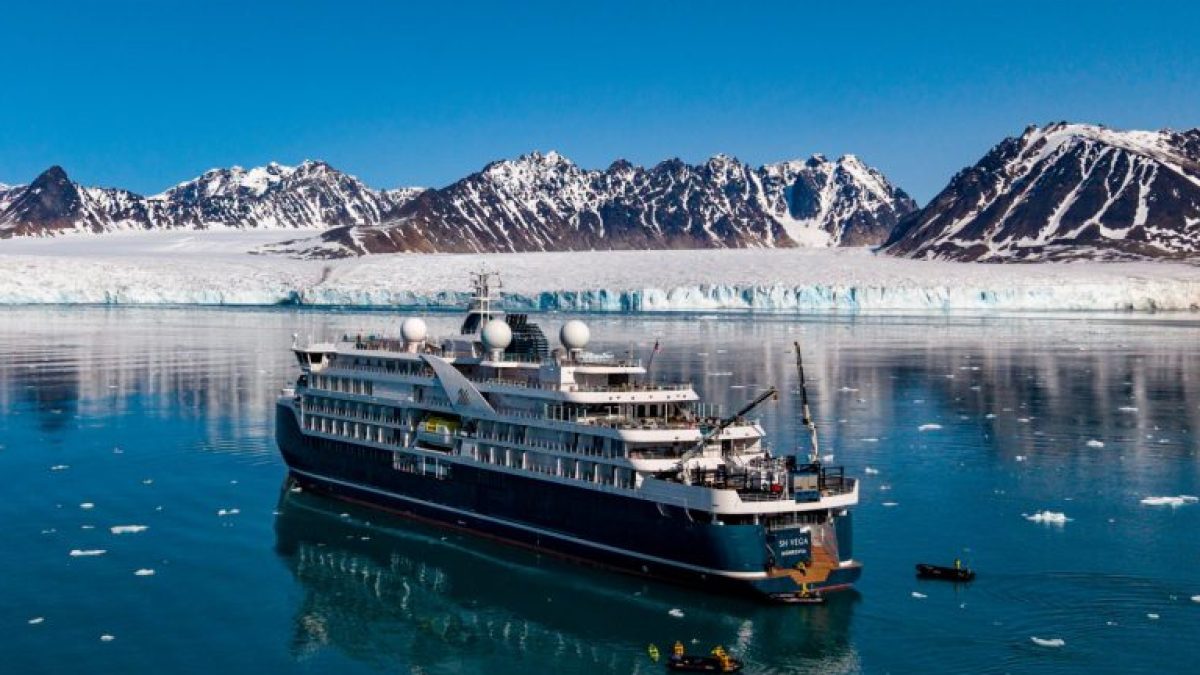
As the Arctic region is transformed by climate change, Russia’s presence in Svalbard starts to look like a stroke of strategic genius
A curt message warning that a polar bear was back, posted on the website of the governor of Svalbard, was a stark reminder that in Longyearbyen, one of the world’s northernmost settlement, humans are not the apex predator.
My guide, Andrey, went over the protocols for a bear encounter. We were driving snowmobiles, which are supposed to go faster than the animal, but only just. The largest land carnivore can cover 40kmh, roughly the sprinting speed of Usain Bolt.
I was on a trip to understand how the region is rapidly changing, and the impact this could have on the world.
Climate change is transforming the Arctic, opening up new maritime routes from Europe to Asia, such as the Northwest Passage which nearly halves existing routes. If sea ice is no longer a major factor, then controlling these newly accessible lines is the key to global maritime trade.
Russia envisions the Northeast Passage, across its northern coastline, becoming a waterway generating tolls for the country, rather like the Suez Canal. Under laws passed in 2013, only Russian-flagged icebreakers can currently use the route, and Russian captains must pilot vessels through the passage.
At the same time, Canada has asserted sovereignty over the Northwest Passage, something the United States has rejected.
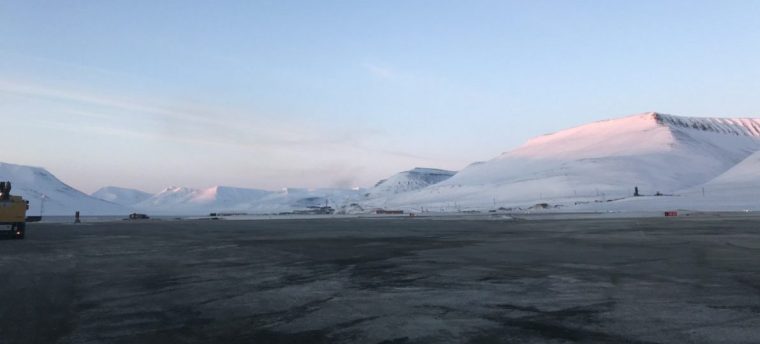 The icy region of Svalbard could become a key flashpoint between Russia and Nato due to its strategic location (Photo: Arthur Snell)
The complete absence of sea ice at the North Pole would offer another tantalising option: sailing straight through the middle of the Arctic Ocean, taking another 4,000km off the overall journey from Europe to Asia. This is not a distant prospect: climate scientists believe that an ice-free North Pole may happen in the 2030s.
All this means that the waters are a vital geopolitical area – a new Great Game, if you will.
Russia has, since 2001, lodged a series of increasingly bold claims to the waters of the Arctic Ocean, asserting that most of the Arctic belongs to it, including the North Pole itself. Other Arctic nations have rejected these claims, including Sweden, Norway, Denmark, Canada and the US.
The Arctic is where Russia increasingly butts up against its geopolitical adversaries. The Kola Peninsula, in the extreme north-west of Russia, is where the majority of its nuclear submarines are based. In the event of a war with Nato, these vessels will have the task of striking distant Western targets.
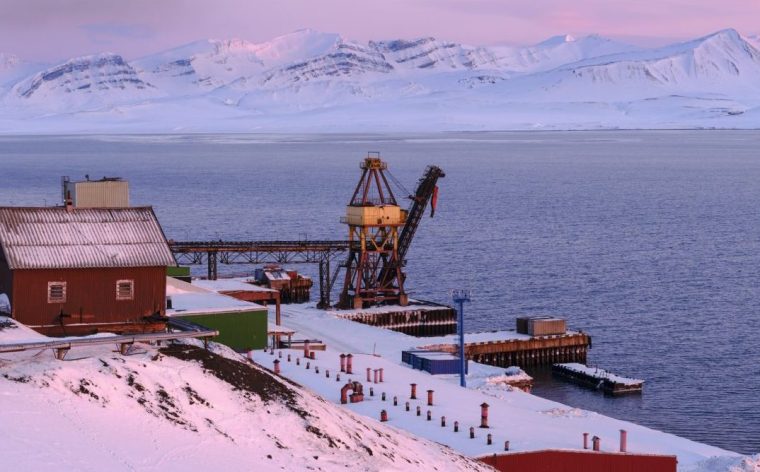 The harbour of the Russian coal mining town Barentsburg in Svalbard. Moscow may have a hidden agenda in continuing to operate the coal mine (Photo: Martin Zwick/Getty)
When Donald Trump announced that he “needed” Greenland for US security, my first thought was “he already has it”. Under existing treaties with Denmark, the US can place unlimited military forces on the island.
Trump’s suggestion that Greenland is “covered with Russian and Chinese ships” is simply untrue, but the story is very different in Svalbard, an archipelago about the size of Ireland sitting in a strategic location 500 miles north of the Arctic Circle.
It is located between Russia and its access to the Atlantic and is a geopolitical anomaly: internationally recognised as Norway’s sovereign territory, the 1925 Svalbard Treaty also ensures that the archipelago is a demilitarised zone while allowing signatories to exploit its natural resources.
During the 20th century, several countries tried mining coal there, with little commercial success. Just two mines continue to function: one, operated by Norway, supplies coal that powers Svalbard’s main town. The second mine is operated by a Russian state-owned enterprise.
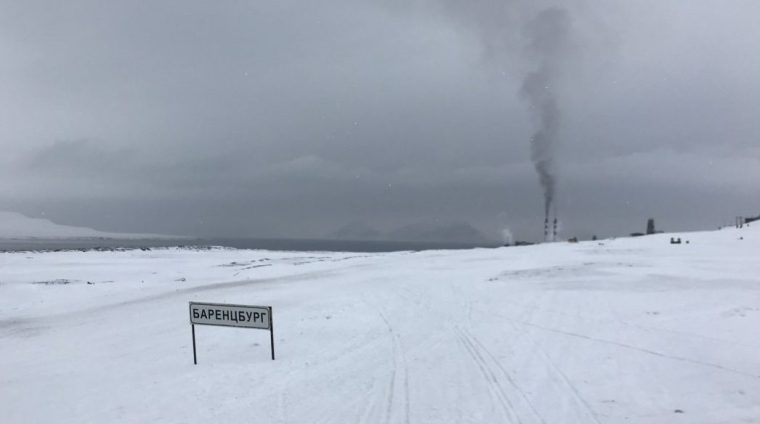 Outside the Russian mining settlement of Barentsburg (Photo: Arthur Snell)
That mine is located in Barentsburg, a settlement with the bleak air of a gulag camp in deepest Siberia – except that Siberia is over 600 miles to the south. It features utilitarian tenement blocks around a windswept central square equipped with a Lenin statue.
The only pleasant buildings I saw there were the former residence of the mine manager, now an art gallery, and the Russian consulate, its roof bristling with antennae.
Unsurprisingly, there is no economic rationale for Russia to continue its mining activities at Barentsburg. Russia has the world’s second-largest coal reserves, while production figures from the Barentsburg mine are tiny and it has never turned a profit from its output of low-quality coal.
So why does Russia persist in mining in one of the remotest, most inhospitable places on Earth? Is it to create and secure an underground base which could be a staging post for future Russian operations against Nato, or to give it a crucial foothold right in the middle of Nato’s Arctic territory? It is unclear.
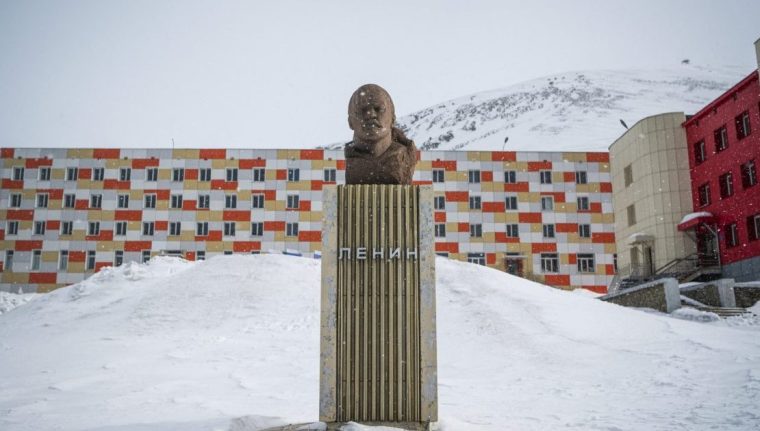 A monument to Lenin in Barentsburg (Photo: Jonathan Nackstrand/AFP)
But as the Arctic region is transformed by climate change, Russia’s presence there starts to look like a stroke of strategic genius.
Russian vessels appear already to have caused deliberate damage to subsea cables connecting Svalbard to Norway. In January 2022, a vital link supplying data to a satellite ground station used by space agencies from around the world was cut.
Norwegian police determined that the likely cause was human, with the only vessel in the vicinity a Russian fishing ship, the Melkart-5, which was found to have passed over the cable more than 100 times. A study of the boat’s route seems to have been very specifically targeted at the line of the undersea artery.
Your next read
If there were a crisis over Svalbard, Russia appears to have the expertise and means to disconnect the territory from Norway and the wider world, quickly.
Sadly, you won’t hear any of this from Trump. His obsession with Greenland, and his ignorance of the real threat to Nato in Svalbard, shows he is dancing to Russian President Vladimir Putin’s tune. He wants Greenland because it looks big on a map, but the real Arctic threat on Europe’s doorstep is being ignored.
Arthur Snell is a former British diplomat and the author of Elemental: The New Geography of Climate Change and How We Survive It, published by Wildfire on 12 March (£25)