It had all seemed simpler for Labour a year previous in Scotland. In the 1987 election when Thatcher won an overall majority of 102, Scotland had turned decisively against the Tories – reducing their number of seats from 21 to 10. Labour were returned with 50 out of 72 Scottish seats, a gain of nine, and were quickly dubbed “the fighting 50”. Yet the question of the Tory lack of a mandate (which became known as “the Doomsday Scenario”) was to come back to bite Labour, a pro-Unionist party which could not ultimately “out-nat” the Scottish Nationalists, with Alex Salmond calling the Labour contingent “the feeble 50”.
Labour’s challenge in the 1980s
THIS Labour conundrum provided the backdrop to Govan. Neil Kinnock’s keynote address to the Scottish Labour conference in March 1988 made not one mention of a Scottish Parliament. When questioned afterwards about this in a TV interview, he commented that he had also “not mentioned the weather in the Himalayas either”.
Such tensions were particularly acutely felt on the poll tax, the legitimacy of which was being openly questioned in Scotland. Its implementation a year ahead of England and Wales was radicalising opinion, with deliberate non-payment considered by a large swathe of society and adopted by the SNP.
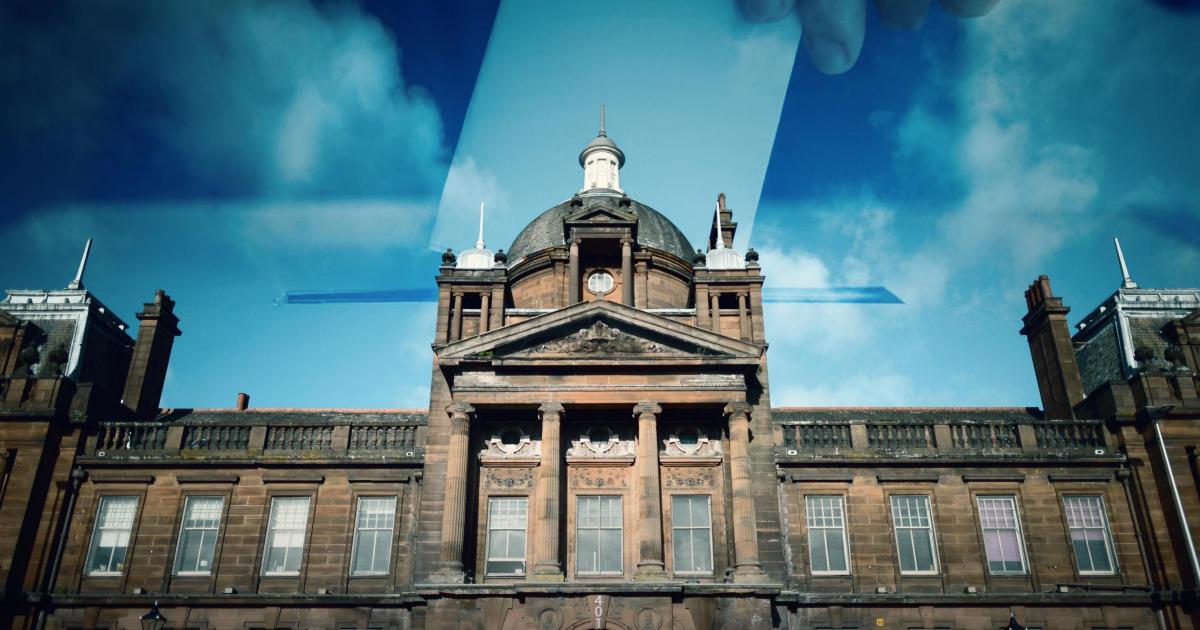
This debate was reflected inside the Labour Party and highlighted in a special conference held in Govan Town Hall in September 1988: a sign itself of the weakness of the leadership on the issue in the party. The party’s divisions were publicly displayed. Constituency parties were behind non-payment, with the leadership only able to hold the line because the bulk of the union block votes rowed in behind Donald Dewar and the Scottish Executive.
Pre-Govan, Labour also began to move hesitantly towards a more radical home rule stance. Dewar stated in a speech at Stirling University in October 1988 that “Scots will have to live a little dangerously for a while”. This meant support for the proposals in A Claim of Right for Scotland published in the summer for a cross-party Constitutional Convention to agree a plan for a Scottish Parliament. Dewar, a
seasoned Labour right-winger, made this move by overcoming resistance from traditional allies such as the MP Sam Galbraith and Scottish General Secretary Murray Elder.
The road to Govan
THIS is the backdrop to Govan Act Two which arose because Bruce Millan (who won the seat in 1987 with a 19,509 majority) became a European Commissioner, leaving Labour facing a challenging by-election caused by its own actions.
The SNP selected Jim Sillars, a former Scottish Labour MP, as the party’s candidate and ran a campaign filled with energy, buzz and excitement. Supported by activists and celebrities such as Craig and Charlie Reid of the Proclaimers, there was a sense of momentum and belief that the SNP could win.
A Labour press officer drafted in from London recalled the Proclaimers “driving round Govan on the back of a flatbed truck urging everyone to kick Labour where it hurt”. Sillars was standing as “SNP Anti-Poll Tax Candidate”; adding to the frenetic energy and intrigue, between Govan 1973 and this campaign, he had married Margo MacDonald, who won the seat for the SNP 15 years previously.
Sillars told me looking back on the campaign: “The decision taken by the NEC well before we knew there was going to be a by-election in Govan, to become part of the anti-poll tax campaign, proved to be of critical importance.
“That the SNP were involved in encouraging mass non-payment, and was known to be there on principle, meant that we could place our anti-Thatcher, anti-poll tax position, front and centre of the campaign and be believed.”
The Labour campaign was beset by problems from the start. The local party was small, numbering 170, many retired and politically inactive. Their candidate Bob Gillespie was a seasoned trade union negotiator, originally from Glasgow, who worked for the print union SOGAT in London and took on the likes of Robert Maxwell, the owner of the Labour-supporting Daily Mirror and Daily Record.
This was to have fateful consequences for press coverage of the campaign in the usually loyal Record. Gillespie later reflected on his stand against the press baron: “Maxwell always put gagging orders on people. He would never have been able to do that if you only spoke as an MP in the Palace of Westminster. So he went after me”.
The result was that Labour faced a universally hostile press environment where it could not even bank on its usual allies at the Record.
Neither the Scottish nor UK party had wanted Gillespie. The latter did not trust the Scottish party and took control of the then daily press conferences in an attempt to control their candidate. As a memento from his navy days, he had “Hong Kong” tattooed on his knuckles: something which he was made to feel over-conscious of in press conferences and even asked whether he and “his background” were “a liability”, replying that he found that “an incredible question”, as well as insulting and patronising.
Gillespie was inspired in his youth by the politics of Communist Willie Gallacher, later recounting his influence: “He said: ‘Whenever I am confronted by a question of policy, I always ask myself the question, how will this affect the working class?’”
Such sentiment might have gone down well in Govan, but Gillespie was not allowed to express such views by his handlers.
Reflecting on this, Sillars comments: “Woven into that scenario was the Labour Party contribution. In placing themselves against non-payment of the poll tax, they were not placing themselves on the side of the people. They didn’t like the poll tax, but would not do the one thing that would defeat it. I am sure Bob Gillespie took the same view as me, but was not allowed any leeway, and had to stick to the party line.”
Two TV debates were pivotal moments in the contest. The second on STV was held in the last week as opinion polls showed the gap between Labour and SNP closing significantly. The STV format allowed candidates to cross-examine each other, and Sillars questioned Gillespie on European funding on the technical subject of “additionality”.
Jimmy Allison, Scottish Labour organiser, later wrote: “It was obvious that he did not know what the word meant and could not handle the situation”, concluding: “It was an unmitigated disaster and you see that Sillars smelled victory.”
A political earthquake comes to Glasgow’s Southside
IN the by-election on November 10, Sillars won 48.8% to Labour’s 36.9%, a majority of 3,554 on a swing of 33.1%. The BBC/NOP Exit Poll showed the most important issues in the contest as: 32% representing Scotland’s interests; 21% poll tax; 19% unemployment; 16% NHS; 12% benefit changes, and 10% candidates; 32% supported non-payment of the poll tax; meanwhile 58% supported home rule compared to 16% independence. Finally, the performance of Scottish Labour MPs was seen as good by 37% and bad by 55%.
Tony Benn recounted in his diary the following day on Govan: “There had been no socialist politics in our campaign – just the idea that if you keep your head you’ll win. A 19,000 majority, the seventeenth safest seat in Britain, was transformed into a 3000 SNP majority.”
Benn went on to make a prescient point: “It revealed that if you don’t offer people analysis they go for separatism, and it was also a reflection of our failure to discuss constitutional questions, which are at the core of the devolution argument.”
Doug Chalmers, the Communist candidate, finished sixth with 281 votes (0.9%) and reflects now that Sillars won because: “The SNP were talking with the grain of the times. There was dissatisfaction with the neglect and de-industrialisation of Scotland and with Labour’s complacency and presumption that they owned the voters of Govan.”
Unlike most by-elections, the story of Govan does not end with the result, but the aftershocks it induced. In the immediate aftermath, Sillars acted magnanimously and called for greater co-operation between the opposition parties against the Tories.
Labour went and licked their wounds; the pro-home rule Scottish Labour Action (SLA) writing in its newsletter summed it up: “Gubbed in Govan: Lessons for Labour” and declared: “People felt Labour don’t fight hard enough for Scotland” and that “the election of another Labour MP would do little for Scotland’s interests.”
What really changed after Govan?
YET, from this electoral earthquake things did not pan out completely as expected. Scottish Labour, within days of Govan, formalised their support of A Claim of Right and a cross-party Convention, moves which had already been afoot, but which now had greater urgency.
Meanwhile, the SNP, after their initial conciliatory tone, got carried away with their soaring poll ratings as they hit 32% and were within 4% of Labour. They then decided to boycott what they suddenly called “Labour’s rigged Convention”, seeing the entire exercise as a “devolution trojan horse” into which Labour were trying to entrap them and prevent independence from being raised.
This hubris cost the SNP at the time, and allowed Labour to regroup, join the Convention and come up with a workable plan for a Parliament in association with the LibDems, Greens and others. This, along with a more professional Labour electoral approach, saw Labour’s Mike Watson see off Alex Neil of the SNP in the nearby Glasgow Central by-election in June 1989 with a 6462 majority on a 15.1% Labour to SNP swing. On the same day the Euro elections across Scotland saw Labour win seven seats to the SNP’s one and 41.9% to 25.6%.
Jim Sillars was a high-profile campaigning MP for Govan but Labour targeted the seat at the April 1992 general election and put significant resources behind their candidate, the combative Ian Davidson, who was returned with a 4125 majority.
Did Govan second time around change anything, or was it just another example of by-election protest blues? Bernard Ponsonby, candidate for the “Social and Liberal Democrats” (renamed Liberal Democrats) went on to become STV’s political editor, and had the ignominy of finishing fourth in the contest with 1246 votes (4.1%).
Years later, he still remembers his brush with the democratic process fondly but downplays its significance stating: “Govan ‘88 produced a kind of political fever as the activist classes debated what it all meant”, concluding: “Now I was there every single step of the way and I regarded this as a classic protest.”
The publication Radical Scotland in an editorial at the time took a contrary line, arguing that politics would never quite be the same: “This was no ‘blip’, no ‘flash flood’. The instant judgement of the London press – that this was just a protest vote which will conveniently disappear again – shows only their total lack of understanding …”
A longer view of how Scotland changed
JIM Sillars now takes a long view of the importance of Govan, stating: “I believe the Govan result was a seminal moment in Scottish politics. It wiped out the stain of the 1979 vote of confidence disaster that befell the SNP and restored it to being a party that people respected and were prepared to listen to. The ‘Tartan Tory’ gibe that had served Labour well and had handicapped the SNP was no longer accepted by the people.”
The effect on the Labour Party was profound. They realised that they faced a real threat that enabled the devolutionist wing to remove control of the constitutional issue from its unionist wing. The Govan result can be viewed as having created the first genuine Labour step towards a Scottish Parliament.
Doug Chalmers states that: “It created a symbol that the cosy two-party system that had long existed in Scotland was broken, and that it was possible for alternative voices to break though.
“This gave heart to those such as SNP voters and dissatisfied Labour voters that their votes weren’t necessarily wasted and that the status quo could be challenged – as it was, in the coming years.”
The myths of Govan continued long after the by-election battlebuses packed up and after Labour’s revenge on Sillars. In 1997, Mohammed Sarwar stood for Labour after a bitter internal selection battle against Mike Watson and defeated SNP rising star Nicola Sturgeon.
This contest produced significant media interest and increased Labour nerves after their publicised party troubles, but Labour held the seat with a reduced 2914 majority.
This was in New Labour’s landslide year, and Scottish Labour HQ had the foresight to treat the seat as a marginal, allocated resources to it and assured the local party that “the SNP had never in their history won a Glasgow seat at a Westminster election” (this not happening at a Westminster contest until the 2015 SNP landslide).
Two years later in the first Scottish Parliament elections Sturgeon lost to Labour’s Gordon Jackson by 1756 votes. On polling day, I took a group of international visitors to meet all the main candidates who were generous with their time. It was clear from his demeanour that Labour’s Jackson thought he was going to lose, and when asked by one of the visitors “why have Labour legislated for a devolved Parliament?” he answered with a weary resignation: “You know, I have often asked myself that very same question.”
Jackson proved to be a part-time MSP who refused to give up his lucrative highly paid work as an advocate, went on holiday in the middle of the 2003 campaign and still narrowly won, and eventually, on the third occasion, lost to Sturgeon in 2007 by 744 votes. Govan was subsequently abolished for the 2005 Westminster and 2011 Scottish Parliament, but it lives on in political memory and folklore and may someday return to haunt others.
One aspect of the 1988 Govan contest seldom reflected upon was its all-male nature with eight male candidates. No-one in mainstream media mentioned it at the time, in the TV debates, or in contemporary analysis of the result.
Retrospectively, neither Sillars nor the late Bob Gillespie ever touched upon it – proof of the continued hold of a certain male view of politics, particularly on the left.
“The overall impression was of a pretty homogeneous group of men, at ease in their unexamined masculinist privilege,” reflects Lesley Orr, academic and feminist, “Operating with taken-for-granted assumptions about politics, labour, work and power, in a fast-changing industrial economy.”
The silences were telling in Govan in 1988 and still exist in too many places today.
GOVAN represents many things: frustration and anger among voters and even the love story between Margo MacDonald and Jim Sillars. It was a kick against the political establishment which produced results – a Labour Party that worked cross-party for a Parliament, and an SNP that eventually recognised they needed to think long-term, and which ultimately contributed to the establishment of the Scottish Parliament in 1999.
Scotland does not now face the injustice and ignominy of a grotesque policy such as Thatcher’s poll tax being imposed upon us. Besides, the reach and temper of Westminster priorities are moderated by the collective democratic voice and will of the Scottish Parliament.
Yet allowing for these important factors many of the dynamics that shaped and informed the victory of Jim Sillars and the SNP in Glasgow Govan remain. A huge part of Scotland still feels effectively disenfranchised and voiceless; a quarter century of centrist, cautious devolution has not to any significant level redistributed power from those who have it to those who don’t; and the Holyrood political class on all the evidence before us seem to have no desire to upend this state of affairs or disrupt their rather cosy lives.
The contest of Govan 1988 was framed around the constitutional question, the issue of class and political legitimacy in Scotland. Underlying all of these was the question of power: who exercises it and in whose interests? This challenge still sits at the core of Scottish politics and despite the unwillingness of mainstream politicians of all persuasions to dare to address it eventually they must.
Too much of what passes for politics in Scotland has forgotten the hopes and anger of the voters of Govan in 1988. The closed shop politics of Holyrood had better wake up to this fact sooner rather than later; otherwise, new forces of disruption and rebellion will find form and voice and challenge the existing status quo and vested interests running Scotland. Whatever way change comes, the present state of affairs cannot and will not continue indefinitely. The lessons of Govan 1988 are both a warning to present day politicians and a symbol of hope.
This is an edited extract of the chapter on Govan 1988 in the recently published book: British By-Elections 1769 to 2025: The 88 By-Election Campaigns that Shaped Our Politics edited by Iain Dale, Biteback Publishing £30.