The health of millions of people is being compromised by low-energy street lights being installed across the UK as part of Labour’s crusade towards Net Zero.
Doctors and scientists have linked the LED lighting to cancer, heart disease and mental health problems. Yet councils under pressure from Energy Secretary Ed Miliband to meet tough climate change targets are rolling out ‘deadly’ new replacements, The Mail on Sunday can reveal.
One study concluded that men with heavy night-time exposure to outdoor ‘blue-rich’ LED lights, which councils have installed in their millions, have twice the risk of developing prostate cancer. Campaigners say that the bright lights are also linked to depression, diabetes and insomnia.
Pressure is now growing on Mr Miliband to demand councils use ‘warmer’ LEDs, which are seen as a safer alternative.
Fred de Fossard, director of strategy at the think-tank Prosperity Institute, said: ‘This is another incidence of the negative aspects of the government’s aggressive drive towards Net Zero.’ He added that ‘unpopular LED lights are a sad consequence of Britain’s green energy drive that the public see every day’.
Shadow Energy Security Minister Greg Smith, added: ‘Further research should be commissioned now, not after the fact. This is about getting the balance right between efficiency, safety, and quality of life, without pressing ahead and hoping concerns can be dealt with later.’
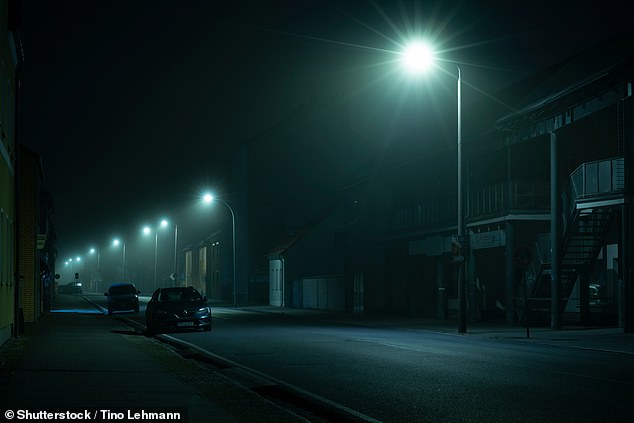
One study concluded that men with heavy exposure to outdoor ‘blue-rich’ LED lights, which councils have installed in their millions, have twice the risk of developing prostate cancer
Health warnings about blue LED lights were first issued ten years ago. The American Medical Association says they can inhibit the body’s ability to produce melatonin – a sleep regulator and powerful antidote to prostate and breast cancers that are dependent on hormones.
Meanwhile, the UK Health Security Agency says that ‘repeated exposure to artificial light at night may be detrimental to health’.
Nevertheless, the number of LED lights in Britain is rising fast, as they cost less to run than traditional sodium lighting, and create less carbon emissions, as they consume less energy.
An MoS investigation has found:
- The total number of LED street lights in the UK is approaching 5 million, up from 3.9 million five years ago, with over half thought to be emitting blue-rich light.
- Councils running the ten largest cities in England and Wales, and the five largest London boroughs, have together installed over 360,000 blue-rich street lights.
- The British Standards Institution has begun a review of street lighting guidance including ‘blue’ lights as experts from the Department of Health and Social Care compile a report on the health impact.
- One council is switching to ‘warmer’ LEDs after acknowledging that ‘with hindsight’ it was ‘too dismissive’ of health concerns.
Whether a light appears warm and orange or cold and blue is determined by what’s called its Co-related Colour Temperature (CCT), which is measured in Kelvin. Those over 4000K are considered ‘blue-rich’.
Eleanor Levin, chairman of light pollution campaign group Lightaware, said: ‘Councils are still installing 4000K LED street lights, known to make people seriously ill, because they want to maximise savings. The evidence is already compelling – links to cancer, heart disease, depression, diabetes, an epidemic of insomnia – and yet safer alternatives are available.
‘Blue-rich LED street lights are the wrong light for the night-time. They are at exactly the wavelength which affects human sleep cycles. Our research shows that 97 per cent of councils have now installed LED street lighting. Four out of five did not consider the health impact of this change.
‘Councils think it will save energy and money without any regard for the effect on human health. It’s all happening much too fast.’
A 2018 study by the University of Exeter and Barcelona’s Institute for Global Health found residents in areas of Madrid and Barcelona with heavy exposure to outdoor blue-rich light at night had double the risk of prostate cancer and a 1.5 times higher risk of breast cancer.

Councils under pressure from Energy Secretary Ed Miliband to meet tough climate change targets are rolling out ‘deadly’ new replacements, The Mail on Sunday can reveal
Dr Alejandro Sanchez de Miguel of Exeter University said: ‘Scientists have long suspected this may be the case – now our findings indicate a strong link.’
The MoS has identified at least nine major research projects in the last decade which have highlighted similar links to prostate cancer. A study last year by Australia’s Flinders University, involving 90,000 UK participants wearing wristband light sensors, found night exposure to street lamps and other light sources raised the risk of heart disease by up to 56 per cent.
Using Freedom of Information legislation, The Mail On Sunday asked councils controlling the ten largest cities in England and Wales and the five largest London boroughs the type of LED street lamp they had installed.
Councils think it will save energy and money without any regard for the effect on human health
Just two – Bradford and Cardiff – said they operated only the warmer 3000K lights. The rest reported a combined total of 365,000 blue-rich LEDs of 4000K or above.
But in September, Dorset Council pledged that all new LED street lights will have a colour temperature ‘typically not exceeding 2700K’. Previously it had dismissed health concerns but in December 2024 retracted a public statement claiming there was no risk from its 4000K lights.
A spokesman wrote: ‘The statement… no longer reflects our position or understanding of some of the issues around LED lighting and, with hindsight, was too dismissive of these concerns.’
Dorset’s change of heart followed lobbying by one of its residents, physicist Dr Gavin Rider, who is campaigning for a total UK ban on blue-rich streetlights. He said: ‘I took action because my local authority claimed reports of health risks from blue-rich LED street lighting were just “misinformation campaigns and conspiracy theories”. The scientific evidence speaks for itself and it begs the question: are deadly lights being used on our streets at night?’
Residents of one Dorset town, Swanage, have been particularly vocal about the LED street lights ‘floodlighting’ their bedrooms. Publican Jacci Pestana said: ‘It’s a relentless artificial glare in my bedroom. It’s like trying to sleep with a powerful light in the room.
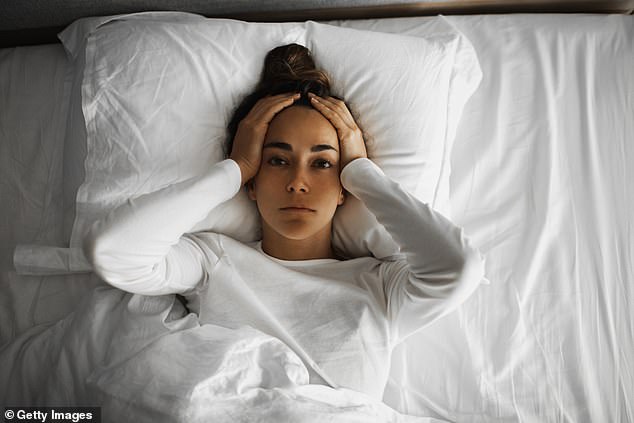
Swanage residents have been particularly vocal about the LED street lights ‘floodlighting’ their bedrooms. Publican Jacci Pestana said: ‘It’s a relentless artificial glare in my bedroom’
‘I wear a sleep mask but it often slips off and in the morning I’m exhausted. Constant lack of sleep has left me in a permanent state of fatigue. For many people in this town, it’s a nightly battle for sleep.’
Ms Pestana, 59, moved to her detached home 12 years ago when old-style sodium street lights were in place. But now she has to endure the glare of the 4000K LEDs, she takes a 10mg dose of melatonin – well above the recommended 2mg – before bed each night to obtain a few hours’ sleep.
Tourist information centre worker Lou Condie, who has a lamp directly opposite her bedroom window, has had to install blackout curtains. She said: ‘People don’t like these lights. There are rightly concerns about the impact on health and sleep patterns.
‘The lamp outside our house has ended one of life’s simple pleasures for me – waking up gradually to natural light as the sun starts to rise. It is timed to go off around 1am but comes on again at 6am which means I have to keep the blackout curtains closed.’
Despite the council’s U-turn on the harshest lighting, she said: ‘It looks like we’re stuck with the lights already in place.’
Her comments are echoed by residents on a local Facebook page.
Keith Nuttall posted: ‘Done on the cheap. Done incorrectly. Done without proper consultation. The result: stark, bright cold lights without proper shielding, huge light spill, ugly, awful light pollution. They ought to be ashamed.’
Richard Foxley wrote: ‘The bright lights are horrible. They should never have been installed. Several around me stay on all night.’
And Janine Denness described a lamp opposite her bedroom window as ‘like a floodlight in our room’, adding that she was told it would ‘dull down when the light gets dirty. What a joke.’
A spokesman for the UK Health Security Agency said a 2016 report by its predecessor, Public Health England, had warned of ‘the potential for LED street lighting at night to cause unwanted disruption to healthy circadian rhythms [which] may be detrimental to health’.
He added: ‘UKHSA’s position that repeated exposure to artificial light at night may be detrimental has not changed.’
The Department of Health and Social Care last year commissioned a report seeking ‘evidence-based guidelines’ on the impact of artificial light on health.
A spokeswoman for the Local Government Association, which represents more than 300 councils, said authorities had a duty to keep streets safe, while also cutting energy use and maintenance costs. She said: ‘We support the review of national standards and want clear, up-to-date guidance to help balance safety, wellbeing, the environment and value for money.’
WHY YOUR BODY CLOCK MATTERS
Melatonin is essential for good, regular sleep – but it also protects multiple aspects of our health.
Known as the ‘sleep hormone’, it is mainly produced by the pineal gland in the brain.
Levels naturally rise in the evening as it gets dark, helping you feel sleepy, and fall back again in the morning as light returns.
This pattern helps control your circadian rhythm – essentially, your body clock, which tells you when it’s time to sleep, and when to wake up.
But being exposed to bright light at night, whether from screens or overhead lights, can reduce the amount of melatonin produced, making it harder to fall asleep and disrupting your internal clock.
And research has shown that, if this becomes chronic, it doesn’t just cause sleep problems.
Suppressed melatonin production is linked to a higher risk of depression, and anxiety.
It can also affect the body’s metabolic system, triggering type 2 diabetes, cardiovascular disease and weight gain.
People who work at night are more likely to have these conditions.
Some studies have also observed an association between chronically reduced levels of melatonin and some forms of breast cancer.
Research is still ongoing to better understand this link.