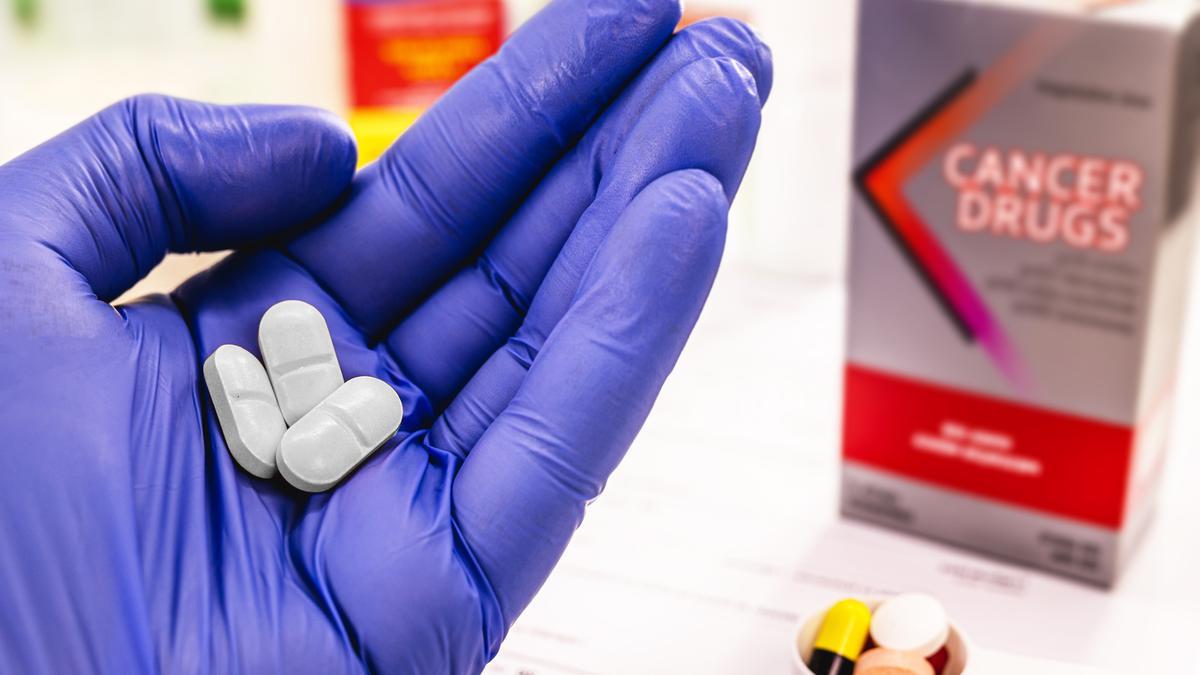
Bringing immediate relief to patients with cancer and rare diseases, Union Budget 2026-27 proposed a full exemption of basic customs duty on 17 cancer-related drugs and medicines. In addition, seven more rare diseases will be added to the list eligible for import duty exemption on drugs, medicines and food for special medical purposes imported for personal use.
Also read | Union Budget 2026 LIVE
The Union Finance Minister Nirmala Sitharaman on Sunday (February 1, 2026) also proposed a ₹10,000 crore investment in the biopharma sector over the next five years, a move which would give a boost to the country’s pharmaceuticals industry. Biopharmaceuticals, or biologics, are complex medicines manufactured from living organisms, cells, or tissues rather than through chemical synthesis.
She also proposed interventions in six areas, including manufacturing, strategic and frontier sectors, healthcare, and advanced technology.

Other major highlights of the budget for the health sector include the setting up of three new National Institutes of Pharmaceutical Education and Research and upgrading the existing seven, creation of a nationwide network of 1,000 accredited clinical trial sites that will accelerate research and product development and strengthening and upgradation of the drug regulatory system to meet global standards and faster approval timelines for drugs.
Union Budget 2026 industry reactions LIVE
Overall health spending saw only modest growth with the Health Ministry being allocated ₹1.05 lakh crore for FY 2026-27, just over six percent higher than the previous year and roughly nine percent more than the revised estimates. Major schemes including Ayushman Bharat PM-JAY received ₹9,500 crore, only marginally above last year’s allocation. A ₹100 crore provision was made for training allied healthcare professionals, alongside a push to expand care delivery beyond hospitals, particularly for geriatric services.

“A strong care ecosystem, covering geriatric and allied care services will be built,” Finance Minister Nirmala Sitharaman said while presenting the Union Budget in the Parliament on Sunday (February 1, 2026). She announced that National Skills Qualifications Framework (NSQF)-aligned programmes would be rolled out to train multi-skilled caregivers combining core care skills with allied capabilities such as wellness, yoga, and the operation of medical and assistive devices. “In the coming year, 1.5 lakh caregivers will be trained,” she said.
What do different cancer drugs do? | Explained
The Budget also proposed a significant scale-up of allied health professionals, a segment seen as critical to easing pressure on doctors and hospitals. “Existing institutions for Allied Health Professionals (AHPs) will be upgraded and new AHP Institutions established in private and government sectors,” the Finance Minister said, adding that the initiative will span 10 disciplines, including optometry, radiology, anaesthesia, OT technology and applied psychology and behavioural health, and is expected to add 1 lakh AHPs over the next five years.

The Union Budget 2026-27 unveiled a comprehensive push to scale up India’s AYUSH ecosystem and announced the establishment of three new All India Institutes of Ayurveda (AIIA) to strengthen education, research, and clinical excellence in traditional medicine.
Major investments have also been proposed for the modernisation and expansion of existing healthcare facilities, including establishment and strengthening of Cancer Centres, expansion of Trauma and Emergency Care Services, development of Super Specialty Blocks, Transplant Units, Robotic Surgery Centres, and AI-enabled Centres in medical institutions.
The Budget also provides for a substantial increase in MBBS, postgraduate, super-specialty, and nursing seats, aimed at strengthening teaching, learning, and clinical training capacities, while promoting cutting-edge research and innovation in advanced biomedical fields, including artificial intelligence
Mental health took the centre stage in the health budget for the country with the Finance Minister acknowledging that the country currently lacks sufficient national-level institutions dedicated exclusively to mental health.

The government proposed the establishment of two new national mental health institutes, to be in Ranchi and Tezpur, alongside plans to create a second campus of the National Institute of Mental Health and Neurosciences (NIMHANS) in North India.
Presenting her ninth consecutive Budget in Parliament, Ms. Sitharaman said the new institutions are intended to improve access to specialised mental healthcare, advanced training, and research, particularly in regions that remain underserved. The proposed institutes in Ranchi and Dispur will function as national-level centres for treatment, academic training, and policy-oriented research, helping to decentralise mental health services.
Published – February 01, 2026 04:05 pm IST