The cars-for-canola deal also carries a certain irony: Canada is importing the very technology that makes fossil fuels obsolete. China is electrifying at dizzying speed, with the International Energy Agency projecting its oil consumption will peak as early as next year thanks to “extraordinary” electric vehicle sales. That means Beijing probably isn’t desperate for new foreign suppliers of hydrocarbons, and the ministerial dialogue will likely drag on inconclusively — albeit courteously — well into the future.
This state of Sino-Canadian trade can be seen as classic comparative advantage at work: China is good at making things, and Canada has abundant primary commodities. But in the not-so-distant past, it was Canadian companies that were selling nuclear reactors, telecom equipment, aircraft and bullet trains to China. Yet today, many of these once globe-spanning Canadian high-tech manufacturers have either exited the scene or lead a much-reduced existence.
Somewhere in this trading history lies a cautionary tale for Europe. Deindustrialization can have its own self-reinforcing momentum. As a country’s economic composition changes, so does its political economy. When producers of goods disappear, so does their political influence. And the center of lobbying gravity shifts toward downstream users and consumers who prefer readily available imports.
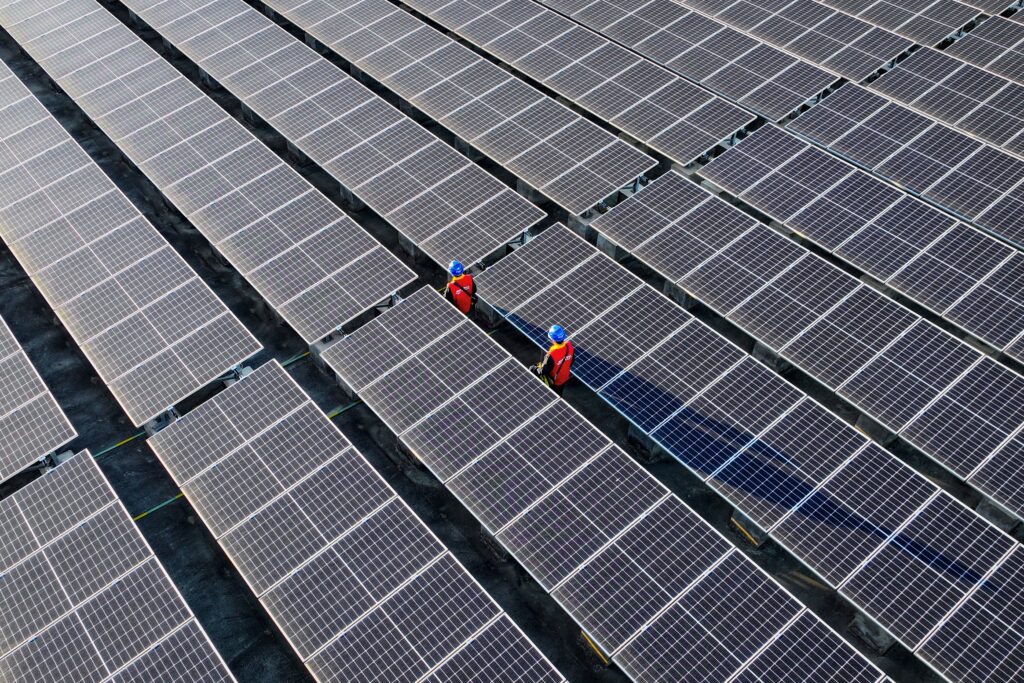 Europe’s indigenous solar manufacturers have been driven to near extinction by much cheaper Chinese products | STR/AFP via Getty Images
Europe already has its own version of this story: Its indigenous solar manufacturers have been driven to near extinction by much cheaper Chinese products over the span of two decades. Currently, its solar industry is dominated by installers and operators who favor cheap imports and oppose trade defense.
Simply put, Carney’s cars-for-canola deal is a salve for Canadian consumers and commodity producers, but it’s also industrial policy in reverse. In overly simplified terms, industrial policy is about encouraging exports of finished products over raw materials and discouraging the opposite in order to build domestic value-added capacity and productivity.
But while Canada can, perhaps, make do without industry — as Carney put it in Davos, his ambition is to run “an energy superpower” — Europe doesn’t have that option. Agri-food and extractive sectors aren’t enough to stand up the continent’s economy — even with the likes of tourism and luxury goods thrown in.