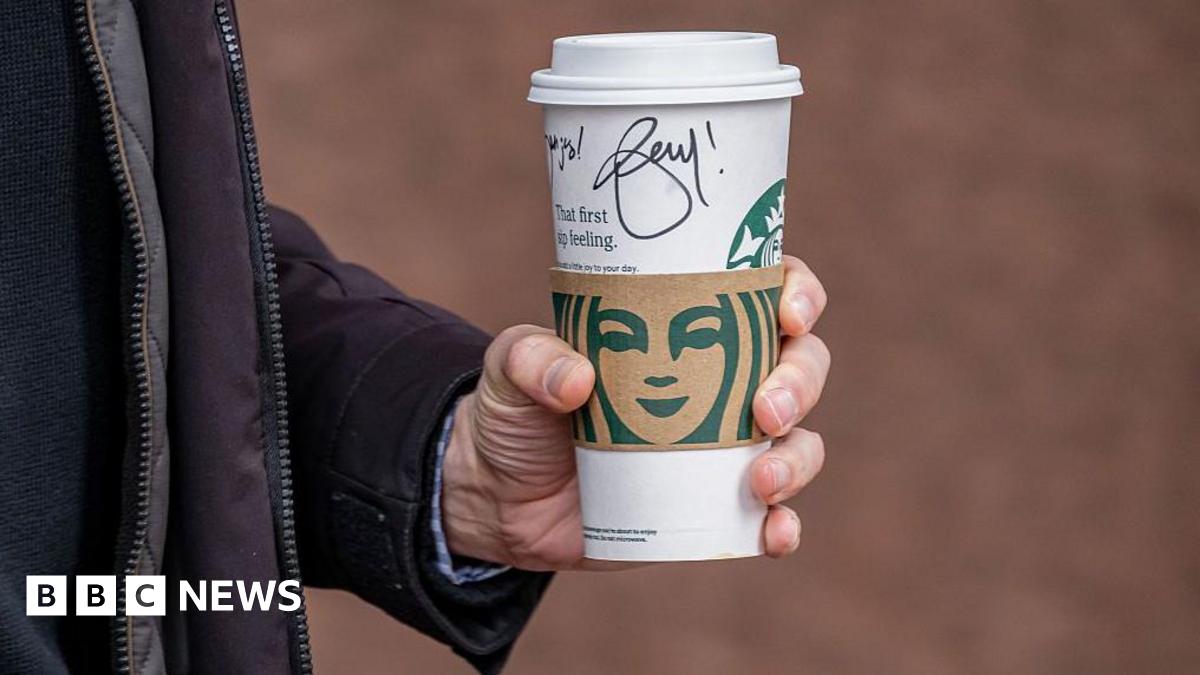
At the firm’s recent investor day, Niccol told analysts he was confident the business had momentum, outlining ambitious expansion plans – especially overseas, where it hopes to nearly double its footprint to almost 40,000 stores in the years ahead.
“Things are really taking hold,” he said, before analysts started peppering him with questions about profits.
Unlike last year, the company is not ruling out price increases.
However, Niccol said: “It really is the last lever I want to pull. In the event we do have to take pricing, it should be fairly muted.”
He is banking that the firm will be helped by wider trends, as general inflation recedes, and the price of coffee, which has soared in recent years, subsides a little.
In recent months, US President Donald Trump also removed coffee from the list of items facing tariffs, which had pushed up costs last year.
Social media fervor against the brand has died down as well, though the union battle continues to dog the company, with organisers accusing Niccol of stonewalling contract talks.
That fight has also put a spotlight on Niccol’s remote working arrangements, private jet use and compensation. He was granted a package worth $97m in 2024 and $30m last year, compared with the average employee’s earnings of about $17,300.
Niccol said he was “wildly open” to the conversation but declined to give a timeline for when the two sides might reach a contract.
“I would love to get to a deal. It’s got to be one that can be a viable, sustainable deal,” he said.
The boss told analysts Starbucks did not plan to backtrack on its labour investments as it hunts for savings, confident that what sets the firm apart is not its coffee, but its cafes.
“People want these places to gather,” he told the BBC.
“It doesn’t matter if you’re eight years old or 80 years old, a third place is relevant and when we can provide the third place that everybody feels safe, welcome and a part of, then I think the Starbucks brand is the solution.”