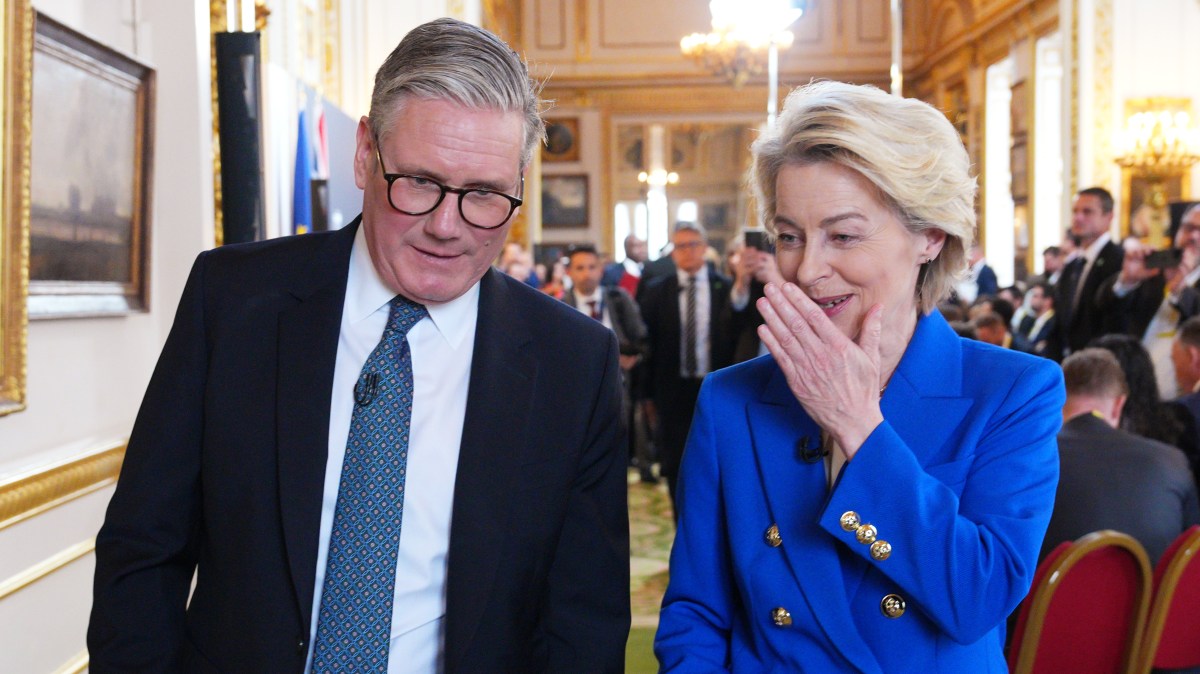
Britain and Brussels have agreed to intensify negotiations over Sir Keir Starmer’s Brexit reset amid concerns that key elements of the deal are still far from being finalised.
Ministers are hoping to unveil a deal on food standards, youth mobility and energy co-operation at talks between Starmer and Ursula von der Leyen, the European Commission president, due to be held by the end of May.
However, discussions at an official level have become bogged down over controversial issues such as genetically modified food, the role of European courts in policing the agreement and ongoing disagreements over a cap on youth mobility.
• Don’t let City lose its shine in post-Brexit reset with Brussels
On Monday, Nick Thomas-Symonds, the Europe minister, met his EU counterpart Maros Sefcovic in London and the two agreed to hold fortnightly discussions in a bid to push the talks on at a political level and tackle key areas of difference between the two sides.
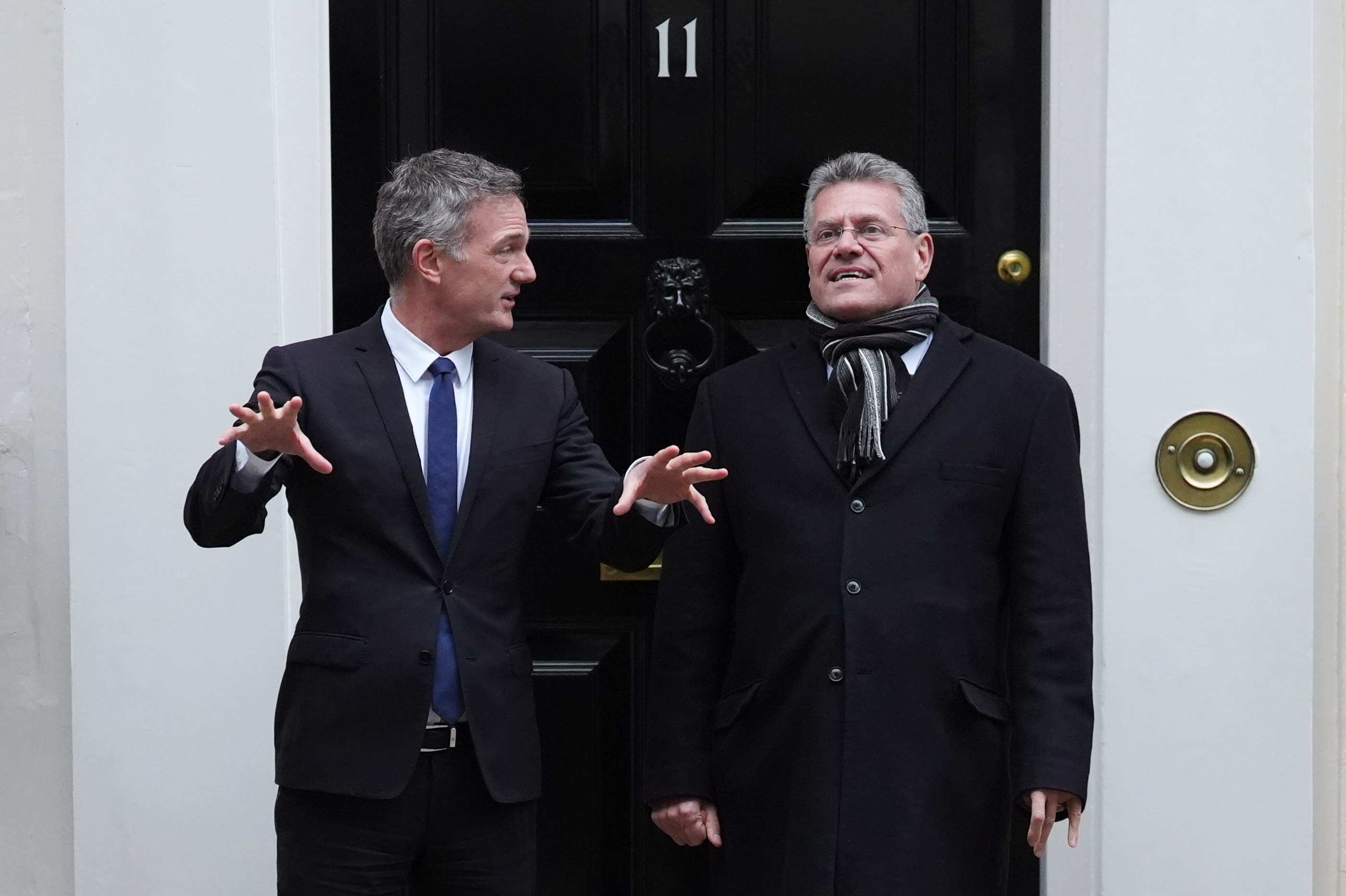
Business secretary Peter Kyle and the EU’s Maros Sefcovic at Downing Street on No 11 Downing Street on Monday
PA
Sefcovic also met Rachel Reeves, the chancellor, and Peter Kyle, the business secretary, to discuss wider UK/EU co-operation and areas of concern including the threat of EU tariffs on British steel exports.
It follows frustrations in London that big differences remain between the two sides that need to be resolved before a deal can be announced.
The UK has requested an opt-out or delay in implementing some new EU regulations that have been brought in since Brexit. These include the use of some pesticides banned in Europe and the ability to continue authorising the use of gene-editing tools in farming, which is also outlawed.
• Are GM purple tomatoes coming to British supermarkets?
There is also no agreement on how many young Europeans will be allowed into Britain as part of the proposed youth mobility scheme.
Ministers have signalled that they are prepared to implement a “flexible” cap that could be expanded or reduced, depending on demand from both sides. However, the EU is demanding that the scheme is uncapped.
A government source said that while relations between Thomas-Symonds and Sefcovic were good, there was a desire to formalise regular political-level negotiations before the talks.
“We want to step the political engagement up even further to iron out issues and drive forward negotiations. Both sides are keen to get positive results and keep building.”
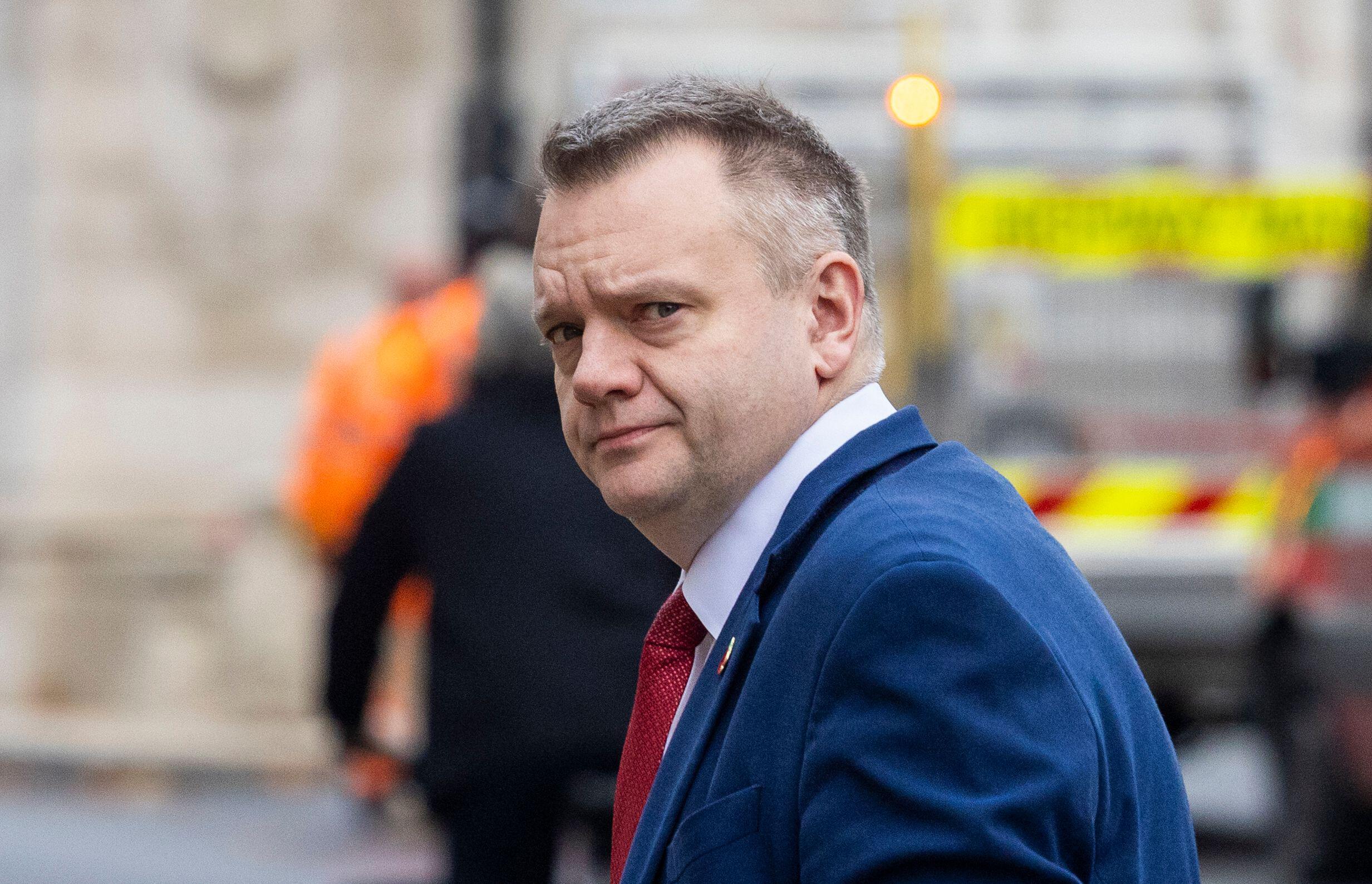
Nick Thomas-Symonds
MARK THOMAS/ALAMY
Writing in the Financial Times, Thomas-Symonds said that the government was taking a “ruthlessly pragmatic approach” to the negotiations focused on what could deliver tangible benefits for the UK.
“There are temptations to reach beyond what is realistic or deliverable,” he wrote. “But we cannot create our own version of the red bus promise.
“Rather, we will focus on where there are real advantages for people: food, drink, and carbon trading. The total value of food, drink and carbon trading deals will be worth £9billion a year to our economy by 2040. Slashing red tape will make it easier to export to the EU — our biggest trading partner.”
• EU demands ‘Nigel Farage clause’ as part of Brexit reset talks
“Voters recognise the status quo Tory deal is bad, and want change. But we need to pursue an argument about why what we are doing is good, based on tangible differences we will make to working people’s lives.”
He said: “I doubt this is the outcome that Brexit architects wanted or even expected. But it was a choice made by those who negotiated the Brexit deal. In thrall to ideology, they were not driven by what works.”
Sefcovic said that he had had “valuable exchanges” with British ministers on “geoeconomic challenges and geopolitical uncertainty”.
He added: “Engagement with like-minded partners matters.”