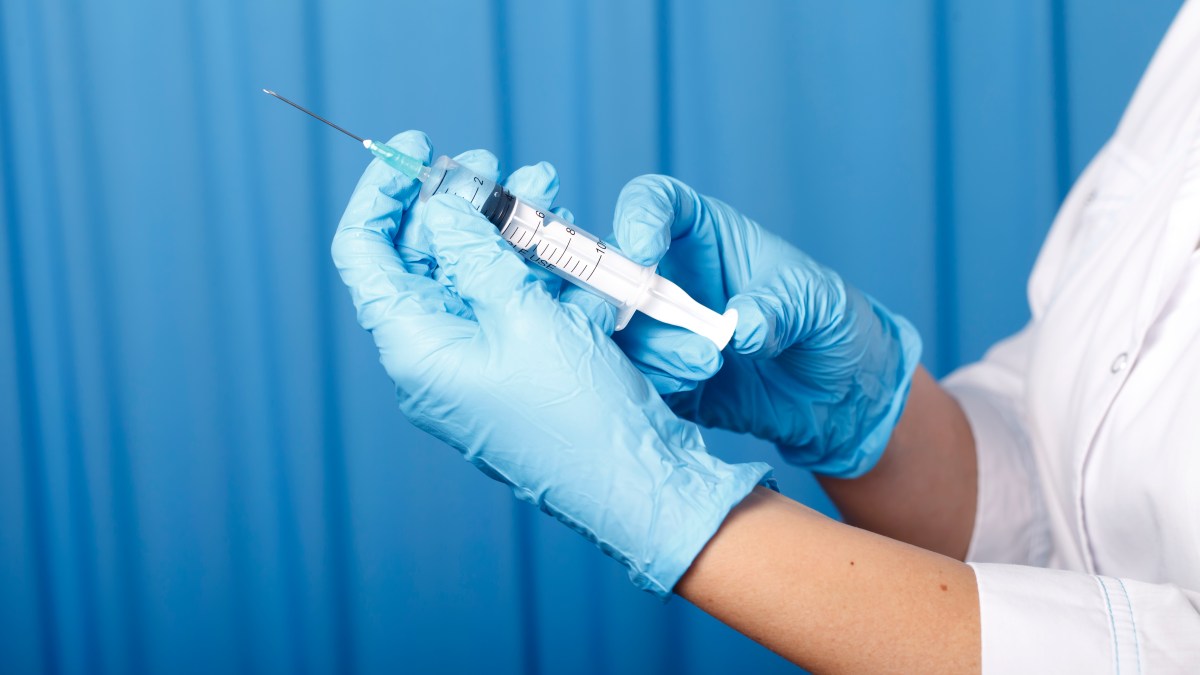
Did you have a flu jab this year? How about the one for shingles? If the answer is yes to both, you may have reason to feel smug. As well as offering protection against the viruses themselves, a growing body of research suggests these vaccines may also offer protection against dementia and heart disease — two of our biggest killers in the UK.
The evidence is in its infancy, but compelling nonetheless. So what do we know for sure and should we be jumping at the chance to get vaccinated? Over to the experts.
The research that experts are most excited about is a review of 21 studies, published in the journal Age and Ageing last year, which concluded that being vaccinated against the shingles virus (herpes zoster) was linked to a 47 per cent lower risk of Alzheimer’s and a 24 per cent lower risk of dementia. It analysed the data of more than 100 million people aged 50 and over, which is, as Danny Altmann, a professor of immunology at Imperial College London, puts it, “a big deal”.
Flu jabs have also been linked to a reduction in the risk of dementia, which one in three people born in the UK today will develop (currently 65 per cent of sufferers are women). An American study in 2022 looked at the health records of tens of thousands of over-65s and found that those with at least one flu jab over a four-year period were 40 per cent less likely to develop Alzheimer’s than those who remained unvaccinated. Another piece of research, from 2023, suggested that having the flu jab for three years in a row lowered your risk of getting dementia by 20 per cent in the next four to eight years.
What about heart disease?
A smaller evidence base but still, the experts say, statistically significant. Last year the first analysis of research linking shingles vaccination and heart disease — presented at the European Society of Cardiology’s annual conference and funded by GSK — found it could reduce the risk of heart attack or stroke by up to 18 per cent.
Several other reviews have made a connection between receiving the vaccine for flu, which can weaken the respiratory system and affect the proper functioning of the heart, with being less likely to experience heart attacks or die from cardiovascular events. “Getting the flu vaccine can reduce the risk of a major cardiovascular event like a heart attack or stroke by 13 per cent in people with heart or circulatory disease,” the British Heart Foundation says.
Do we know why?
Short answer: no. But the experts have theories. The first thing to say, of course, is that both vaccines are good at their basic function: to guard against shingles and influenza. Shingles is a painful rash caused by the varicella zoster virus, which also gives us chickenpox, being reactivated — which will happen to one in five of those who have had chickenpox. It usually lasts for up to four weeks and can be serious in those with compromised immune systems.
• Chickenpox changed our lives. If I’d known, we’d have got the vaccine
We all know how nasty the flu can be. The current “super flu” is the common H3N2 strain, which mutated into the K variant after the World Health Organisation had already decided on the composition of this year’s vaccine, meaning it’s not a perfect match — although having it still makes it less likely that you’ll get seriously ill.
Any additional benefits the vaccines offer could hinge on their ability to reduce inflammation in the brain, often caused by viral infections such as shingles and influenza, which is a risk factor for dementia, heart attack and stroke.
“Viruses such as influenza can enter and affect the central nervous system, which in turn may cause immune system side-effects such as inflammation that can trigger changes in the brain proteins,” says Dr Primrose Freestone, an associate professor in clinical microbiology at the University of Leicester. “We know that a viral infection can be a dementia risk factor, and as vaccination is a protection against viral infection its protective effect against dementia is understandable.”
There’s also a school of thought, Altmann adds, that the vaccines might activate scavenger cells in our central nervous system that help to clear up the brain plaques (abnormal clusters of protein that build up between neurons) that are associated with dementia.
Shingles, by contrast to most other viruses, “lives inside us”, he adds. “When it reactivates, it kills neurons and causes inflammation in your nervous system. So, to me, it doesn’t take a genius to imagine that could be a contributory part of the pathway to neurodegenerative disease.”
So how excited should we be?
“I’m really excited [about the shingles research in particular] because it’s big data. These studies are not small or speculative or hypothetical, but solid and credible,” Altmann says. “Medical breakthroughs sometimes feel as though they come at you left, right and centre. But, for me, this is head and shoulders above a lot of the other health stories you read. We’re all terrified about the growth of dementia and what it looks like for our futures. None of us know what’s in store for us or our loved ones. So it’s a big deal.”
But on the flip side…
We don’t know for certain why this link has been noted and the studies to date are observational, so don’t establish cause and effect. “The underlying mechanism of how virus vaccines can offer some protection against dementia has not been proven yet and other explanations are possible,” Freestone says. “The area is still under study, so I would be a bit more cautious and suggest that flu and shingles vaccinations are protection against viral infection that may also provide an additional benefit.
“It is also possible that the lower incidence of dementia in the flu or shingles vaccine-treated patient groups may simply reflect that the vaccinated participants were more health conscious generally, which would by default reduce the number of risk hits for developing dementia.”
Right. So should I get the flu jab every year just in case?
“Absolutely,” Altmann says. And at the earliest opportunity — according to the NHS, it takes up to 14 days to build immunity and you’ll then be protected for up to six months. The risk of serious side-effects is rare and, the experts say, far outweighed by the benefits.
“I had mine in October, at the earliest opportunity, and I’ve been quite healthy this winter. I think the sooner the better,” says Brendan Wren, a professor of microbial pathogenesis at the London School of Hygiene & Tropical Medicine. “The sooner you take it, the quicker you can build up your antibodies.”
• What the scientists are doing to avoid superflu
What about the shingles vaccine — am I eligible?
The shingles vaccine is, in theory, available on the NHS to those aged 65 to 79 — as long as you turned 65 on or after September 1, 2023. If you were 65 before that date, you’ll have to wait until your 70th birthday. It’s also offered to those aged 18 or over who have severely weakened immune systems, for instance people with leukaemia or lymphoma, those having chemo or radiotherapy, organ transplant patients or those with HIV.
If you’re aged 50 or over, you can pay to have the shingles jab privately, but it doesn’t come cheap. The full course — two doses given between six and 12 months apart — costs £460 at Boots and £459 at Superdrug. Unlike the flu jab, it’s a one-off vaccine that can be taken at any time of year and has a low chance of serious risks. Just “the mild side-effects that you can get with all vaccines — sore arm, temperature, muscle aches”, Freestone adds.
• Read more expert advice on healthy living, fitness and wellbeing
Is it worth paying to have it privately, then?
“I think we shouldn’t get carried away, even with this [latest] very good, large study,” Wren says. “It’s not like if you take this particular vaccine you can say, well, I’m not going to get dementia. I think we have to be careful to not give that message. The encouraging thing is that it doesn’t do any harm and it could do you good.”
What about other jabs, like the pneumococcal or respiratory syncytial virus (RSV)? Should I have those?
In the Age and Ageing analysis, the pneumococcal (pneumonia) jab was also linked to a smaller but still promising reduction in dementia risk, while a study last year by the University of Oxford showed that the RSV jab is associated with a 29 per cent reduction in dementia risk in the following 18 months. At the moment both are only offered to specific, vulnerable groups on the NHS.
So should you pay to have them if you don’t fall into one of those? The experts are divided. Freeman says she wouldn’t recommend them for the healthy population, while Wren thinks that although having them privately “wouldn’t do any harm, it’s probably not necessary because you’re unlikely to get the disease if you have a decent immune system”.
“I would, and my children all did, because life on planet Earth is a scary business,” Altmann says. “There are so many pathogens out there — why wouldn’t you want to have more antibodies and T-cells on board?”