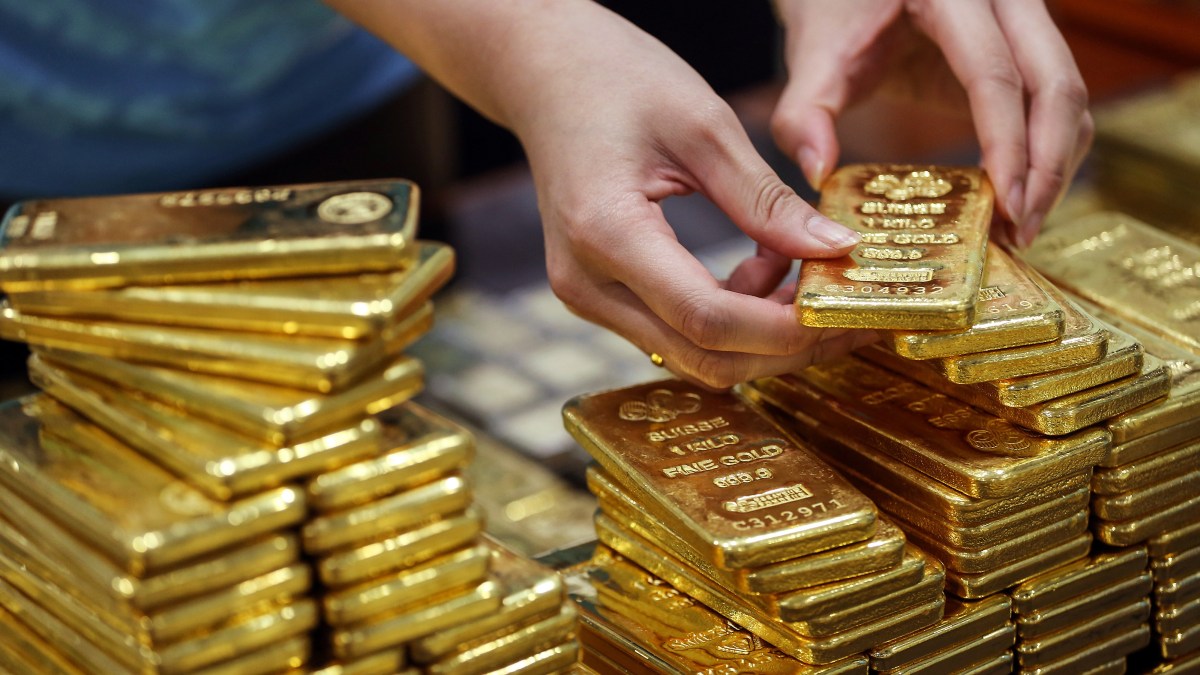
Gold and silver prices rallied for a second day on Wednesday as investors jumped back into precious metals following the biggest sell-off in decades, buoyed by a softer dollar.
Bullion rose back above 5,000 an ounce in Asia trading, up 2.9 per cent to 5,084.64, after gaining 5.9 per cent on Tuesday, its biggest daily gain since November 2008 during the financial crisis.
The precious metal hit a high of $5,594.82 last Thursday but on Friday recorded its steepest one-day drop since 1983, down more than 9 per cent, and lost another 1.9 per cent on Monday.
Silver, which dropped 27 per cent on Friday — its worst daily fall — and slipped a further 6.7 per cent to $78.96 an ounce on Monday, surged 10 per cent to about $87 an ounce on Tuesday and was up 3.2 per cent to $87.88 an ounce. It touched a record high of $121.64 last Thursday.
The rise was attributed to investors buying the dip after many City analysts argued on Monday that the sell-off in gold has been overdone and that there was more upside to come.
Analysts at Jefferies, the US investment bank, said: “The path of least resistance for commodities and mining shares is still mostly higher in an environment where investors and central banks globally are actively reallocating capital en masse to real assets due to macro factors … our point? Buy the dip.”
Precious metals prices have been supercharged by a combination of geopolitical tensions driving investors to perceived “safe haven” physical assets, weakness in the dollar that makes the metals cheaper for investors in other currencies, and expectations that the US Federal Reserve may aggressively cut interest rates, which would make non-yielding metals relatively more attractive.
Friday’s sell-off was initially prompted by President Trump’s nomination of Kevin Warsh as the next chairman of the Federal Reserve. He is perceived as better able to withstand pressure from the Trump administration to cut interest rates. The further fall in precious metal prices on Monday came after CME Group announced it was raising margins on metal futures, which forced leveraged investors to sell other assets to cover gold and silver margin calls.
• Is there still money to be made in the gold rush?
In a prescient note published after Monday’s rout, Joni Teves, precious metals strategist at UBS, wrote: “Is the gold rally over? Our short answer is no.”
“The market was oversold after the announcement of US President Donald Trump to nominate Kevin Warsh as the next Federal Reserve chairman. What we see today is a rebound,” Peter Fertig, an analyst at Quantitative Commodity Research, said. “You also see investors who have sold on profit taking are now regarding the prices as attractive again for buying.”
She argued that the sell-off had given “investors the opportunity to build long-term strategic positions at more attractive entry levels”.
UBS has forecast that gold could touch $6,200 this year. Teves added: “The underlying constructive narrative for gold is intact, in our view. Portfolio diversification remains relevant in the current macro environment and gold should continue to benefit from this trend. We don’t think much has changed materially from a fundamental standpoint. We expect demand to resume across the board, from retail, institutional, as well as official sector buyers. This should eventually allow gold to resume its uptrend and see new highs in the coming quarters.”
Despite the recent falls, gold is still up more than 60 per cent over the last year.
The whipsawing markets continued to feed through to the share prices of London-listed precious metals miners on Tuesday. Fresnillo, the Mexican FTSE 100 group that is the world’s biggest silver producer and a big gold miner, rose by 5 per cent. Endeavour Mining, the West Africa-focused gold miner, was up 2.9 per cent while the South American gold miner Hochschild was up 3 per cent.