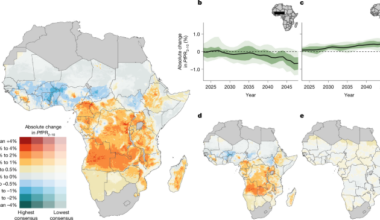
HHealth Read More Projected impacts of climate change on malaria in Africa29 January 2026 Our analysis framework comprised nine main stages, summarized in Extended Data Fig. 1. Preparation of consistent geotemporal climatologies,…
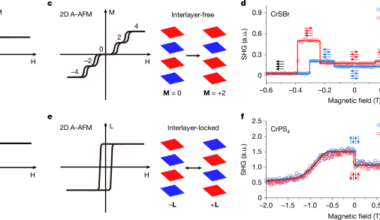
PPhysics Read More Ferromagnet-like binary switching of a Stoner–Wohlfarth antiferromagnet29 January 2026 The response of magnetization to external stimuli has drawn attention for more than a century, providing fundamental insights…
HHealth Read More Damage from a heart attack comes from brain signals, mouse study suggests29 January 2026 Heart damage caused by a myocardial infarction is exacerbated by activation of a heart–brain–immune axis.Credit: Sevolod Zviryk/Science Photo…
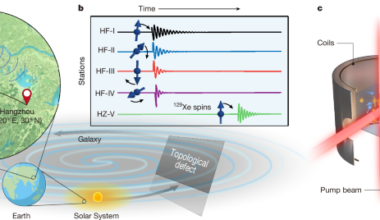
PPhysics Read More Constraints on axion dark matter by distributed intercity quantum sensors29 January 2026 Bertone, G. & Hooper, D. History of dark matter. Rev. Mod. Phys. 90, 045002 (2018). Article CAS ADS …
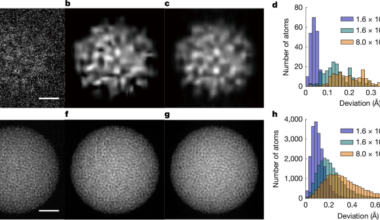
PPhysics Read More Accurate determination of the 3D atomic structure of amorphous materials29 January 2026 Nomura, K. et al. Room-temperature fabrication of transparent flexible thin-film transistors using amorphous oxide semiconductors. Nature 432, 488–492…
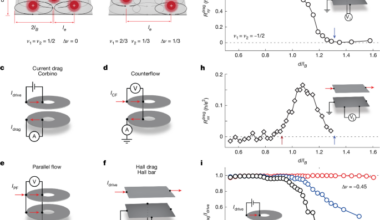
PPhysics Read More Observation of a superfluid-to-insulator transition of bilayer excitons28 January 2026 Anderson, M. H., Ensher, J. R., Matthews, M. R., Wieman, C. E. & Cornell, E. A. Observation of…
HHealth Read More The surprisingly big health benefits of just a little exercise28 January 2026 January is peak gym time — the month when fitness seekers commit to New Year’s resolutions. By February,…
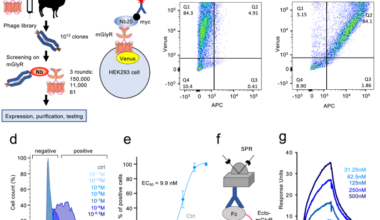
MMental health Read More Targeting mGlyR with nanobodies for depression28 January 2026 Animals All animal experiments were approved by the Herbert Wertheim UF Scripps Institute for Biomedical Innovation & Technology…
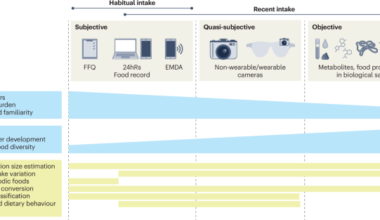
NNutrition Read More Integration of modern technologies to advance dietary assessment27 January 2026 Franks, P. W. et al. Precision medicine for cardiometabolic disease: a framework for clinical translation. Lancet Diabetes Endocrinol.…
SScience Read More LED lighting (350-650nm) undermines human visual performance unless supplemented by wider spectra (400-1500nm+) like daylight25 January 2026 We demonstrate that the visual performance of those working under standard LED is significantly improved by exposure to…