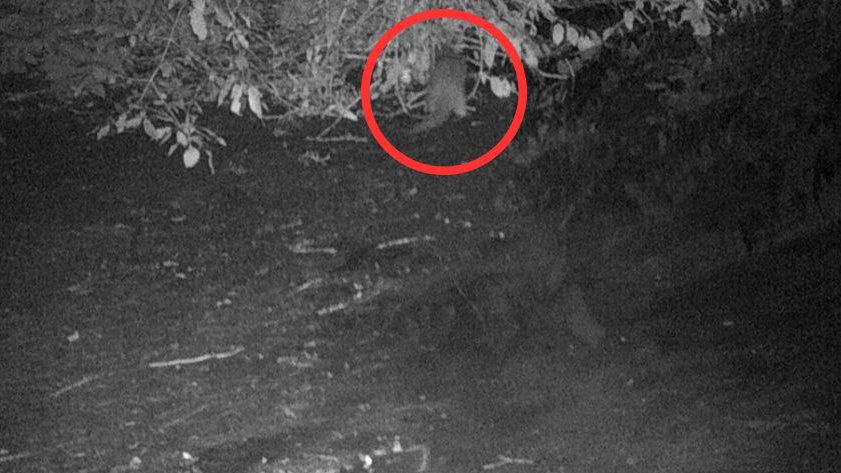
A North American river otter has been spotted in the Bronx for the first time in about 100 years, according to the Wildlife Conservation Society’s Bronx Zoo.
A motion-activated camera operated by local scientist RJ Hawkins captured the otter along the Bronx River, the zoo said. WCS’ education department, which is based at the zoo, oversaw the camera monitoring effort.
The sighting is believed to be the first documented river otter in the Bronx section of the river since the early 1900s, according to the zoo.
“When I first reviewed the images, I could hardly believe what I was seeing,” Hawkins said in a statement. “Knowing this may be the first documented river otter in the Bronx in generations was an incredible moment. It shows why long-term wildlife monitoring and environmental restoration efforts matter.”
While river otters used to traverse New York’s waterways, they were driven out of many areas by “pollution, habit degradation, and unregulated trapping,” the zoo said.
Officials are pointing to the sighting as evidence of the Bronx River’s recovery following decades of restoration efforts.
The waterway was once heavily polluted and considered one of the most neglected urban rivers in the country, according to the zoo.
The zoo said researchers “caution that a single observation does not necessarily indicate a resident population,” but added that the sighting “demonstrates that the Bronx River is increasingly capable of supporting native wildlife that has been absent for generations.”
“This isn’t simply the story of one animal. It’s the story of an urban river coming back to life,” Bronx Zoo director Craig Piper said in a statement. “Every improvement in water quality, every acre of restored habitat, every community volunteer who has cared for this river has helped make a moment like this possible. We hope it’s the first of many.”
Javier Lopez, interim executive director of the Bronx River Alliance, called the otter sighting “a gift, not just to the Bronx River but to the communities that have fought for 50 years to bring this river back to life.”