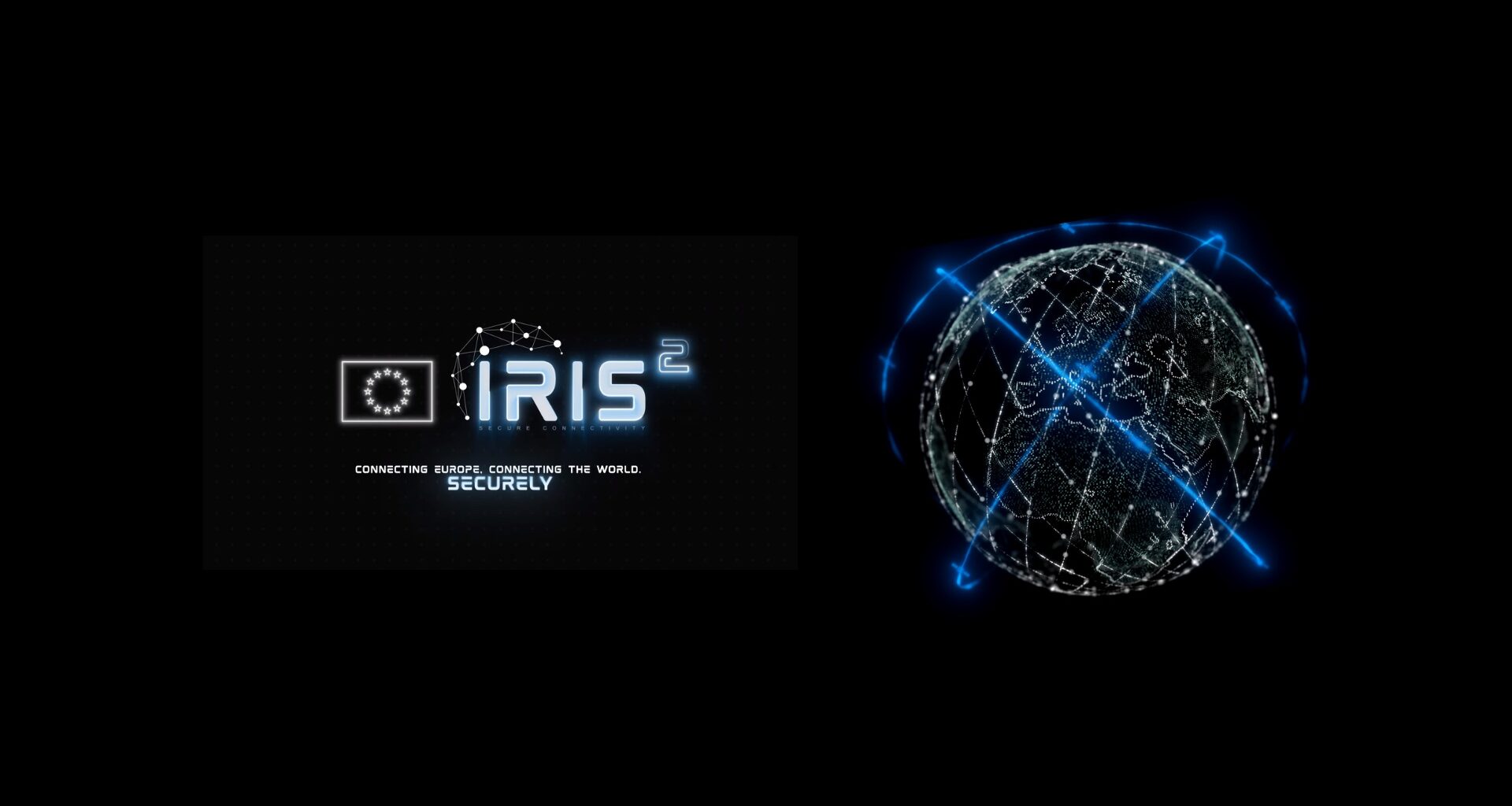
WASHINGTON — OHB has won a contract worth more than a billion dollars to build the satellites for the medium Earth orbit, or MEO, shell of a European constellation.
OHB announced Aug. 31 it signed a contract with satellite operator SES to build 18 satellites for the Infrastructure for Resilience, Interconnectivity and Security by Satellite, or IRIS², constellation. The contract, OHB said, is worth nearly 1 billion euros ($1.16 billion).
The satellites will comprise the MEO portion of the constellation, which also includes satellites in two low Earth orbit bands. SES, part of the SpaceRISE consortium developing the constellation for the European Commission, is responsible for the MEO shell as well as development of user terminals and creation of government control centers.
The contract is the first for the constellation since SpaceRISE and the Commission completed a review Aug. 7 called Rendezvous 1. The review resulted in adding 66 LEO satellites to IRIS² and increasing its total cost by nearly 50% to 15.6 billion euros.
IRIS² is designed to provide connectivity services for European governments as well as consumers and businesses. European officials have increasingly emphasized the need for a sovereign satellite communications system to reduce reliance on foreign systems, such as SpaceX’s Starlink.
“IRIS² will mark another significant step toward Europe’s independence. In an increasingly digital and highly mobile world, a resilient and autonomous communication infrastructure is indispensable,” said Marco Fuchs, chief executive of OHB, in a statement. “We are especially pleased to have been entrusted with the development of 18 satellite platforms for IRIS², further expanding our role in Europe’s strategic space infrastructure.”
The company said the 18 satellites it will develop will each weigh 2.6 tons and produce up to 15 kilowatts of power. Neither OHB nor SES disclosed details about the communications payloads they will carry. SES previously stated it would design and build those payloads.
SES is leading the MEO portion of IRIS² based on its experience with its own MEO system, O3b. The current generation of the O3b constellation, called O3b mPower, uses satellites that provide multiple gigabits per second of capacity. Those satellites, though, are built by Boeing, an American company that is likely ineligible for IRIS² awards.
SES also signed a contract in March for a next-generation MEO system of 28 satellites called meoSphere. Those satellites will be built by K2 Space, another American company.
SES said Aug. 7 it expected to spend up to 1.35 billion euros on the MEO segment, part of 4 billion euros being provided by SpaceRISE, which includes satellite operators Eutelsat and Hispasat. The rest of IRIS² will be funded by the European Commission, the European Space Agency and national governments. Those satellites are slated to enter service in 2030.
Related