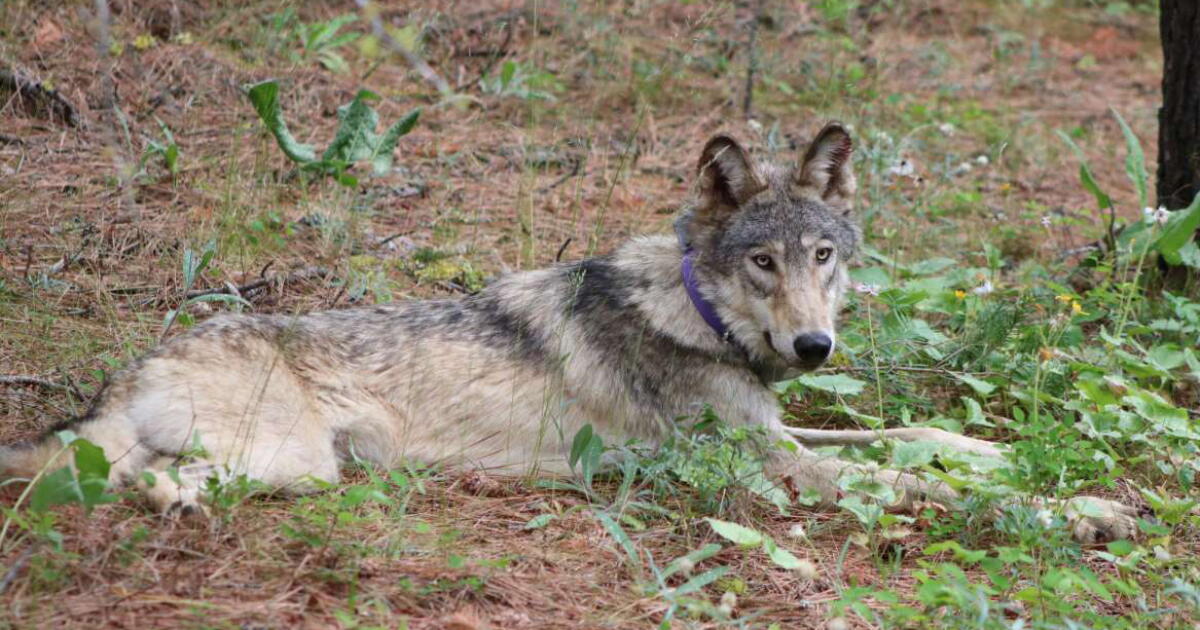
A gray wolf was spotted in Lake County, a bright sign that the recovering endangered species is expanding its presence in California, wildlife officials say.
The California Department of Fish and Wildlife received two reports of a rare gray wolf sighting and photos of the carnivore in late August in an area where Mendocino, Glenn and Lake counties meet.
A wolf biologist “confirmed the validity of the photos and conducted surveys in the area and confirmed wolf tracks where one of the sightings was reported,” Alicia de la Garza, the agency’s deputy director of public affairs, said in a statement.
The sighting could be another turning point for the wolves’ California comeback. Gray wolves started to disappear from the state in the 1920s but began returning in recent years. The first one documented in California since 1924 was a wolf called OR7, who made his way from Oregon in 2011.
At least 50 wolves are known to be in California, according to the Department of Fish and Wildlife. Various factors such as hunting and agricultural activity could have led to their disappearance, though there isn’t a definitive answer, the department says. In California, it’s illegal to hunt, pursue, harass, catch, capture or kill the gray wolf.
The wolves eat other animals including elk, deer, reptiles, birds and sometimes large livestock, though that’s not common. Wolves will defend their territory, so they can pose a risk to nearby dogs and coyotes, but they typically avoid people. Officials say people who encounter a wolf should not run, but rather make noises, maintain eye contact and retreat slowly.
The Sacramento Bee, which reported on the wolf sighting, called the appearance of the canine in Lake County “especially significant” because much of the species’ recovery has occurred east of Interstate 5. There are more elk and other prey for the wolves west of the area, making it an appealing habitat for the animals.
“This is incredibly exciting news — the news we in wolf recovery for decades have been waiting for,” Amaroq Weiss, a former senior wolf advocate at the Center for Biological Diversity, told the news outlet. “For it to get to the west side of I-5, where we know is the best habitat in the state.”
The gray wolf’s growth in California comes as the White House is reviewing the protection of the species as part of an effort to support U.S. ranchers. On Friday, President Trump signed an executive order directing the secretary of the interior to determine within 90 days if the gray wolf and the Mexican wolf should have their protections removed or reduced under the federal Endangered Species Act.
The act protects endangered species from people who might intentionally kill or try to destroy their habitat. Animals can have their protections stripped after their species are deemed to have recovered.
The first Trump administration also tried to get the gray wolf dropped from the endangered species list. However, in 2022, following a court order, the gray wolf received endangered species protections in 48 states and Mexico but not in the Northern Rocky Mountains, according to the U.S. Fish and Wildlife Service.