WASHINGTON – Arizona farmers have been hit hard by diesel prices that reached record levels this week, driven higher in large part by the conflict with Iran.
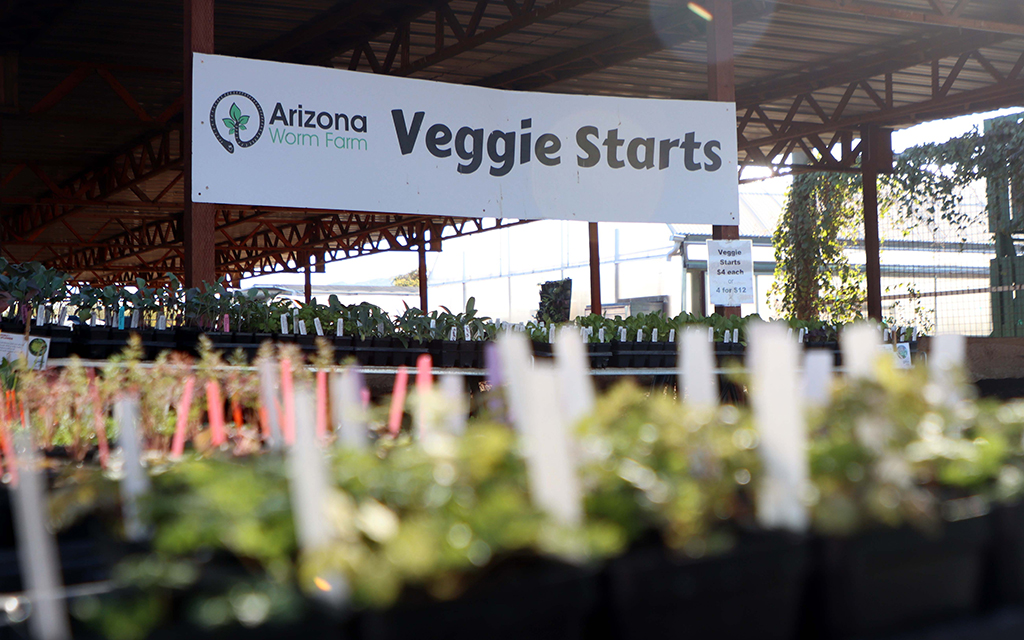
“It’s squeezing our profits and making it difficult to meet our financial objectives,” said Zach Brooks, owner of Arizona Worm Farm.
The urban farm in Phoenix uses millions of worms to fertilize 10 acres of fruits and vegetables. That requires 1,000 gallons of diesel a month, Brooks said.
The national average hit $6.53 per gallon on Sept. 22, an all-time high, according to AAA. The average in Arizona that day, $6.45, was also a record – up 77% from a year earlier.
For Brooks, the skyrocketing price of diesel is adding $40,000 in annual costs.
“That’s a person’s salary,” he said.
Oil prices have risen dramatically since the U.S. and Israel attacked Iran in February, disrupting transport through the Strait of Hormuz.
“Input prices are high, equipment prices are high, and so we’ll continue to see farms go out of business,” said John Boelts, president of the Arizona Farm Bureau. “Farms and ranches and every other segment of agriculture.”
 This 2022 file photo shows Oklahoma wheat farmer Tim Heinrich, who said the price of diesel was a challenge. The national average price of diesel hovered around $5.00 per gallon in September 2022. The price hit a record $6.53 on Sept. 22, 2026. (Photo courtesy Heinrich family)
Rajnish Mehra, a professor of economics and finance at Arizona State University, said that diesel prices shot up much more than gasoline prices since the war, impacting industries dependent on either very differently.
“The headline is always oil, but the real story for the economy is diesel,” he said.
In Casa Grande, drought has forced the owners of Caywood Farms to leave their 250 acres of cotton and alfalfa fields fallow.
But there is still work to be done, said co-owner Nancy Caywood, and that requires fuel.
“We’re not able to grow anything and yet we have to control weeds and also road tractors down to the farm,” she said. “The diesel prices are killing us.”
With no permanent solution in sight for the Iran conflict, optimism is low.
“We have used the ’S word’ – Sell,” Caywood said. “We just don’t know how long we can hang in there.”
The higher fuel costs impact farmers in a number of ways, Mehra said.
Apart from direct costs for diesel they need to run their equipment, higher fuel costs also drive up the price of fertilizer. With inflation persisting, the Federal Reserve raised the interest rate by 0.25% on Sept. 16, pushing up borrowing costs.
Because farmers are “price takers,” Mehra said, they have to sell at whatever prices the market sets. They can’t pass higher costs to customers, so they have to absorb those costs or cut back somehow.
But that isn’t entirely possible for some operations, like dairy farms that operate 24/7, according to Clint Gladden, farm manager of Gladden Farms and Saddle Mountain Dairy in Palo Verde.
“We can’t just shut down,” he said. “There’s pretty much no part of our operation it doesn’t touch.”
Gladden’s operation has about 4,000 cows on 3,000 acres and, he said, it already runs on thin margins. With diesel costs so high, he said, “There’s less and less room in that bottom line to be able to be a sustainable operation.”
He is eyeing futures contracts to lock in prices for diesel, making it easier to plan ahead.
“There’s constantly headwinds that we’re facing and adapting to,” Gladden said.
Mark Manfredo, a professor in the Morrison School of Agribusiness at Arizona State University, said futures markets provide a good indication of where prices are headed.
On Friday, the U.S. Energy Information Administration showed the wholesale price of low sulphur diesel, the type used in agriculture, at $4.88, while contracts for November delivery closed the day at $4.57.
That suggests that traders expect shortages to ease and downward price pressure. But managing price risk is a challenge for individual farmers.
“It’s very difficult,” Manfredo said, adding that if prices stay high or keep rising, “that just translates into higher costs that farmers are going to pay.”
This <a target=”_blank” href=”https://cronkitenews.azpbs.org/2026/09/25/diesel-arizona-farmers/”>article</a> first appeared on <a target=”_blank” href=”https://cronkitenews.azpbs.org”>Cronkite News</a> and is republished here under a <a target=”_blank” href=”https://creativecommons.org/licenses/by-nd/4.0/”>Creative Commons Attribution-NoDerivatives 4.0 International License</a>.<img src=”https://i0.wp.com/cronkitenews.azpbs.org/wp-content/uploads/2026/02/favicon1.png?resize=85%2C85&ssl=1″ style=”width:1em;height:1em;margin-left:10px;”>
<img id=”republication-tracker-tool-source” src=”https://cronkitenews.azpbs.org/?republication-pixel=true&post=106493″ style=”width:1px;height:1px;”><script> PARSELY = { autotrack: false, onload: function() { PARSELY.beacon.trackPageView({ url: “https://cronkitenews.azpbs.org/2026/09/25/diesel-arizona-farmers/”, urlref: window.location.href }); } } </script> <script id=”parsely-cfg” src=”//cdn.parsely.com/keys/cronkitenews.azpbs.org/p.js”></script>
Canonical Tag:
Copy Tag
Article Content:
Record diesel prices squeeze Arizona farmers as Iran conflict drives up costs
Eileen Mamaghani, Cronkite News
September 25, 2026
WASHINGTON – Arizona farmers have been hit hard by diesel prices that reached record levels this week, driven higher in large part by the conflict with Iran.
“It’s squeezing our profits and making it difficult to meet our financial objectives,” said Zach Brooks, owner of Arizona Worm Farm.
The urban farm in Phoenix uses millions of worms to fertilize 10 acres of fruits and vegetables. That requires 1,000 gallons of diesel a month, Brooks said.
The national average hit $6.53 per gallon on Sept. 22, an all-time high, according to AAA. The average in Arizona that day, $6.45, was also a record – up 77% from a year earlier.
For Brooks, the skyrocketing price of diesel is adding $40,000 in annual costs.
“That’s a person’s salary,” he said.
Oil prices have risen dramatically since the U.S. and Israel attacked Iran in February, disrupting transport through the Strait of Hormuz.
“Input prices are high, equipment prices are high, and so we’ll continue to see farms go out of business,” said John Boelts, president of the Arizona Farm Bureau. “Farms and ranches and every other segment of agriculture.”
Rajnish Mehra, a professor of economics and finance at Arizona State University, said that diesel prices shot up much more than gasoline prices since the war, impacting industries dependent on either very differently.
“The headline is always oil, but the real story for the economy is diesel,” he said.
In Casa Grande, drought has forced the owners of Caywood Farms to leave their 250 acres of cotton and alfalfa fields fallow.
But there is still work to be done, said co-owner Nancy Caywood, and that requires fuel.
“We’re not able to grow anything and yet we have to control weeds and also road tractors down to the farm,” she said. “The diesel prices are killing us.”
With no permanent solution in sight for the Iran conflict, optimism is low.
“We have used the ’S word’ – Sell,” Caywood said. “We just don’t know how long we can hang in there.”
The higher fuel costs impact farmers in a number of ways, Mehra said.
Apart from direct costs for diesel they need to run their equipment, higher fuel costs also drive up the price of fertilizer. With inflation persisting, the Federal Reserve raised the interest rate by 0.25% on Sept. 16, pushing up borrowing costs.
Because farmers are “price takers,” Mehra said, they have to sell at whatever prices the market sets. They can’t pass higher costs to customers, so they have to absorb those costs or cut back somehow.
But that isn’t entirely possible for some operations, like dairy farms that operate 24/7, according to Clint Gladden, farm manager of Gladden Farms and Saddle Mountain Dairy in Palo Verde.
“We can’t just shut down,” he said. “There’s pretty much no part of our operation it doesn’t touch.”
Gladden’s operation has about 4,000 cows on 3,000 acres and, he said, it already runs on thin margins. With diesel costs so high, he said, “There’s less and less room in that bottom line to be able to be a sustainable operation.”
He is eyeing futures contracts to lock in prices for diesel, making it easier to plan ahead.
“There’s constantly headwinds that we’re facing and adapting to,” Gladden said.
Mark Manfredo, a professor in the Morrison School of Agribusiness at Arizona State University, said futures markets provide a good indication of where prices are headed.
On Friday, the U.S. Energy Information Administration showed the wholesale price of low sulphur diesel, the type used in agriculture, at $4.88, while contracts for November delivery closed the day at $4.57.
That suggests that traders expect shortages to ease and downward price pressure. But managing price risk is a challenge for individual farmers.
“It’s very difficult,” Manfredo said, adding that if prices stay high or keep rising, “that just translates into higher costs that farmers are going to pay.”
This article first appeared on Cronkite News and is republished here under a Creative Commons Attribution-NoDerivatives 4.0 International License.
Copy Content
Tracking snippet:
Copy Snippet