
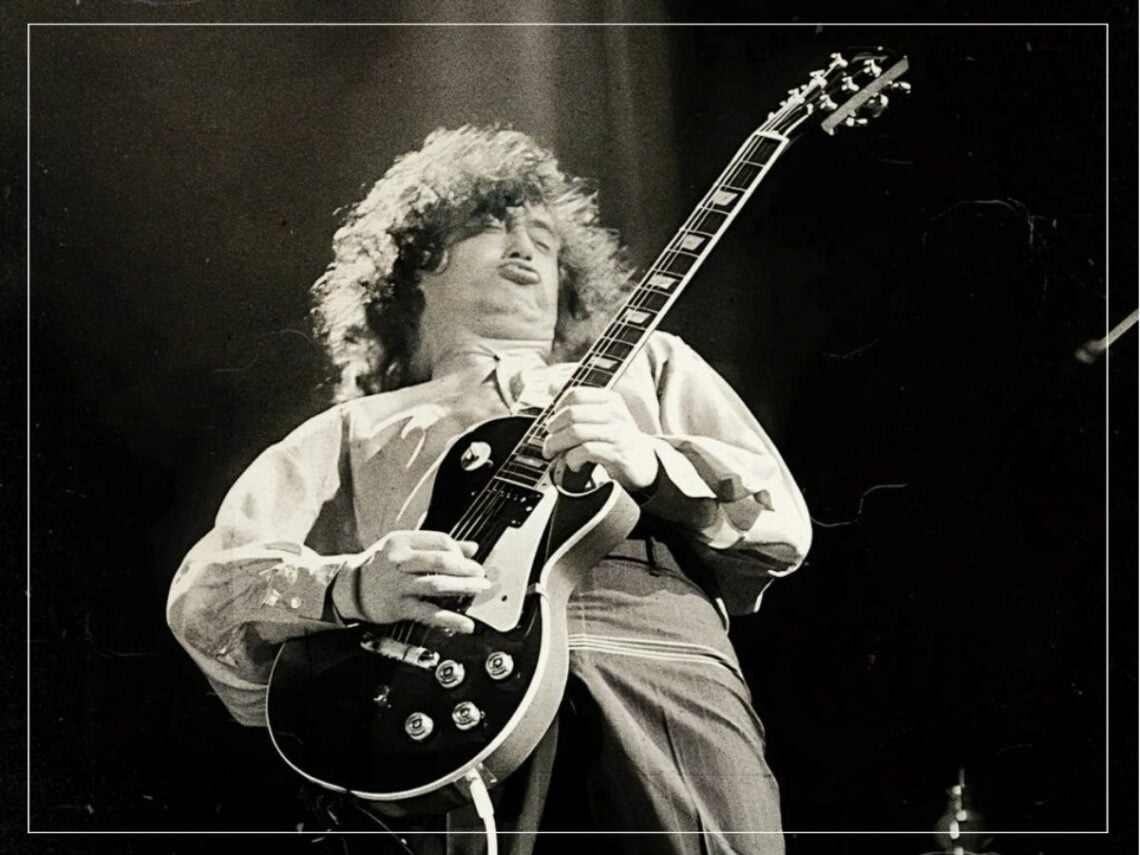
Credit: Far Out / Alamy
Sat 10 October 2026 16:00, UK
Jimmy Page didn’t ever want to try to make everything palatable for the mainstream whenever he played.
Some of the biggest tunes of his career usually came from him trying to go against the grain and make something that the world perhaps wasn’t ready for when Led Zeppelin first formed, and every tune he made after that debut record was all done to show people that there was more to life than a bunch of blues songs. But even when he was well into Zeppelin’s career, he felt that there was a lot more to explore that didn’t necessarily have to be in the rock and roll format all the time.
Half of the reason why Zeppelin was together was to have all of the best musicians of their generation all in one place, and that didn’t usually cater to having just one style to play in. The blues was always going to have a special place in all their hearts, but there was also a healthy dose of exotic scales in what Page was doing whenever he was working on any number of his tunes like ‘Kashmir’.
The Western world wasn’t yet ready for some of the strange tunings or the abnormal harmony that he was using all the time, but he felt that there was also something about his music trailing back into electric rock. He could have spent a hefty chunk of his time on acoustic guitar and been completely fine, but there were more than a few times when he wanted to see what those strange tunings sounded like when it was roaring out of an amplifier.
And when talking about the band’s core records, Houses of the Holy marks a bit of a departure point for the band in some respects. They were making some of the best tunes of their career, but when you look at all of the albums that they released before, this was the first time they didn’t have any outward blues songs. It was all about making new progressions, and songs like ‘Dancing Days’ and ‘The Ocean’ were the clearest indication of where they would be going.
No one would have thought that they were going to go as far as they did, but Page always intended to put himself on the brink of whatever was acceptable when making his guitar parts, saying, “I never really wanted to take the easy way out. Those harmonies you are talking about are stretching and pushing those songs and making them a bit angular. You’re not in a comfort zone when you are listening to the opening riff of ‘Dancing Days’, but I think it feels natural in a dark way. I was pushing myself to explore new areas of harmony.”
“I wanted to investigate those outside edges – maybe push myself over the edge! I’m surprised, really, that I’m here to tell the tale.”
Jimmy Page
But that kind of experimentation was exactly what the band needed at the time. They were on this upward path, trying to outdo everything they had done before, and while there’s an off-kilter energy about ‘Dancing Days’, the whole thing was meant to be a lot more adventurous once they made a tune out of it. All of that was well and good, but all it was to prepare us for what Physical Graffiti would do.
Further reading: From The Vault
Compared to Holy, Graffiti is the concept that they were shooting for on their previous record only fully realised. No one would have called Holy bad by any stretch, and the album does actually accomplish some things better than Graffiti, but their double album is the sound of what extravagance was supposed to be, even if they went a little too far over the edge in some places as well.
Then again, Page didn’t want to be in a band that took things cautiously. He would do everything he could to change the trajectory of what rock could be, and if he happened to throw people off a little bit whenever he worked on a song, that was a great way of subverting everyone’s expectations.
ADD AS A PREFERRED SOURCE ON GOOGLE  The Far Out Led Zeppelin Newsletter
All the latest stories about Led Zeppelin from the independent voice of culture.
Straight to your inbox.