
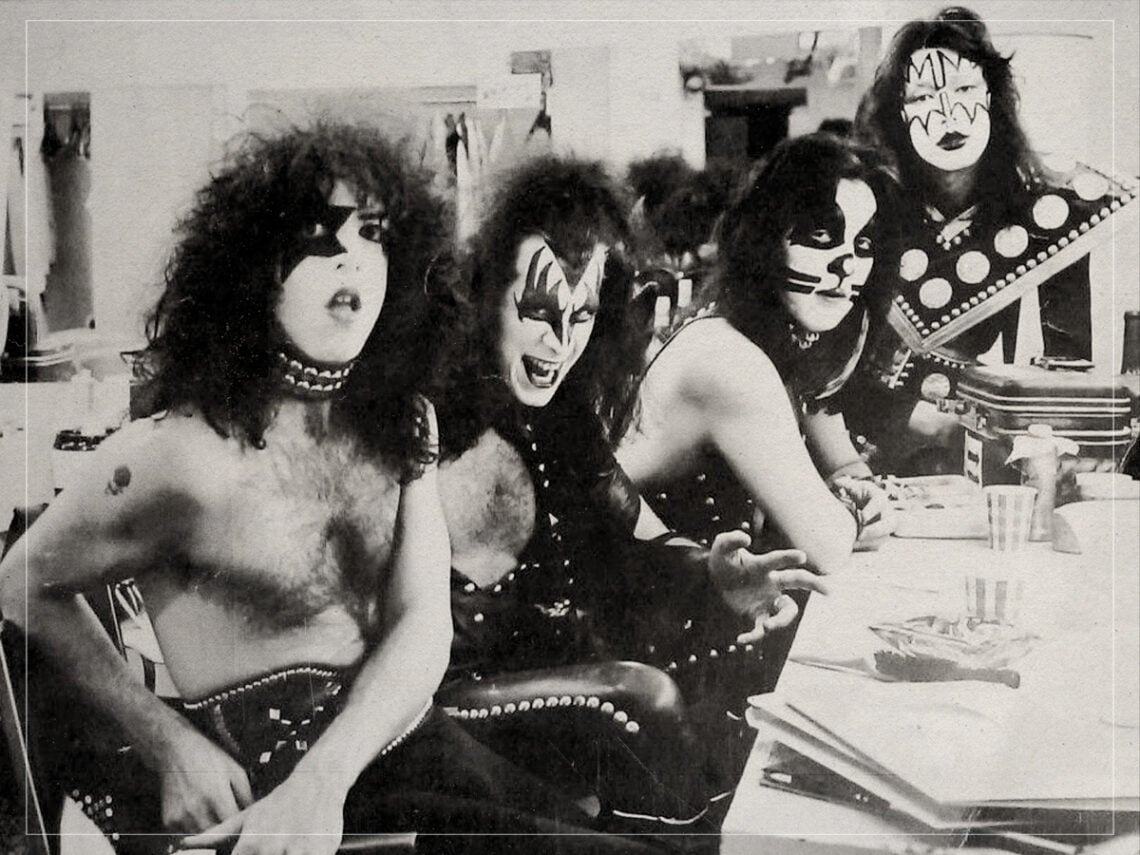
Credit: Far Out / Casablanca Records
October 20th, 2026 · 8:32am BST
Paul Stanley and Gene Simmons met in the New York music scene. Upon hearing Paul Stanley play, Gene Simmons knew that they had to start making music together.
Both of them were playing in different bands at the time. Stanley was working on music with Steve Cornell, meanwhile, Gene Simmons was in a band called Bullfrog Bheer. Stanley was rehearsing with Cornell at his house, which is where he met the man who would become his Kiss counterpart. The moment he and Stanley started playing music together, Simmons knew that the two of them would have a great partnership. However, it took a while for the two of them to agree to work together.
“I thought we should be in a band together,” said Simmons, “But Paul didn’t like me at all.” Stanley confirmed he wasn’t too keen on Simmons at the start. It wasn’t anything personal, he just thought that he might prove a bit too difficult to work with. “I think he thought Lennon, McCartney and Gene were the only songwriters in the world,” he said, “And all of a sudden he had to make room for a fourth.”
Their first attempt at making it work wasn’t Kiss, though. Before the makeup and the stage characters, Stanley and Simmons played together in Wicked Lester, even recording an album for Epic that never received a proper release. By their own account, the problem wasn’t a shortage of ideas but a lack of direction, and even a smidgen of misplaced enthusiasm.
They had tried so many different things that neither man thought the finished record represented the band they wanted to be. They had run too quickly into the abyss of music-making without thinking about the destination they were hoping to reach. Walking away from a record deal might sound like a strange way to get ahead, but it gave them a better understanding of what they needed from each other before starting again.
 Credit: Far Out / Michael Sears / Milwaukee Journal / Public Domain
The two did start working together eventually, and the two of them went on to have a songwriting partnership that has produced some truly timeless music. A lot of people thought that when Kiss started painting their faces, they did it because they wanted to make themselves easier to sell; however, they said it was because they had more creative freedom within their strict brand. When asked about the paint, Simmons compared their approach to music to that of the Beatles.
“We also took pride in having the same freedom The Beatles had,” said Simmons, “Their philosophy was, ‘No matter what kind of music we do, it’s still The Beatles’. That’s what was amazing about them… The Beatles were not trapped in that way. They could do music hall, psychedelia – anything – and they did. Yet somehow it always sounded like The Beatles.”
The two of them managed to write plenty of great songs with this newfound freedom that came with facepaint, but there is one that Paul Stanley loved playing the most. ‘C’mon and Love Me’ was born out of necessity, as the band had been told their record Hotter Than Hell had stopped selling. Upon hearing the news, they began working on their next album, Dressed to Kill, right away.
For all its swagger, the song also had a slightly unexpected influence behind it, with Stanley pointing to fellow ’70s icons The Moody Blues’ ‘Question’, particularly the way they struck their chords with an almost orchestral force. Kiss didn’t suddenly want to become a progressive rock band, but rather than huge chords and bigger shoes, they took a small detail from somebody else’s music and found somewhere else to put it.
On ‘C’mon and Love Me’, those emphatic guitar chords give the singer something to push against, making his invitation sound all the more urgent. The words might be straightforward, but the music does plenty of the persuading before Stanley reaches the chorus.
“It was a real interesting concept – especially since we hadn’t written any new songs yet,” recalled Stanley, “So we packed our bags and went home, and every morning Gene and I would write. When Peter [Criss] and Ace would show up, we’d say, ‘Okay, guys, here’s today’s song’. It wasn’t unusual for us to write a song in an hour and a half.”
He continued, “The verses to ‘C’mon and Love Me’ were probably written in half an hour, and yet it’s one of my favourite songs to this day – in fact, we may bring it out on the next tour. It sounds every bit as good today as it did back then.”
