
The wildlife filmmaker has been following a single pack of wolves off and on for eight years. And because wolves typically only live two to three years in the wild, he’s seen all the animals he once knew in this pack pass on and be replaced by their offspring.
“These wolves live in Hudson Bay, Canada, and they live in a very remote area where they are not hunted,” explains Gregory. “They don’t see people particularly often, and so they don’t have this fear of us like they do in places where they’re aggressively persecuted, which is most of North America.”
Among the facts Gregory reveals in the new television special are the many ways wolves contribute to a healthy ecosystem—ways that may surprise viewers who grew up with the idea that the only wolves out there were the big-and-bad, huff-and-puff variety.
“A healthy wolf population means a healthy planet, and that also means healthy people,” says Gregory. “I’m in awe of them.”
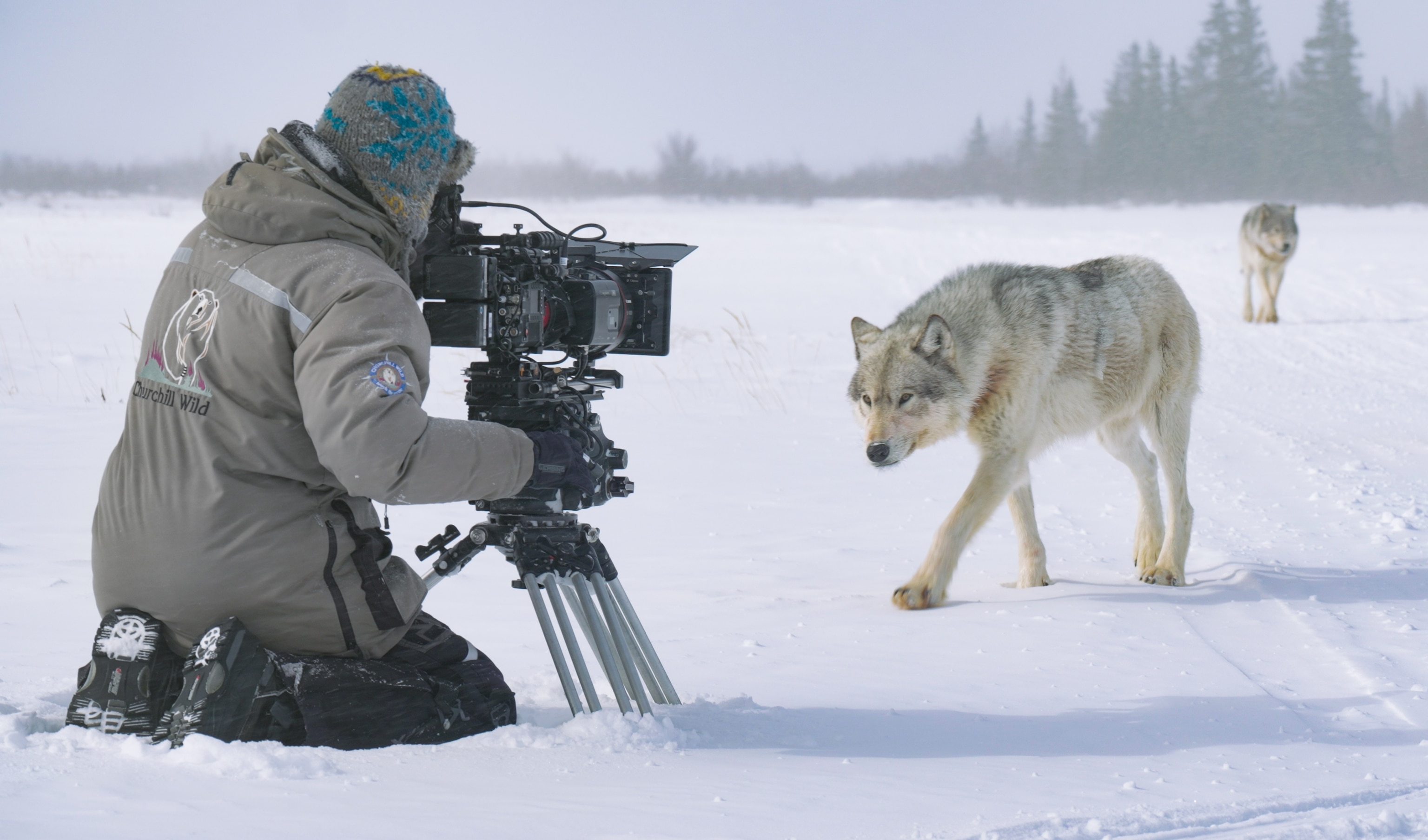
Bertie Gregory has been following the same pack of wolves in Hudson Bay, Canada for eight years.
Rick Smith, National Geographic
Boosting Biodiversity and Keeping Landscapes Diverse
At one point during Gregory’s new show, his team stumbles upon a moose carcass that had been left by the local wolf pack. Wisely, the crew sets up camera traps nearby to see what other animals might be making use of the fresh kill.