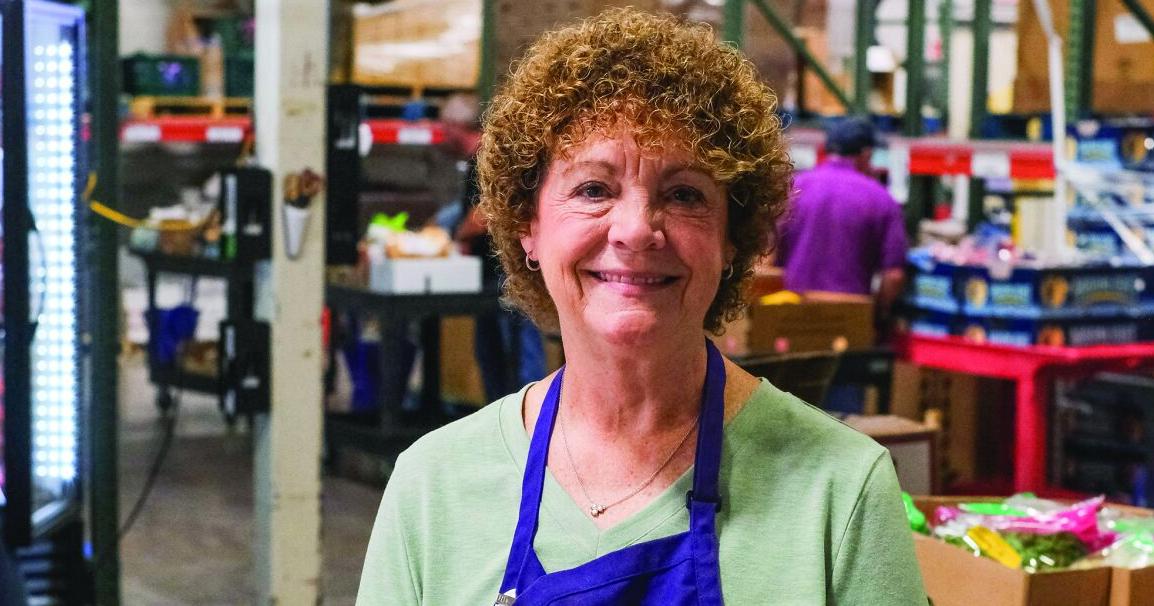
HonorHealth isn’t just doling out medical care – it’s also handing out food to those facing hunger crises.
The local nonprofit healthcare organization – with hospitals in Mesa, Scottsdale and Tempe – is on pace to surpass last year’s numbers, serving over 300 households a day with 5,000 households already served this year – a full 30 days ahead of last year’s record pace.
“People are coming from all over the state to seek help,” spokesman Bill Baer said. “We have seen an increase in numbers due to multiple reasons – the economy and social benefits decreasing such as food stamps and Medicaid.
“HonorHealth recognizes that our patients are just one part of the community we serve. By addressing barriers like food insecurity, we help prevent chronic disease and improve overall well-being. Providing food isn’t just about meals — it’s about building stronger, healthier communities for everyone.”
In 2024, HonorHealth’s Desert Mission Food Distribution Center, 9229 N. 4th St., Phoenix, served 57,648 households.
“For 2025 so far, we have served 29,378,” Baer said. “If we continue to serve the average of a 15% increase in households from last year, we could easily see 66,000 households.”
The number of Mesa households seeking food boxes also has increased over the years. In 2023, there were 102 households, which increased to 157 in 2024. Through June 30, this year, 125 households from Mesa have been helped.
Overall the remaining East Valley communities – including Chandler, Gilbert, Queen Creek, and San Tan Valley – saw 169 households come to the pantry from Jan. 1 to June 30, according to the hospital. In 2023, there were 147 households receiving food and in last year, 199 households were helped.
Now, HonhorHealth is looking for help – volunteers to help out in the pantry.
“With many student volunteers returning to school and snowbirds yet to return, the food bank is facing a critical volunteer shortage,” Baer said. “This is a great opportunity for individuals, businesses, and community groups to step up. Volunteering here is more than sorting food – it’s a hands-on way to fight hunger and give back in a deeply meaningful way.”
The food bank has a dedicated core of 108 volunteers as of the end of 2024 who run the front market, Baer said, adding that other volunteer groups help with the production/project-oriented side of the pantry.
“Based upon the growing need, having at least 10-plus volunteers per shift is critical for operations,” Baer said. “Due to availability, especially in our summer hours when snowbirds leave us, we sometimes have as low as three volunteers per shift. It varies each day.
“We need a minimum of one volunteer group per day – some days we need two volunteer groups. We have both morning and afternoon shift options and can accommodate groups up to 25 volunteers at one time.”
Volunteer activities range depending on the need for that day, but it may include bagging or sorting food, making snack packs for grade-school children, assembling food boxes for community nutrition programs, filling grocery carts in the market for food bank guests and working on special projects such as assembling hygiene kits, according to Baer.
The pantry stocks its shelves with food from St. Mary Food Bank, which can include rice, pinto beans, canned salmon, macaroni and cheese, milk, apple sauce, quick oats and peanut butter.
Desert Mission’s offerings include the Emergency Food Assistance Program for individuals and families, the Senior Food Box Program, the Infant Emergency Food Box Program and the Snack Pack Program, working with local schools to provide weekly bags of nutritious, kid-friendly food for school-age children to ensure they have enough to eat over the weekend.
It also provides the Nutrition Education Program, educating people on “how to make healthy eating a tasty and affordable reality.”
Both the Senior Food Box Program and the Emergency Food Box program have income guidelines set forth by the Department of Economic Services, according to Baer.
For the senior food program specifically, it is less than 130% of the Federal Poverty Level by Household size and the Emergency Food Box Program is 185% of the Federal Poverty Level by Household size.
“The cap for Desert Mission Food bank is currently two visits per month,” Baer added. “A family can use those visits at their discretion of how often, they just can’t do two in the same day.”
Desert Mission has been handing out food to the community since it was incorporated in 1927.
Although uncommon they are becoming more prevalent in recognition of the link between nutrition and health outcomes. Hospitals have either an on-site pantry or partner with a community food pantry.For instance, Boston Medical Center in Massachusettes has a Prentative Food Pantry, created in 2001. It works to address nutrition-related illness and under-nutrition of its low-income patients by filling BMC doctors’ “prescriptions” for supplemental foods that promote physical health, prevent future illness and facilitate recovery, according to its website.
And Loretto Hospital in Chicago has a Community Cupboard, which provides free non-perishable food to hospital staff, patients and the community, 24 hours a day.
“As the community services arm of HonorHealth, Desert Mission addresses the social determinants of health through programs that serve individuals from infancy through senior hood,” Baer said. “Our work extends far beyond medical treatment—because true health starts with access to basic needs like nutritious food.
“That’s why we operate a food bank, along with adult day health care, early care and education, resource navigation, and community nutrition programs that meet people where they are.”