Quick Read
-
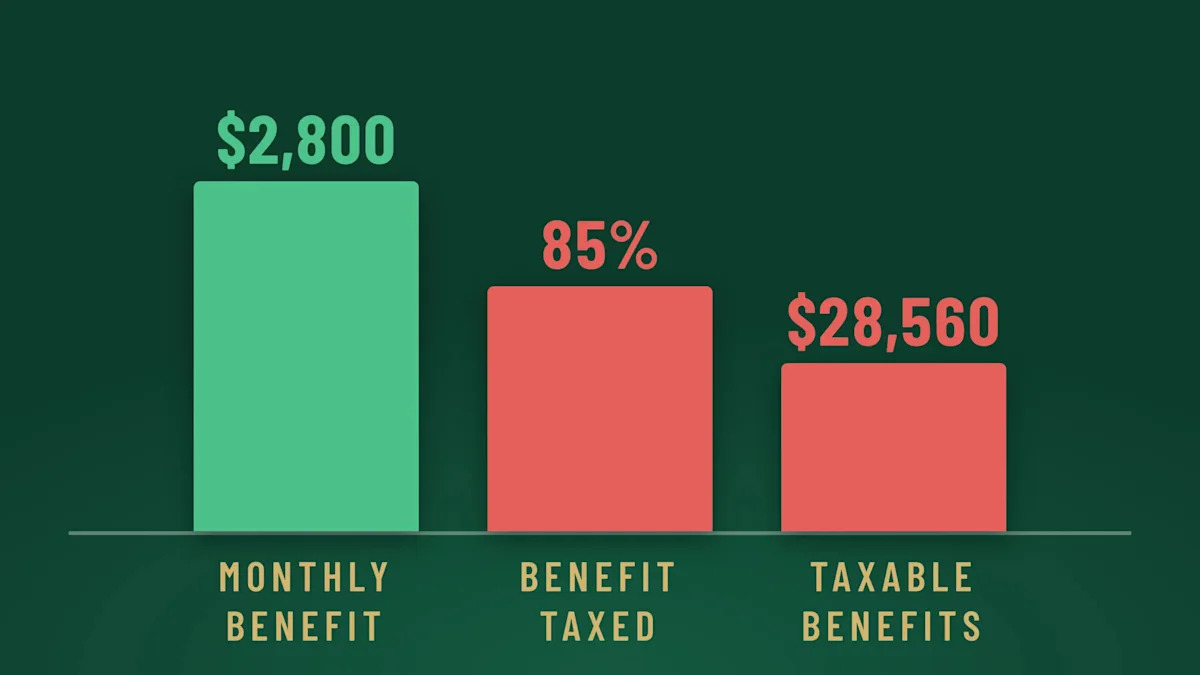
Withdrawing $60,000 from her 401(k) pushes combined income far past $34,000, so 85% of her Social Security, about $28,560, becomes taxable.
-
She hits the 85% cap at roughly $45,500 in withdrawals, so modest cuts barely reduce taxable benefits, and each extra $1,000 withdrawn costs about $233 in tax.
-
Her roughly 7% withdrawal rate threatens her $900,000 balance more than taxes do, so she should size withdrawals carefully and review the plan yearly.
-
Americans who work with a financial advisor have saved more than twice as much for retirement, on average. Find out what one could change for you: SmartAsset’s free quiz matches you with up to three vetted fiduciary advisors in about five minutes. (Sponsor)
She’s 67 and single, and her retirement income comes from two places. Social Security pays her $2,800 a month, which is well above the estimated $2,071 average for retired workers in January 2026. She also takes $60,000 a year from a $900,000 traditional 401(k). She saved steadily and claimed at a reasonable age, and she’s in a better spot than most retirees.
 24/7 Wall St.
Tax season is where it gets confusing. Her 401(k) withdrawals change how her benefit is taxed, so the IRS counts $28,560 of her Social Security as taxable income. This amounts to $2,380 of every monthly check. What she actually pays on it depends on her tax bracket, so the bill is much lower than $28,560.
Why Her 401(k) Withdrawals Make 85% of Her Benefit Taxable
The IRS starts with a figure called combined income. It’s half of your Social Security plus almost all of your other income. For her, that’s half of her $33,600 in annual benefits plus her 401(k) withdrawals, which comes to $76,800.
A single filer sees some benefits become taxable once combined income passes $25,000. Above $34,000, as much as 85% can be taxed. Her combined income is well past that second line, so she hits the legal maximum: 85% of her benefits, or $28,560.
——
Can You Answer These Three Questions?
Americans say they need $1.46 million to retire comfortably. Whether that number fits your life depends on three questions most people never work through:
-
1. How much can you withdraw each year without running out?
-
2. When should you claim Social Security?
-
3. How much will taxes take from your 401(k) or IRA?
A fiduciary advisor can answer all three using your real numbers. SmartAsset’s free quiz matches you with up to three who serve your area.
(Sponsor)
——
Most retirees miss what happens next. She reaches that maximum well before she’s done withdrawing. Under the IRS formula, she hits the 85% cap once her 401(k) withdrawals reach about $45,500. Below that level, each extra dollar she withdraws also makes up to 85 cents of her Social Security taxable. Above it, her taxable Social Security stays at $28,560, and each additional 401(k) dollar is counted only once.
Story Continues
So trimming her withdrawals a little won’t change much. If she cut them to $40,000, her taxable benefits would drop only to about $23,880, and she’d have much less money to live on.
The $25,000 and $34,000 thresholds are flat dollar amounts in the tax code, and they don’t rise with inflation. Benefits do rise.
The 3.6% inflation adjustment for 2027 takes her check to about $2,901 a month. That raises her taxable portion to roughly $29,588 a year.
What Actually Sets Her Tax Bill
Her income before deductions is her 401(k) withdrawals plus her taxable benefits. For 2026, she gets a $16,100 standard deduction plus another $2,050 because she’s single and over 65. She also qualifies for a separate senior deduction of up to $6,000, available from 2025 through 2028.
That deduction shrinks by 6% of income above $75,000, so at her income she keeps about $5,186 of it.
After deductions, she’s in the 22% bracket, which for single filers starts above $50,400 of taxable income. Each extra $1,000 she withdraws costs about $233 in federal tax. That’s the 22% on the money itself, plus a bit more because her senior deduction gets lower.
Required minimum distributions (RMDs), the annual amounts the IRS makes you take out, start at 73 or 75 depending on birth year. She’s already withdrawing about 7% of her balance each year, which is more than the required amounts would be in their first years. So those rules are unlikely to push her into a higher bracket. If she has more than one 401(k), each plan has to meet its own required withdrawal separately.
Two Decisions That Matter More Than the 85% Figure
First, at her spending level the 85% figure won’t change, so the size of each year’s withdrawal is what she can control. Large one-time costs, like a new roof or a car, are the biggest risk. The 24% bracket starts above $105,700 of taxable income. Splitting the 401(k) withdrawals needed for a big expense between December and January can help keep both years in the 22% bracket.
Second, her roughly 7% withdrawal rate matters more than any tax detail. Taking that much from a $900,000 account every year can run it down faster than she might expect, and taxes leave her less of each withdrawal to spend. Social Security will keep paying for life and rising with inflation, but the 401(k) won’t automatically last. A plan that works at 67 should be checked again each year as the balance and her expenses change (the taxation of her benefits is one of nine IRS rules that quietly drain retirement accounts, all mapped in a free guide here).
Her state taxes, other savings and health costs could change any of these numbers. Before changing her withdrawals, it’s worth running her own figures through the IRS worksheet or going over them with a tax professional.
Not Every Financial Advisor Has to Put You First (Sponsor)
The title “financial advisor” isn’t legally protected, and plenty of people who use it are paid on commission for the products they sell. A fiduciary is different: they are legally obligated to act in your best interest.
SmartAsset’s free matching tool only connects you with fiduciary advisors who are registered with the SEC or a state regulator and serve your area. Fees still vary from advisor to advisor, which is why you’re matched with up to three to compare, and you’re under no obligation to hire any of them.
Free: Find a fiduciary advisor who serves your area.
Contact editorial@247wallst.com for any questions or corrections.