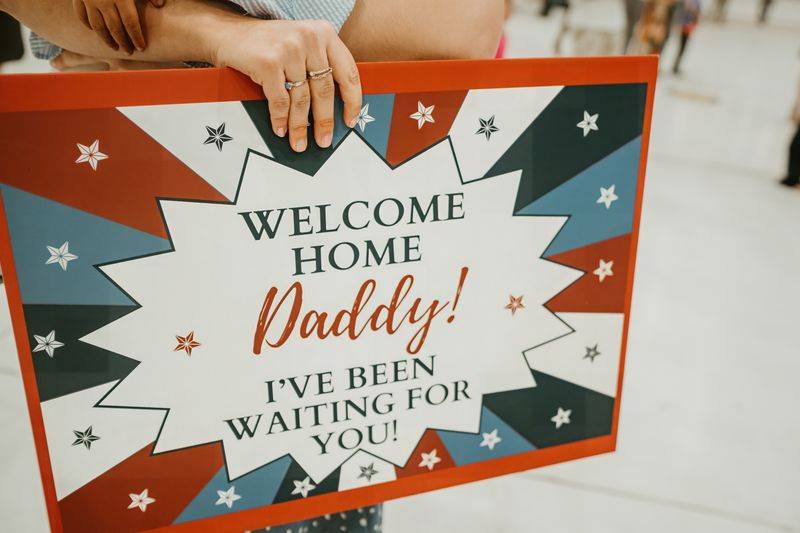
Some 1.4 million U.S. children have a parent currently in the military, according to the U.S. Department of Defense. That’s nearly half the nation’s soldiers, sailors, airmen and Marines who have children under 18.
The effects can be devastating. According to the National Center for PTSD (post-traumatic stress disorder), researchers have found that children with parents who are deployed to war tend to worry more and be afraid and sad. They may also fear that the parent or other loved one who is deployed may die in war.
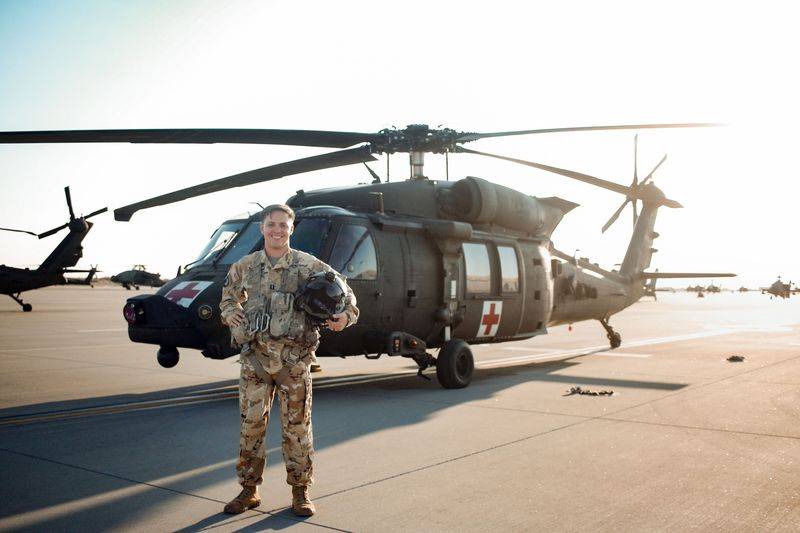
U.S. Army Maj. Steven Rohrig spent 9 months deployed to Europe in 2024, away from his wife, daughter and unborn child. The experience sparked the creation of the children’s picture book, ‘The Dada Doll.’ (Nina Rohrig).
Nina Rohrig, a military spouse and mom of two, felt the strain of her husband’s deployment in 2024 on three fronts.
First, she was left to care for her then 2-year-old daughter, Aila. She was also pregnant with her second daughter, Kaia, and was missing the support of her husband, U.S. Army Maj. Steven Rohrig, who had been deployed to Europe for nine months.
“The child certainly misses the parent. But the military parent also misses the child,” Rohrig said in an interview with Military.com from Fort Rucker, Georgia. “This was our first deployment as a family, and I tried my best to stay strong. I was also pregnant, so it was difficult for me too.”
Helpless Feeling Led to Educational Endeavor
Rohrig said there was one emotional moment Aila experienced that sparked an idea.
“Before Steve left for his deployment, he gifted Aila with a bear or doll made out of a worn-out uniform and some old patches,” Rohrig said. “It was his way to stay connected to her during their time apart.
“Well, one day, Aila picked up the bear and hugged it and called it ‘Dada.’ She was only 2, but she understood what was going on. She understood she was missing her dad.”
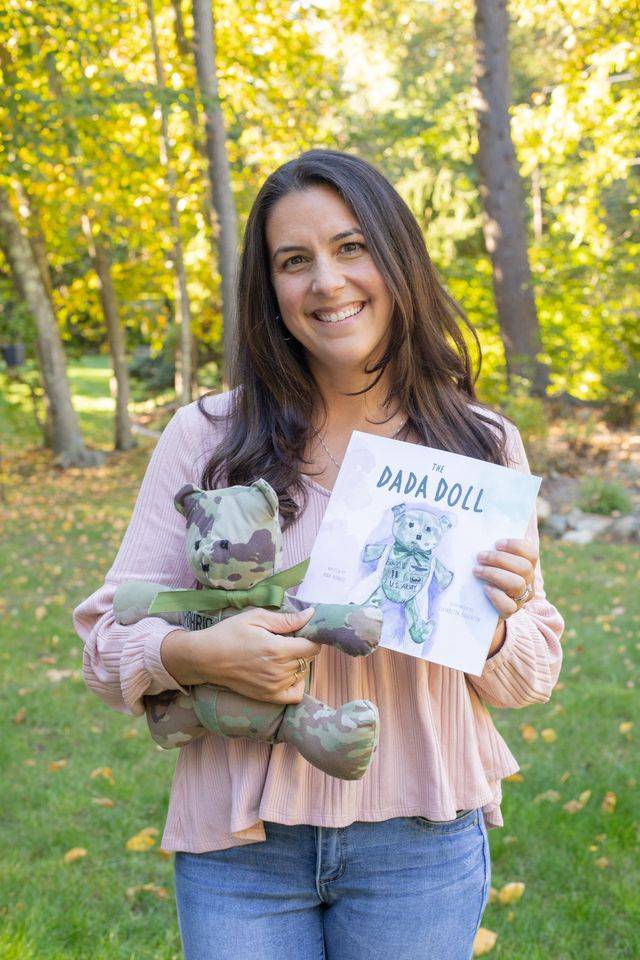
Credit: Nina Rohrig, a military spouse and mom of two, wrote the children’s picture book, ‘The Dada Doll,’ to help military children cope with deployment separation (Nina Rohing).
That night, Rohrig said she wrote ‘The Dada Doll,’ described as a heartfelt picture book about one little girl, her doll and finding comfort while her military father is away.
She said she’s received plenty of positive feedback, hoping it gives military kids the opportunity to see themselves in the book’s pages.
That’s what I struggled with, explaining the physical separation of deployment to a child. There were no stories I could find about deployment and how to explain this difficult concept to my daughter.
‘The Dada Doll’ was published in September, featuring the work of a professional illustrator, Elisabetta Boughton, and book designer Jilly Burtnett, who is also a military spouse.
In a synopsis of the book posted on Amazon, Rohrig writes, “To anyone else, he’s a teddy bear made from a well-loved military uniform and patches. But to Aila, he’s so much more. He’s a reminder that even when Dad is far away, his love is never far from her heart.”
It continues: “It’s a story of love, resilience, and the quiet strength of military children.”
What Research Shows About Children With Deployed Parents
Children with a deployed parent may be at an increased risk for behavioral problems, maltreatment and substance abuse, according to a review by researchers at the Providence VA Medical Center and the Bradley/Hasbro Children’s Research Center, a prominent pediatric mental and behavioral health research facility in Providence, Rhode Island.
For the youngest set of children, those under age 5, the review found increased behavioral and emotional problems during deployment. Among children between 6 and 12 years old, the major problem was anxiety.
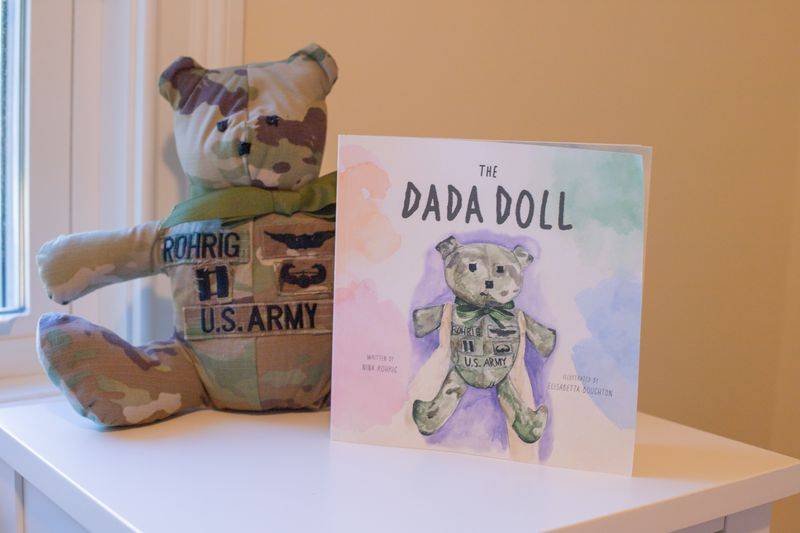
The children’s picture book, ‘The Dada Doll,’ was published in September 2026 to help children cope with military deployments. (Nina Rohrig).
Also, the length of deployment tended to predict childhood depression, as well as other symptoms, according to the review.
Rohrig said her husband’s deployment only lasted nine months, compared to the average military deployment of 2–3 years. But his return from serving as an Army MEDEVAC pilot was emotional, and a learning experience for the family.
“There was a moment, and it’s a very significant point in my book towards the end, when dad comes home, and he’s sitting down talking with Aila,” Rohrig said. “She says, ‘You know, dad, you’re home now, Dada Doll’s job is done, his mission’s complete.'”
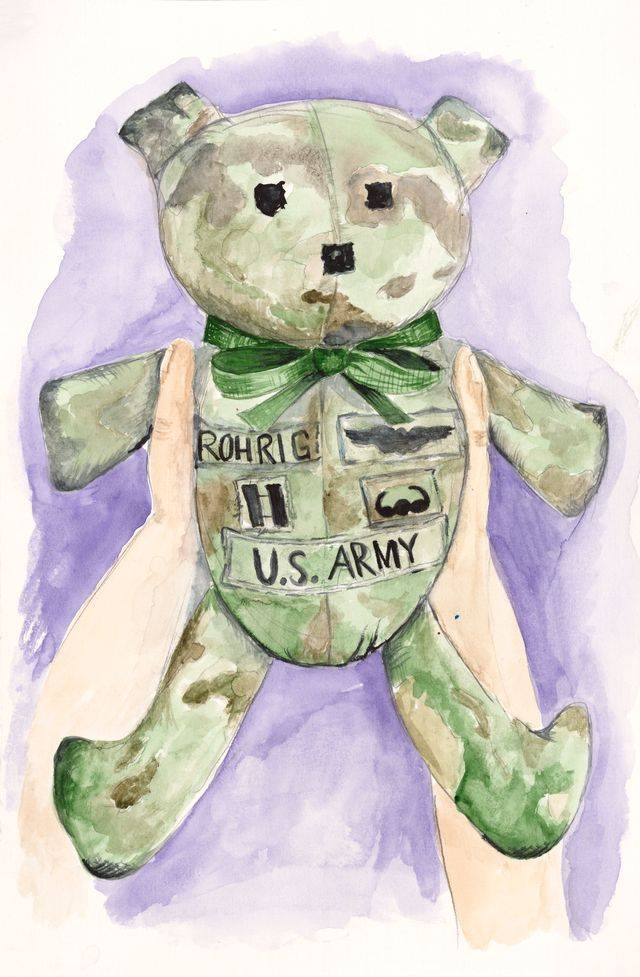
Illustrated art for ‘The Dada Doll’ children’s picture book with illustrator Elisabetta Boughton, written by military spouse and mom of two, Nina Rohrig. (Elisabetta Boughton).
That is when Steven responds with his own “interesting” bit of information, that he carried her picture in his flight suit as he missed her too.
Rohrig said capturing that moment in the pages of the book was important—not just to show that children are not only aware and affected by a military deployment, but that the military member is affected as well.
“My goal for this book is just to have these military kids be seen,” she said. “They’re resilient, but I think it’s important to give them tools for this resiliency.
“I feel like this book could potentially be a tool to help kids cope, to help parents cope, to help them explain deployment in a safe and compassionate way.”