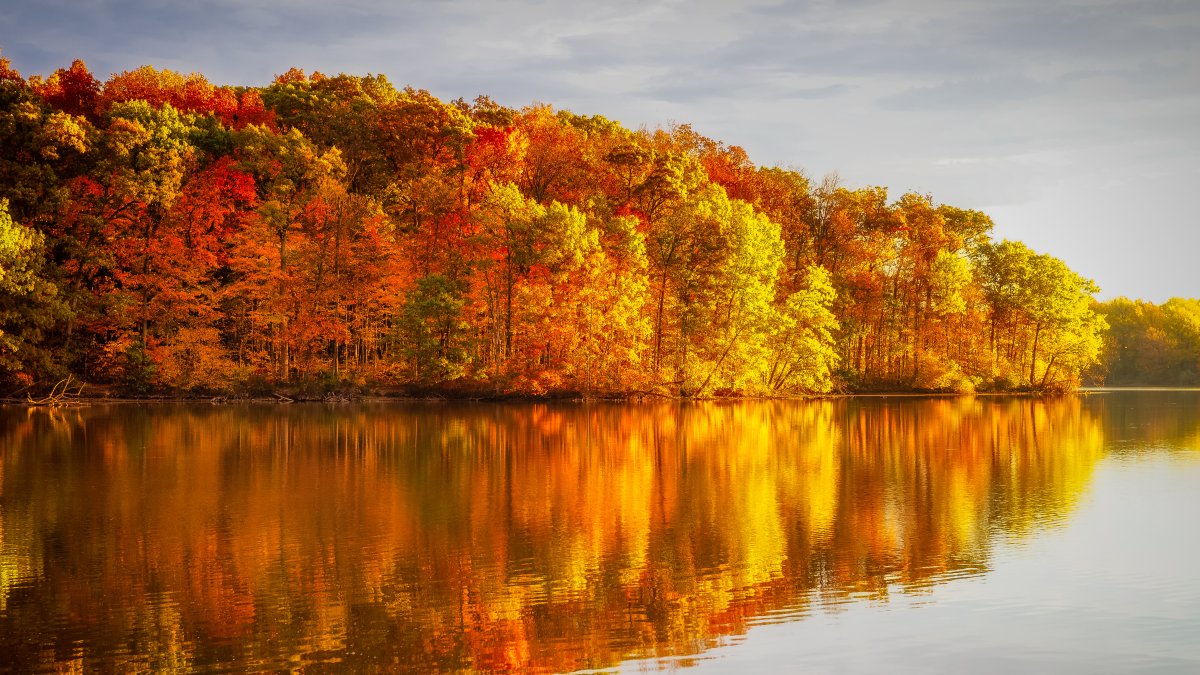
The fall season will officially begin soon in the Chicago area, but some have already noticed leaves starting to change color.
While northern Illinois is already seeing signs of change, peak colors won’t come just yet.
Fall officially starts on Sept. 22, just as leaves begin showing some of the first signs of the changing season.
Is this early or late for typical changes to foliage?
Here’s a timeline and what to watch for in the weather to know just how vibrant the fall colors could be:
Mid-to-late September
According to Illinois’ fall foliage map, leaves are already showing “minimal” signs of change.
By the end of the month, the transition will be in full swing, the Illinois Trip Planner from the Department of Natural Resources predicts, particularly for northern Illinois and then spreading south into central Illinois.
Early-to-mid October
Once October arrives, colors are expected to begin changing across much of the Midwest.
By Oct. 15, some of the more moderate color changes are expected across northern Illinois, spreading into other parts of the state by Oct. 20.
According to the map, estimated peak times for leaves from Galena, through the Chicago area and down to Starved Rock are between the second and final weeks of October.
Late-October
Peak colors typically continue in the Chicago area and Illinois through late-October.
By the end of October, the northern region of the state starts to enter the “past peak” phase.
For central Illinois, the estimated peak time is slightly behind the northern portions of the state, according to Enjoy Illinois.
November
By the time November arrives, fall leaves are expected to be past their peak.
What could change this timing?
There are some factors that can change just how colorful the leaves turn and how long they last.
Trees usually start changing as the days continue to get colder and nighttime temperatures get consistently quite cold – into the low 40s, 30s or even lower.
NBC 5 Storm Team Meteorologist Kevin Jeanes said in general, a hot and dry summer can dampen the brightness of leaf colors.
Morton Arboretum and its research partners found trees respond to extreme weather conditions over longer time periods — several weeks or more — compared to short-lived heat waves or dry spells.
Why do tree leaves change color?
While it appears peak colors won’t emerge for several weeks, you might be wondering what causes trees to change color in the first place — or what causes the vibrant hues.
Trees with leaves that change colors are green most of the year because of the chlorophyll they use to absorb energy from sunlight during photosynthesis, according to the an article by the Smithsonian Institute.
But when temperatures drop and days get shorter, trees get less direct sunlight, and the chlorophyll in the leaves breaks down.
“How much and how fast leaves transform varies by location on the globe,” the article explained. “The best colors are produced when the weather is dry, sunny and cool. Places that are cloudy, damp or warm won’t see the same degree of changing color.”