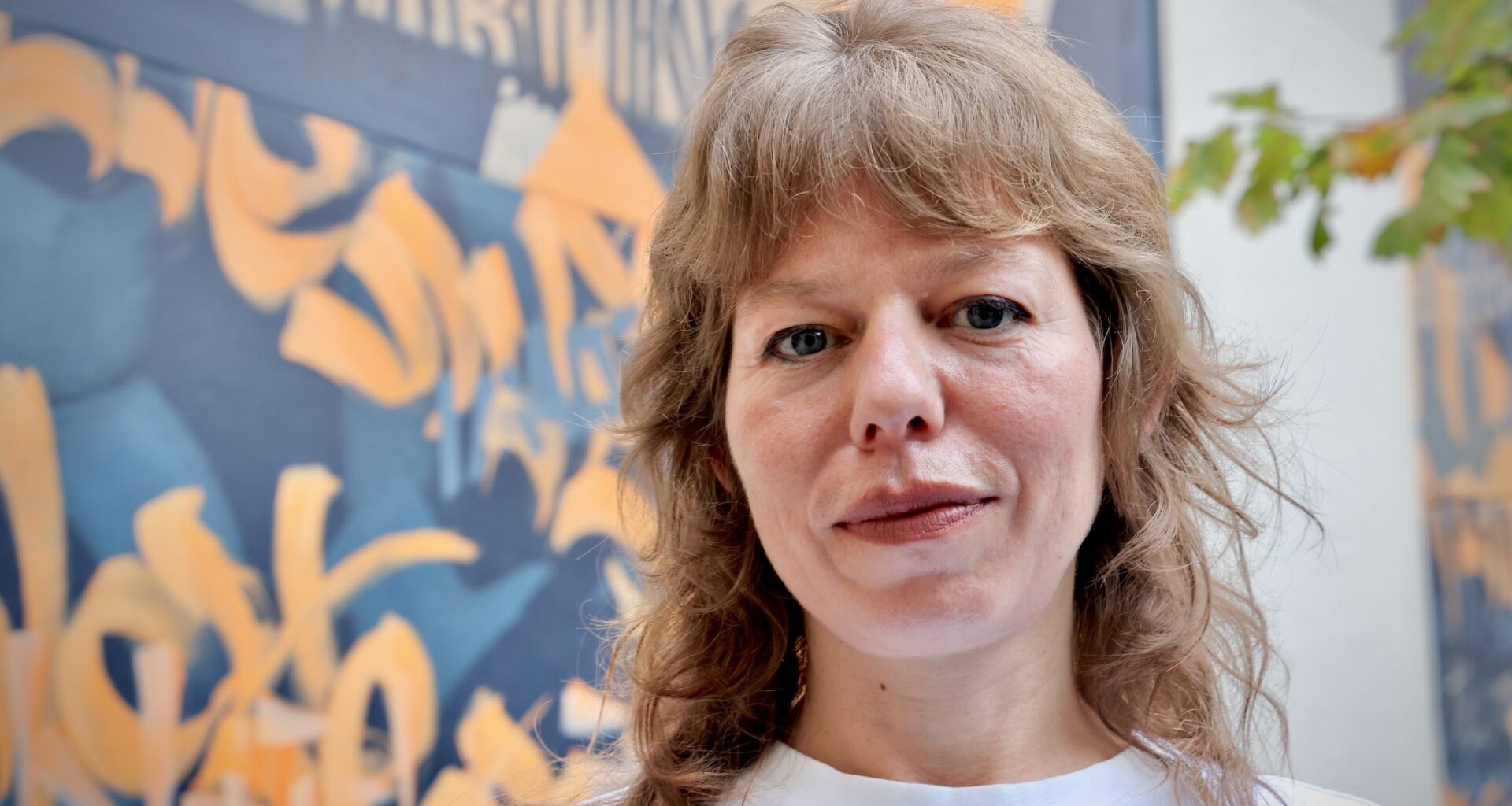
Kutas was also struck by how soft the mural is, using gentle phrases typically told to children.
“There’s a sweet element to having songs, prayers, and lullabies,” she said. “It’s a nod to what has survived, despite all odds, having been passed down generation to generation.”
The way “Lay-lah Lay-lah” uses text that is both evocative and abstracted is unlike any other mural in Philadelphia, said Mural Arts Philadelphia director Jane Golden. She and Kutas knew they had to tread carefully in selecting Ponizovsky Bergelson to make a public mural about such a weighty historic event.
“There’s a great thread that connects us all as being human,” Golden said. “In our world now there’s something lost that deals with our common humanity. Through her art she’s holding out her arms and asking people to come in.”