
Between 2006 and 2012, comedian Cameron Esposito performed stand-up in almost every conceivable Chicago venue: bars, clubs, roller derbies, burlesque shows, the circus, the back room of a pancake restaurant and Hamlin Park Fieldhouse.
This weekend, Oct. 3 and 4, she tackles theater-in-the-round in Steppenwolf’s Ensemble Theatre with the debut of her new one-person show, “FEAT.”
With “FEAT,” Esposito, who was raised in Western Springs, displays her penchant for finding levity in heavy and deeply personal material. A year and a half ago, she underwent a minor medical procedure for a foot injury. But, after extended antibiotic dosing to treat possible infection, she contracted Clostridium difficile (C. diff), a secondary colonic infection that threatened her life.
The rapidly escalating events of “FEAT” forced Esposito to meditate on her own mortality, which ultimately convinced her to have a child with her wife, Katy Nishimoto, who works as a book editor at Dial Press. She returns to Chicago, the place that launched her, with a healthy foot, a refreshed digestive system and, most surprising to her, a pregnancy that’s seven months along.
“I made peace with the whole rest of my life,” Esposito says of the ordeal. “It changed my perspective on what kind of spouse I want to be and what kind of child I want to be. It also opened the door to wondering about what’s next and if I’ll have a chance to leave a legacy.”
“FEAT” continues Esposito’s trajectory as a gallantly confessional comedian, particularly over the past few years as a working stand-up in Los Angeles. In 2018, she released “Rape Jokes,” a powerful stand-up album where she talks about her experiences with sexual assault; in April, she dropped her latest hour-long special, the self-directed “Four Pills,” about her diagnosis of bipolar disorder.
But it was Esposito’s formative years in the Chicago comedy scene that cement her legacy as the vanguard for local queer comics. Within months of arriving in the city from Boston in 2006, she launched The Spectacular Show, a cabaret variety revue at the now-shuttered Gorilla Tango Theatre that featured an inclusive line-up and homemade cupcakes to complete its ramshackle charm.
“Cameron was one of the first people I met [in the scene] that had a very, ‘If you build it, they will come’ ethos that Chicago needed at the time,” says Adam Burke, a Chicago-based comedian who can be heard regularly on NPR’s “Wait Wait…Don’t Tell Me!” “She also had the notion to find ways to do stand-up, even if it’s not at a stand-up venue … People would say, ‘That’s not a stand-up gig,’ but it was the way she did it. She was doing exemplary crowd work.”
While honing her material in local rooms, often as the only queer person, she launched her memorable one-person show, “Side Mullet Nation,” which poked fun at her lesbian identity, asymmetrical haircut and all. Esposito, who today identifies as gender fluid, also developed a series of “Feminine Comique” classes for female and non-binary comics-to-be with the venerable independent stand-up venue The Lincoln Lodge.
Perhaps Esposito’s most enduring contribution is the Wednesday open mic at Cole’s Bar in Logan Square, which she co-hosted with Burke. Since its inception in 2009, about a week after Cole’s opened, it has remained a staple of the comedy scene, running weekly to this day with very few exceptions. (The mic moved online during the COVID-19 pandemic shutdown.)
Cole’s was a welcome departure from open mic nights dominated by dudes playing to an audience of other comedians simply waiting for their turns. Esposito and Burke radiated warmth and cultivated an atmosphere in which comedians of any orientation could feel comfortable.
The pair enforced some rules: They discouraged comics from picking on audience members who looked or dressed differently. They would not tolerate fellow comics snickering in the back of the room and would eject them immediately for doing so. They also managed the lineup dynamically as the evening went on to maintain a diversity of viewpoints and to juice the room if energy began to lag.
As the co-host, Esposito modeled other-ness as a feature, not a bug. She eschewed broad material and rapid-fire punchlines in favor of personal stories — dating women, being questioned about her muscle-y arms, wearing a raccoon-skin cap far too often as a child — punctuated by pregnant pauses. Intentional or not, her deliberate pace radiated confidence.
“Cameron was so proud of her identity and so vocally outspoken at a time when it wasn’t OK to be gay, when gay marriage wasn’t a right,” says Coleman Brice, owner of Cole’s Bar. “That really made it a safe space for different kinds of people to come out and do comedy.”
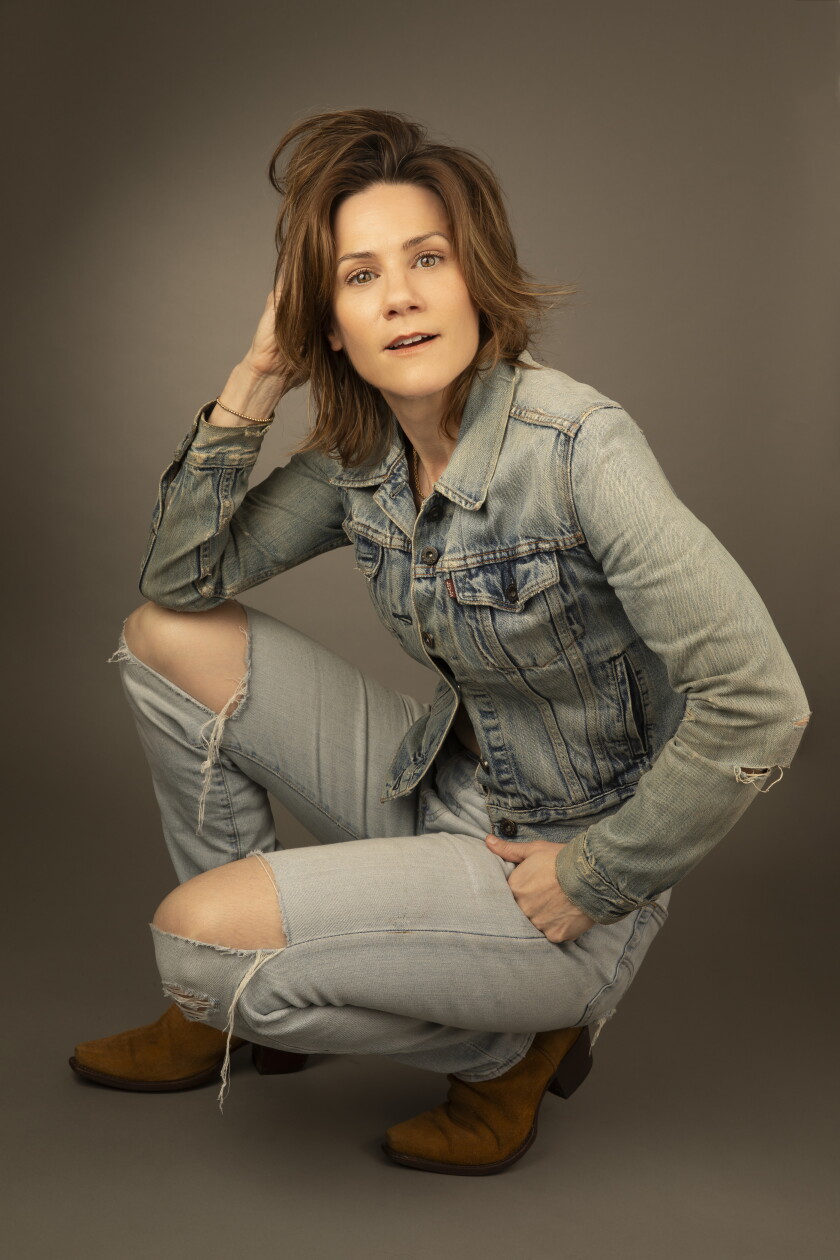
“When I was a young comic, especially as a queer comic, my biggest goal was for people to see that they could be cool and confident onstage; now, I want people to know that, while my story might be different, we all feel the same stuff,” Esposito said.
Courtesy of Cameron Esposito
Before long the open mic hosted 30-40 comics each week, some arriving many hours early to claim a performance slot. Regular people began to attend — the holy grail for any local comedy show — upwards of 50-70 throughout the night.
Cole’s open mic maintains its reputation as a welcoming room and continues to attract new and veteran Chicago comedians alike, cementing its place as the go-to Wednesday comedy spot. Its popularly has also led to occasional celebrity drop-ins over the years, including Sarah Sherman (“Saturday Night Live”), Tim Meadows (“Saturday Night Live”, “Mean Girls”), Hannibal Buress (“Broad City”), Eric Andre (“The Eric Andre Show”) and Liza Treyger (“Survival of the Thickest”).
The hosts at Cole’s have changed over the years. Now helmed by Kristi Durkin and Victoria Vincent, Cole’s remains a haven for all sorts of folks to see themselves represented in the line-up and to feel like they are worthy of stage time. Which is exactly what Esposito needed in 2006 but offered to others every year beyond that.
“When I was a young comic, especially as a queer comic, my biggest goal was for people to see that they could be cool and confident onstage; now, I want people to know that, while my story might be different, we all feel the same stuff,” Esposito says. “You stick around long enough, and sometimes things come full circle.”