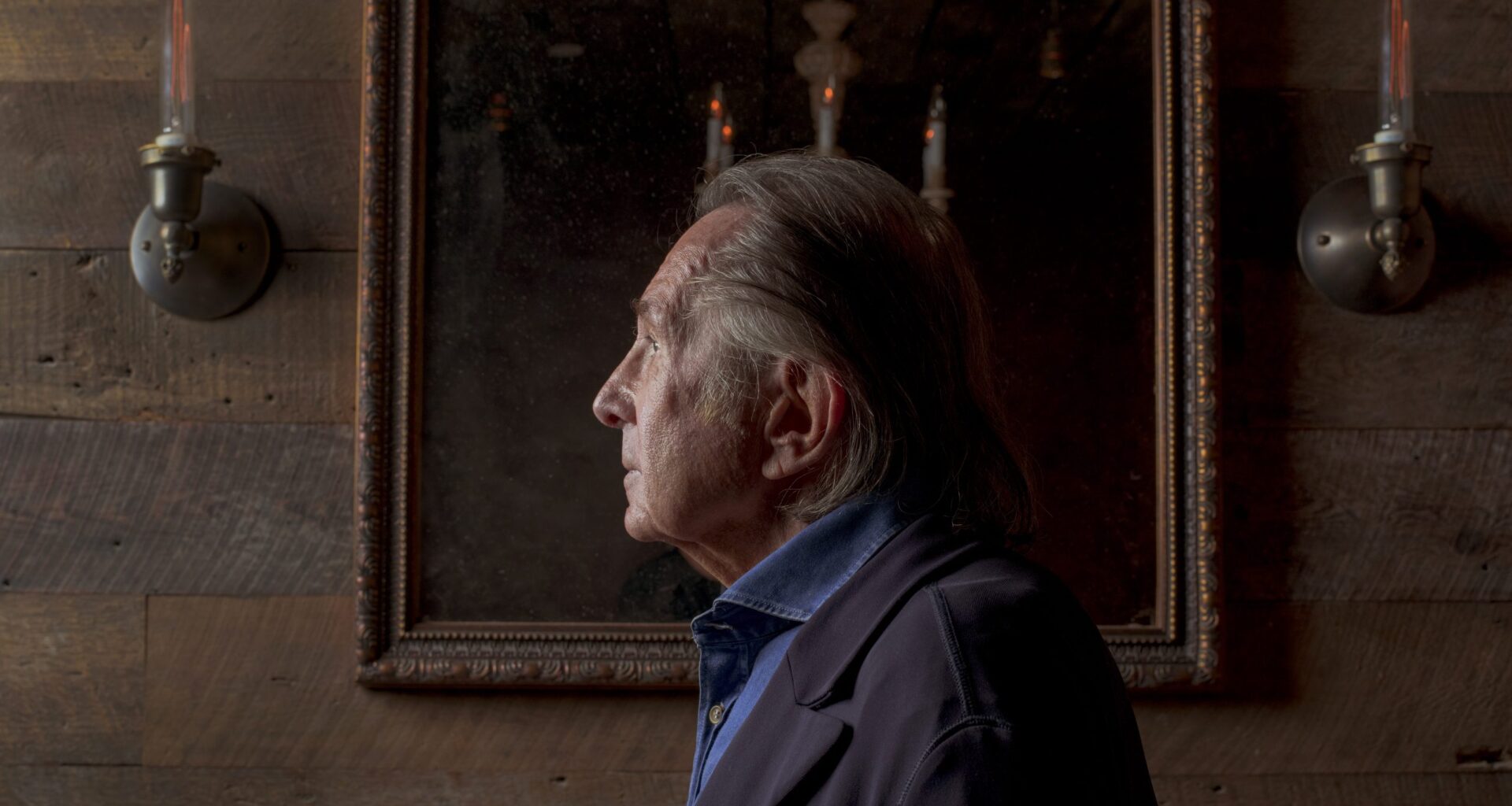
Shelly Fireman — the larger-than-life Bronx-born restaurateur, sculptor and Broadway insider who turned dining into theater and theater people into family — died this week at the age of 93.
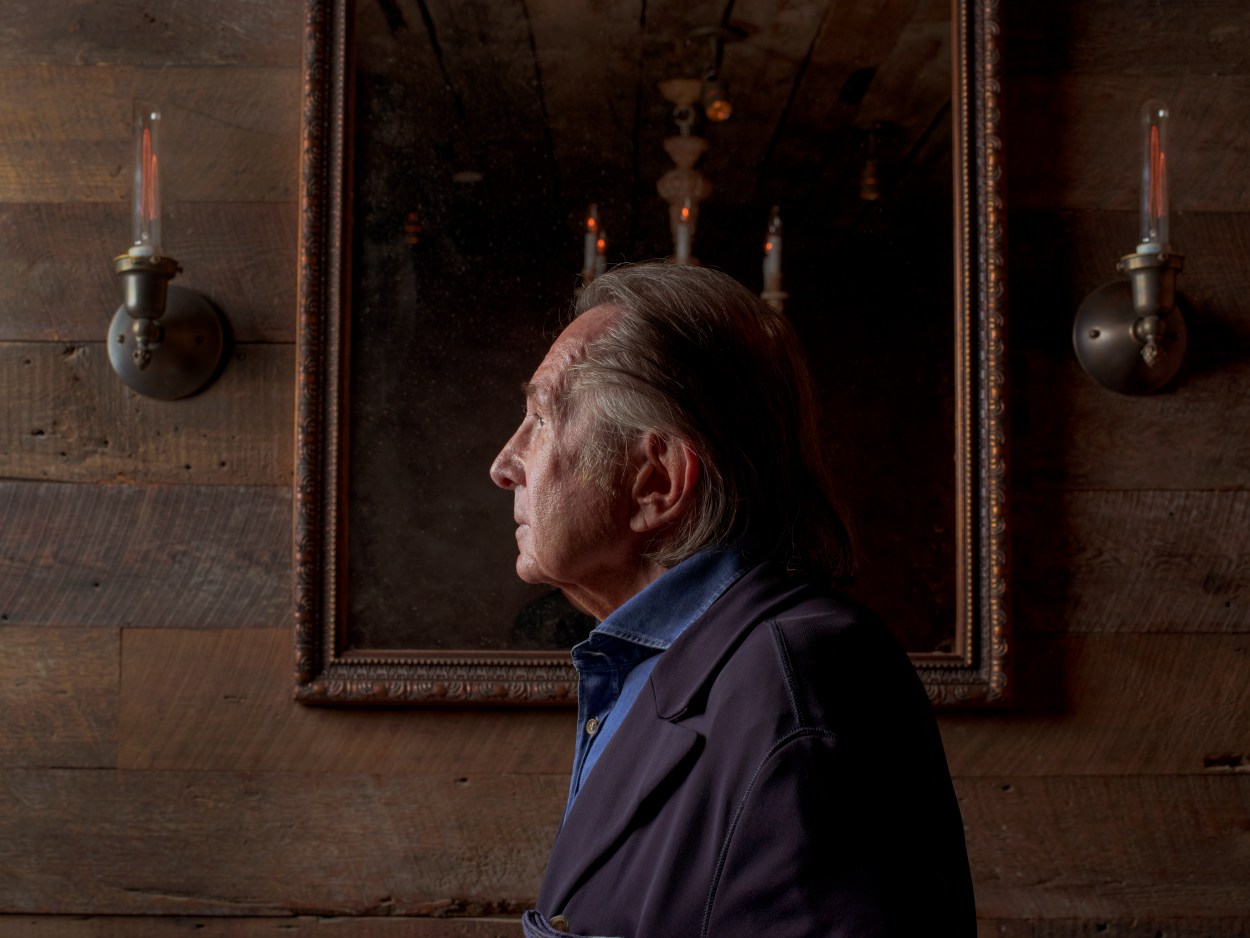 Shelly Fireman was proud of his art, as well as his food. Photo: Nacho Guevara
His death was announced by his restaurant group on social media, with Trattoria Dell’Arte sharing that it was “with a heavy heart” that they said goodbye to their founder.
Born and raised in the Bronx, Fireman credited his parents with instilling in him a love of art, literature, and hospitality — influences that became the backbone of his life’s work. He opened his first venture, The Hip Bagel in Greenwich Village, in 1963 and launched Café Fiorello across from Lincoln Center in 1974, setting the tone for an empire of restaurants that doubled as cultural salons. He didn’t just build places to eat — he created gathering spots where Broadway stars, producers, critics, neighborhood regulars, and tourists shared tables, laughter and unforgettable meals.
Beyond hospitality, Fireman was a sculptor and passionate art collector, known for his bold bronze nudes and his eye for artists like Warhol and Leroy Neiman. His influence stretched across food, art and entertainment — and his legacy lives on in the rooms he animated and the people he brought together.
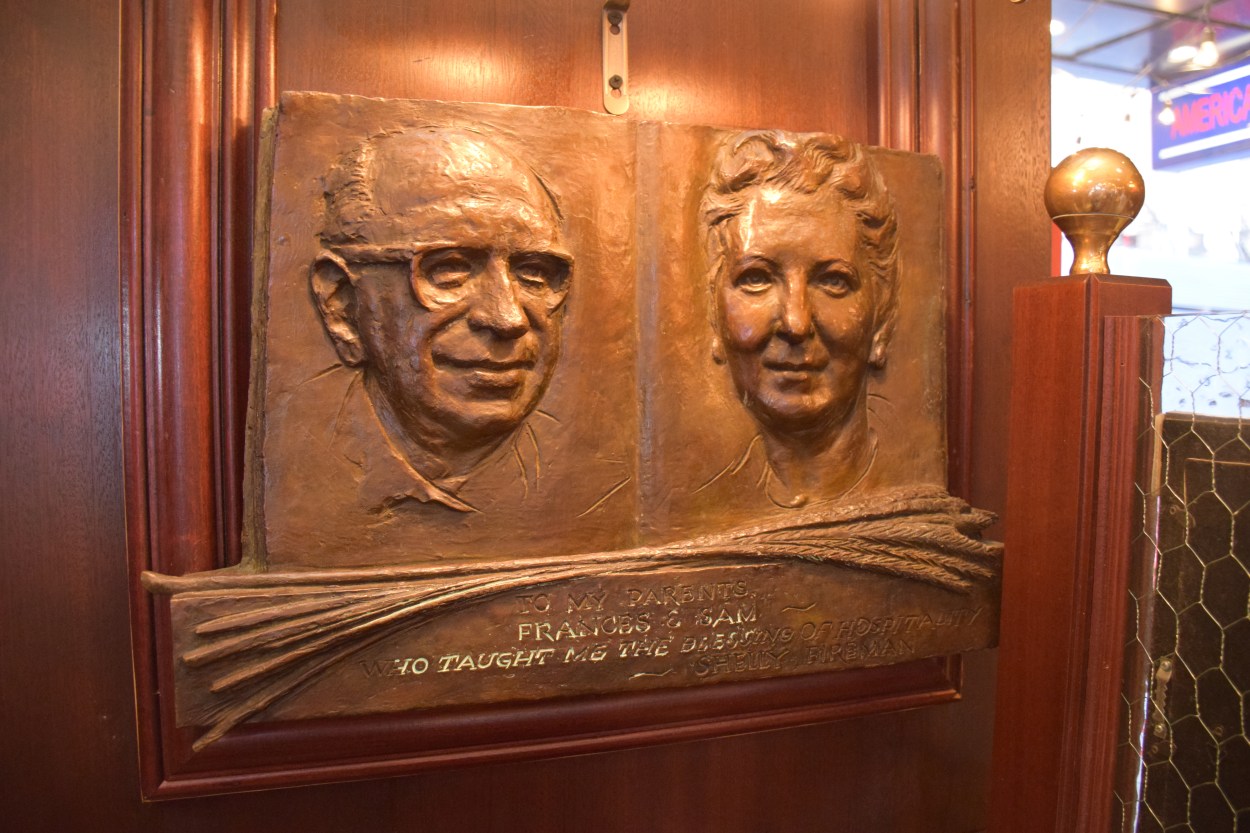 Shelly Fireman’s tribute to his parents Frances and Sam on the wall at Bond 45. Photo: Phil O’Brien
He became the unofficial maître d’ of New York’s cultural life, building an empire of iconic venues — Trattoria Dell’Arte, Brooklyn Diner, Redeye Grill, and his beloved Bond 45 — each buzzing with energy, attitude and theatrical flair. He didn’t just serve meals; he staged experiences. Actors, producers, critics and stagehands all found a home in his dining rooms. Deals were made over pasta. Opening nights spilled into late-night martinis. Broadway history was written at his tables.
“It was a dark day on Broadway when Bond 45 went away,” Tony-winning director Michael Mayer said, recalling the restaurant’s closure after the collapse of Toys R Us on the block. But Fireman, true to form, came back fighting — reopening the restaurant closer to the action, now sharing a block with Hamilton andThe Lion King. He treated the rebuild like a Broadway revival, hiring set designer David Korins and lighting designer Don Holder to create the drama. At its center stood something unmistakably Fireman: a life-size bronze nude sculpture, created by his own hand.
Art wasn’t a side project — it was the other half of his identity. Fireman began sculpting as a teenager, driven by curiosity and challenge. “I just wanted to do something I couldn’t do,” he said in a 2017 interview with W42ST. But he abandoned it early on when survival took precedence. “I hung around with a lot of artists. They were in pain. They were dead broke… I didn’t want to be that dead broke.” Decades later, after buying a home in an artists’ community in Camaiore, Tuscany, his passion reignited. “One day I just said, ‘Sure, I’m going to do it.’ I was on a roll.”
To him, sculpture wasn’t leisure. “It’s a job,” he said. “I do it to pull that other part of myself out. I don’t want to talk about food all day. I don’t want to talk about sex all day. But it makes me smile, that’s all.” When asked why he sculpted nudes, he didn’t hesitate: “I like naked ladies — is that something I should be ashamed of? I like girls with clothes on, too.”
Fireman’s personality was raw, unfiltered, and deeply New York. When W42ST editor Ruth Walker opened their interview by asking his age, he fired back: “What? Are you kidding me? How old are you, baby? How much money do you have in the bank? When did you have sex last? Who did you vote for?” Even in his late 80s, people guessed he was twenty years younger. Now we know: 93.
Behind the bravado, he cared deeply about legacy. He collected works by Warhol, Bacon, Schnabel, and Leroy Neiman — the last of whom once told him, “Five hundred years from now, somebody’s going to remember me for my art. Who’s going to remember you?” That challenge pushed Fireman back to sculpting. “At least if I make sculpture, maybe someone will remember me.”
He adored Broadway and Broadway adored him, but he resisted name-dropping for fear of leaving anyone out. “If I mention three, four, five… it sounds like bragging,” he said. “And I’ll leave people out — my friend Jerry Frankel or Roy Furman or Jeffrey Seller… or, my God! I’ll leave out Shirley Shapiro and she’ll hate me!” So instead, he’d throw his hands wide and declare: “The cast. The backstage guys. Everybody’s invited! I love you all!”
 Shelly Fireman with then Broadway League President Charlotte St Martin in 2021. Photo: Phil O’Brien
Fireman’s story was classically New York. Born in the Bronx, raised “not poor — broke,” he grew up eating well thanks to his European-trained aunts. There was fruit before every meal, dinner together every night and a belief that hospitality was an art form. Those lessons became the DNA of his restaurants: generous but disciplined, playful but precise, theatrical yet deeply human.
He attributed his success not to luck but to relentless work. “It’s hard work, a lot of studying, a lot of schlepping around, a lot of eating, a lot of stealing from others, a lot of teamwork — you can’t do this by yourself.” When pressed for his formula, he grinned: “If I told you, you’d have to pay me for it.”
In the end, his legacy is clear. He built some of New York’s most enduring restaurants, created dining rooms that felt like living rooms for Broadway, and sculpted art as bold as his personality. He made people feel seen, famous, fed and loved. He lived loudly, laughed often, and never pretended to be anyone but Shelly Fireman.
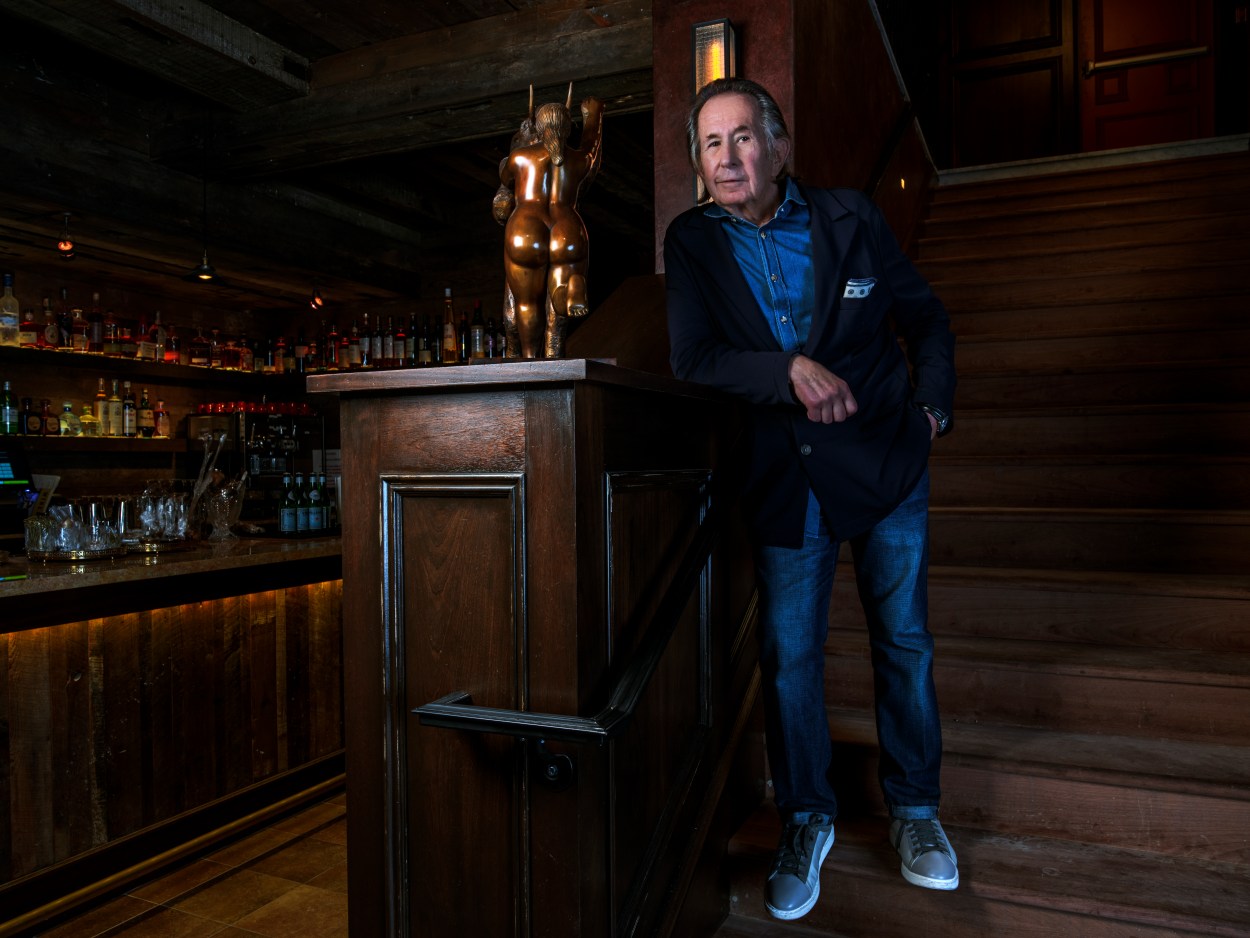 Shelly Fireman — restaurateur and sculptor. Photo: Nacho Guevara
“Who the fuck’s going to remember me?” he once asked. New York will. Broadway will. Every producer, every busboy, every guest who lingered too long at his table will. His bronzes will stand. His restaurants will thrive. And his stories will be told.