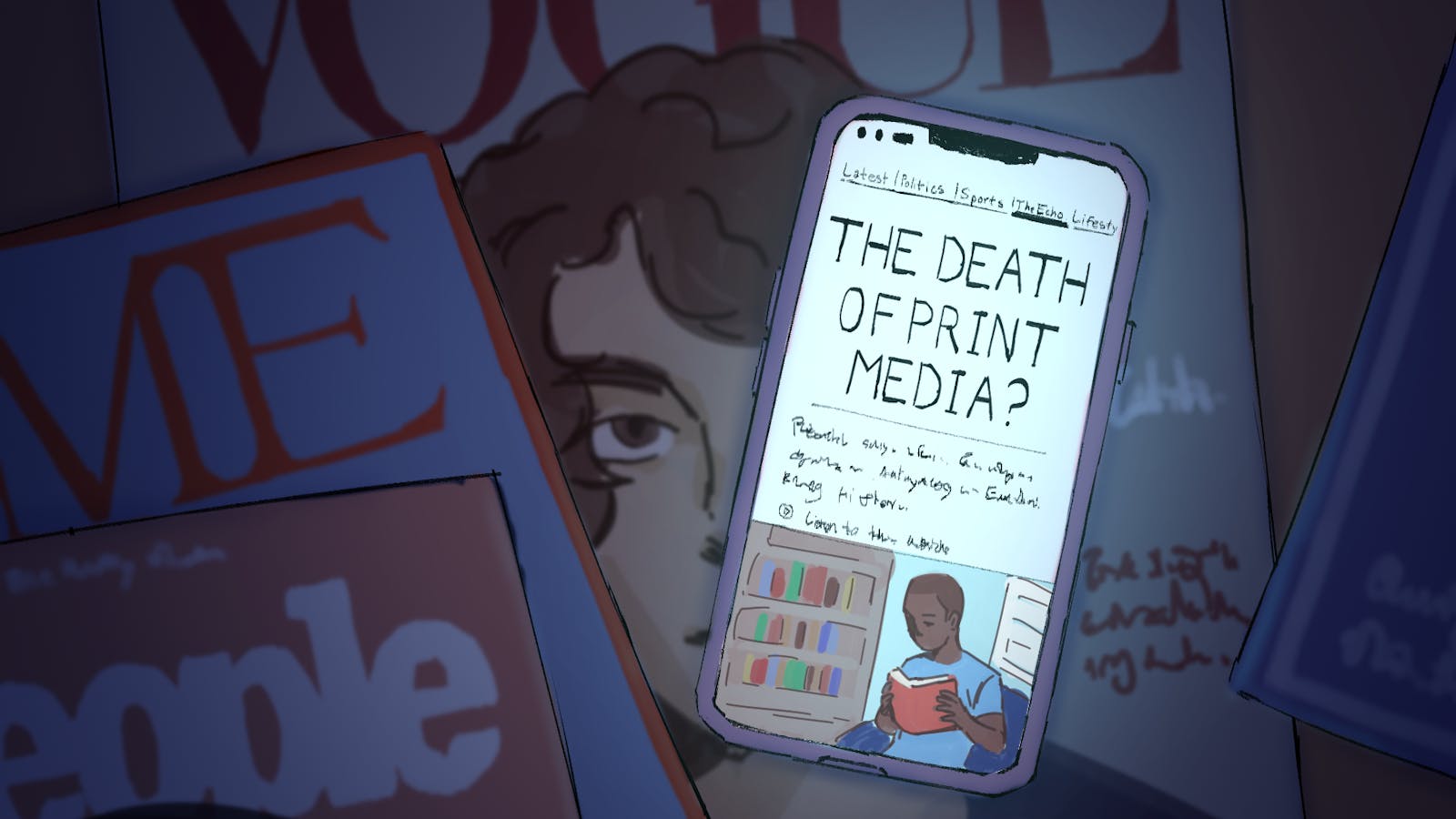
Gen Z has known the internet its whole life, and with it has witnessed the decline of print media as it fades in our current digital age. Young adults today no longer need to flip through pages of Vogue for fashion inspiration; they have social media.
To challenge creativity and combat online isolation, Gen Z is trying to reconnect with print media like fashion magazines to stay culturally engaged.
Eden Sapien, a junior studying marketing, is a member of the Style Line Magazine at ASU. She said that Gen Z should be engaging with meaningful content instead of doomscrolling with no purpose.
“What are you doing scrolling on Instagram all day?” Sapien said. “You could actually be filling your brain with knowledge and reading about what other people have their opinions on, and what’s happening in the world, what’s happening in fashion.”
There’s an understanding that Gen Z is craving those real-world connections, and it’s becoming clearer that the internet isn’t the best way to foster said connections.
Kara Keene, a senior studying media arts and sciences, works as the assistant director for The Fashion Collective at ASU and oversees the club’s yearly magazine publication.
“Gen Z grew up on the internet, and I think we’re kind of getting sick of it,” Keene said. “People are kind of realizing that spending all your time on your phone, spending all your time looking at digital things, detaches you from the real world.”
The return of magazines and print media is forecasted, but there are a number of barriers in the way of Gen Z’s desire for physical connection.
One of the obvious hindrances is the cost of print media. A print and digital subscription to The New Yorker is $78 for the first year and $169 annually after that.
Lexi Stevens, a sophomore studying graphic design, works as the creative director for The Fashion Collective at ASU, sharing responsibilities with Keene. She said people aren’t incentivized to read magazines when publications post the same content online for audiences to interact with.
“When you have print media, you pick it up, you read it, and maybe you have your opinions,” Stevens said. “But on social media, you can voice them right away; the second it pops into the brain, you can be typing it out.”
Keene said that The Fashion Collective at ASU uses its own funding to print and distribute its magazines, so students don’t have to pay for them.
Price isn’t the only obstacle, though; people are also growing tired of well-established publications like American Vogue, which Keene said isn’t producing content on par with their creative past.
She also added that the publication has become accustomed to playing it safe to appease mass audiences.
“It feels like they’re holding back and going safe instead of actually being a magazine for artistic expression,” Keene said. “It’s more so focused on this is the big person of the moment, and here’s just a basic picture of them.”
Stevens said a magazine that can balance artistic vision and commercial appeal is GQ with its October special issue. The magazine centered “The State of the American Male in 2025” with Glen Powell as the cover star.
Stevens said some of the photos were reminiscent of “American Psycho,” when Powell was dressed plainly, with an American flag in the background.
“There was a bit of a political statement there, and his face was shiny and plastic; he looked like a Ken doll,” Stevens said.
Problems like cost, sustainability and unimaginative direction from publications limit the manifestation of Gen Z’s desires for print media, but the desire is still there all the same.
“It’s so important for us to sit down and take a moment to read and digest,” Sapien said. “I do think it’s really important that we still read these things and keep them alive.”
Edited by Kasturi Tale, Henry Smardo and Ellis Preston.
Reach the reporter at jagon128@asu.edu.
Like The State Press on Facebook and follow @statepress on X.
Jazlyn GonzalesThe Echo Reporter
Jazlyn Gonzales is junior studying Journalism and Mass Communication. This is her third semester with the State Press. She has also interned at KJZZ.
Continue supporting student journalism and donate to The State Press today.