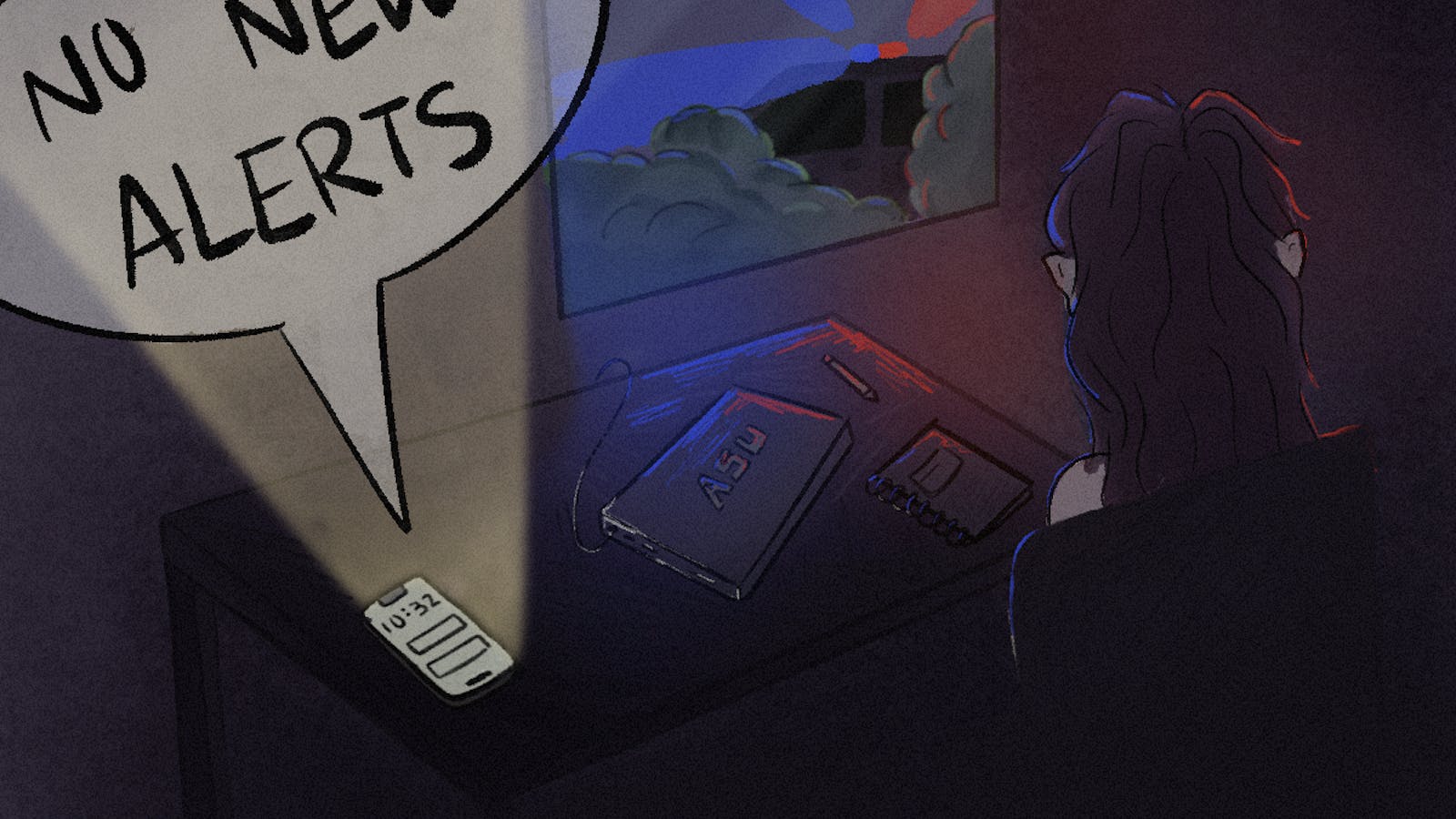
The ASU Police Department and students maintain the importance of LiveSafe, even as some crimes listed elsewhere are never announced on the app.
The University’s 60-day crime log, which is continually updated, lists incidents occurring on or near the institution’s four campuses. Students may not be notified of most of these crimes, as few of them meet the criteria for a LiveSafe alert.
“Not every crime reported is going to generate there,” ASU police information officer Amanda O’Halloran said. “We have Clery, and then we have LiveSafe. Those are two separate (things), even though we use the LiveSafe app to send those notifications out.”
Under the Clery Act, universities are required to disclose four categories of crimes: criminal offenses, hate crimes, arrests and referrals, and offenses covered by the Violence Against Women Act. Not every disclosed incident requires the administration of an alert delivered through LiveSafe.
ASU’s LiveSafe alerts are primarily sent during potentially life-threatening events or incidents. Advisories may also be delivered when students should steer clear of an area, such as during road or building closures, O’Halloran said.
Ultimately, the decision to administer an alert is made by the officer in charge based on the circumstances of the situation.
“There’s no two incidents that are exactly the same,” O’Halloran said.
The LiveSafe app uses geofencing techniques to only alert those near the scene. Students may not receive alerts concerning other locations, O’Halloran said.
It can be difficult to pinpoint why students may not receive some notifications. O’Halloran said students should ensure that location services for the app are turned on, as those who do not enable the feature may not be included in relevant notifications.
It is recommended that individuals open the app at least once a week to check it, updating to the latest version as needed, O’Halloran said.
READ MORE: An ASU student was stabbed in a classroom, students nearby never received alert
ASU PD partners with Vector Solutions, the third-party company that operates the LiveSafe app.
“We do have a working relationship with them for improvement and open discussions,” O’Halloran said.
A spokesperson for Vector Solutions said they were unavailable for an interview and did not provide a statement.
“If they’re saying that they don’t have … the alerts, chances are they might not have downloaded the app,” O’Halloran said. “We can’t force people to download the app, though we highly encourage it.”
While ASU PD encourages regular engagement with the app, some students admit they don’t always use it. Ryan Anderson, a junior studying business, said he doesn’t personally notice the alerts.
“I’m probably not the best example for how to safely go about things,” Anderson said. “I don’t have the app, and I don’t have notifications popping up right on my home screen.”
Despite not having the app on his phone, Anderson acknowledged the software’s importance but thinks the University could take it further.
“The resources are definitely available to those who are concerned about ensuring their safety at all times,” Anderson said. “It could be a little more prevalent, I would say, and just make it a mandatory thing, rather than having the option of not getting an app and not paying attention to things.”
READ MORE: ASU innovation spreads to campus safety, security amid concerns from students
While some students don’t use the app, others have seen firsthand how effective its alerts can be. Sydney Brooks, a senior studying speech and hearing science, assisted in identifying a suspect after receiving a LiveSafe notification.
In March 2024, Brooks received an alert with the description of an individual thought to be connected to a crime near the Tempe campus. Later that morning, she spotted a person matching the report and informed Tempe PD.
Brooks was later given the Citizen Meritorious Citation Award by ASU PD, as her actions directly assisted in the apprehension of the suspect.
“I didn’t realize that what I did was uncommon,” Brooks said. “I definitely am paying more attention to it now that I know that a student can make such a difference and help … the police department keep the campus safe.”
Now, Brooks advocates for the use of LiveSafe and encourages students to download the app. For example, she said LiveSafe notifications were the only way she knew about power outages on campus during Tempe’s recent microburst.
“Even if you live off campus and you go in person to class, you should know safety concerns and events happening nearby, that way you can keep yourself safe and your friends as well,” Brooks said.
Edited by Carsten Oyer, Senna James, Sophia Braccio and Pippa Fung.
Reach the reporter at emalvar9@asu.edu.
Like The State Press on Facebook and follow @statepress on X.
Emilio AlvaradoPolitics Reporter
Emilio is a junior at Arizona State University and this is his second semester at The State Press.
Continue supporting student journalism and donate to The State Press today.