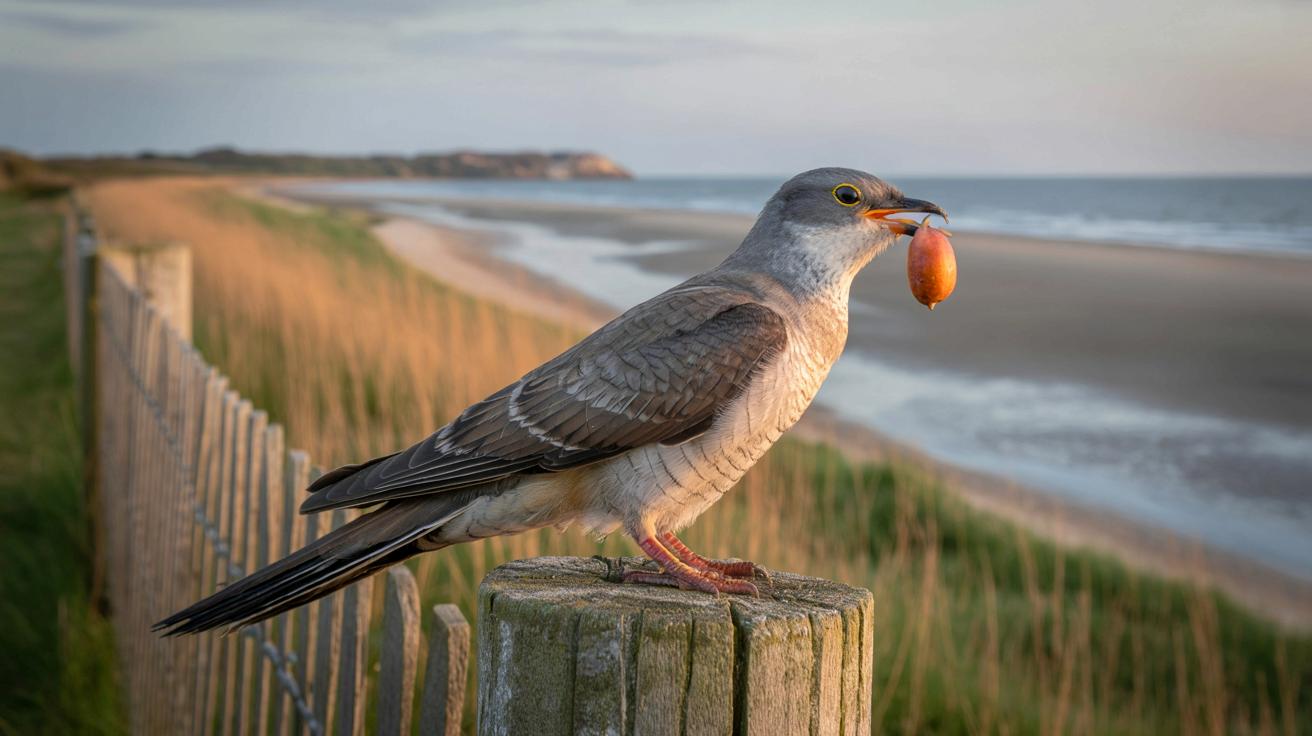
Salt on the wind, reeds rustling, and a slim grey shape cutting low over the marsh. Eyewitnesses paused, then reached for binoculars.
For 10 days, a juvenile cuckoo has circled the skies above Salthouse on the north Norfolk coast, offering a rare, extended view of a declining migrant that many people only ever hear. The sighting has drawn quiet excitement locally, not least because autumn juveniles rarely linger so obligingly before pushing south towards Africa.
What witnesses saw over the shingle and marsh
Walkers reported a purposeful bird tracking the edge of the reedbeds, perching briefly on fence posts, then sweeping out over the shingle and back to the marsh. Local photographer Adam Spruce made repeated visits and confirmed the bird’s age by its plumage and behaviour, noting it feeding and building fat reserves for migration.
Ten straight days over Salthouse have given coastal visitors an unusual chance to watch a red‑listed migrant at length.
Juvenile cuckoos often switch from a largely insect diet to include energy‑rich berries in late summer and early autumn. Short, frequent feeding bouts help pack on the fuel it needs for the next leg of an ambitious journey.
Why a single juvenile matters
The common cuckoo now sits on the UK Red List, a warning reserved for species facing the most serious conservation concerns. The listing reflects sustained declines across much of England. Seeing a healthy youngster preparing to move on is a small but hopeful sign for a species that has struggled in recent decades.
Red‑listed status signals the highest conservation priority; each successful juvenile carries disproportionate weight for the population.
A master of borrowed nests
Cuckoos are brood parasites. Females lay eggs one by one in the nests of other species, leaving the unwitting hosts to do the rearing. Around Norfolk’s coast and river valleys, common hosts include reed warbler, meadow pipit and dunnock. The timing is critical. The female often watches a nest, waits until the hosts are away, then lays in seconds. Her egg typically mimics the host’s, giving it a better chance to be accepted.
By the time young cuckoos fledge, the adult birds have usually already left the UK. Juveniles then depart alone weeks later, relying on innate navigation to find their way to central Africa.
How to identify a cuckoo at distance
Autumn removes the famous “cuck‑oo” call from the toolkit, so identification relies on shape and plumage. The Salthouse bird showed the classic lines that can fool newcomers into thinking “small falcon”. Look for these cues:
- Size and shape: about dove‑sized, with pointed wings and a long graduated tail that flicks as it flies.
- Colour: blue‑grey upperparts on adults; juveniles show a colder grey‑brown tone with fine pale fringes.
- Underparts: clean, bold barring in black and white; the barring continues right down the belly.
- Flight: level, direct, with quick bursts of wingbeats, then short glides over the reedbeds.
- Perched look: slim body, slight hook to the bill, yellow eye‑ring more obvious at close range.
Seasonal calendar at a glance
Typical behaviour in the UK
The road to Africa: Norfolk to the Congo Basin
The Salthouse juvenile now faces a journey of around 3,000 miles or more to tropical Africa. Many British cuckoos track through Iberia or Italy, cross the Mediterranean at narrow points, then tackle the Sahara. Weather patterns can speed or stall progress. Tailwinds help; headwinds drain precious reserves.
A 3,000‑mile flight path lies ahead, powered by fat laid down on Norfolk’s hedges, ditches and reedbeds.
Juveniles migrate without their parents. They depend on inherited orientation, suitable stopovers and pockets of food along the way. That makes each feeding spell on the north Norfolk coast count. Berries can top up fast. Insect‑rich ditches and grazing marsh margins also matter, offering dense caterpillar runs in late warmth.
How you can help cuckoos in Norfolk
Small choices by people who share the coast can add up to safer passage for migrants gathering strength.
- Keep at least 25 metres from feeding birds; distance reduces disturbance and wasted energy.
- Stick to marked paths on marshes and shingle; ground‑nesters are still sensitive late in the season.
- Avoid using playback calls; birds respond, burn energy and lose feeding time.
- Report clear, well‑timed sightings to local bird groups or national recording schemes to build the picture for conservationists.
- At home, cut pesticide use and plant native shrubs that host caterpillars and provide autumn berries.
Planning a responsible visit
Salthouse offers wide horizons over reedbeds and shingle, with public footpaths and safe viewpoints. Early morning or late afternoon gives the best light and calmer paths. Bring binoculars, dress for sea breezes, and check the forecast. Tidal spray can catch out the unprepared on exposed stretches.
Use patience as your tactic. Pick a vantage point, scan edges where reeds meet open ground, and watch fence lines and isolated bushes. A brief perch, a clean wingbeat, and a barred belly may be all you need.
What this sighting tells us
Extended stays by juveniles suggest good local feeding conditions. In a changing climate, timing shifts can disrupt the match between arriving birds and available food. Where late warmth keeps insects and berries going, young migrants gain the margin they need for a demanding journey.
The cuckoo’s life story also underlines the value of wetlands and adjacent farmland. Reedbeds support host species such as reed warbler; nearby meadow edges and hedgerows deliver the insect and berry bonanza used by fledged juveniles. When those pieces align, north Norfolk becomes a crucial service station before Africa.
A note on identification and ethics for photographers
Juvenile cuckoos can look falcon‑like through a camera viewfinder. Before moving in for a shot, ask whether the bird is feeding. If it is, hold your ground and wait. A clear image from a respectful distance does more good than a close frame that flushes a bird burning daylight to gain fuel.
One bird over ten days will not reverse a national decline, but it focuses attention on the habitats that can.
If you missed the Salthouse bird, the lesson stands: tune in to shape and movement over marsh edges through September and early October. The next slim silhouette could be another youngster on the cusp of a continent‑spanning trip, and your careful watch might be the quiet help it needs to make it.