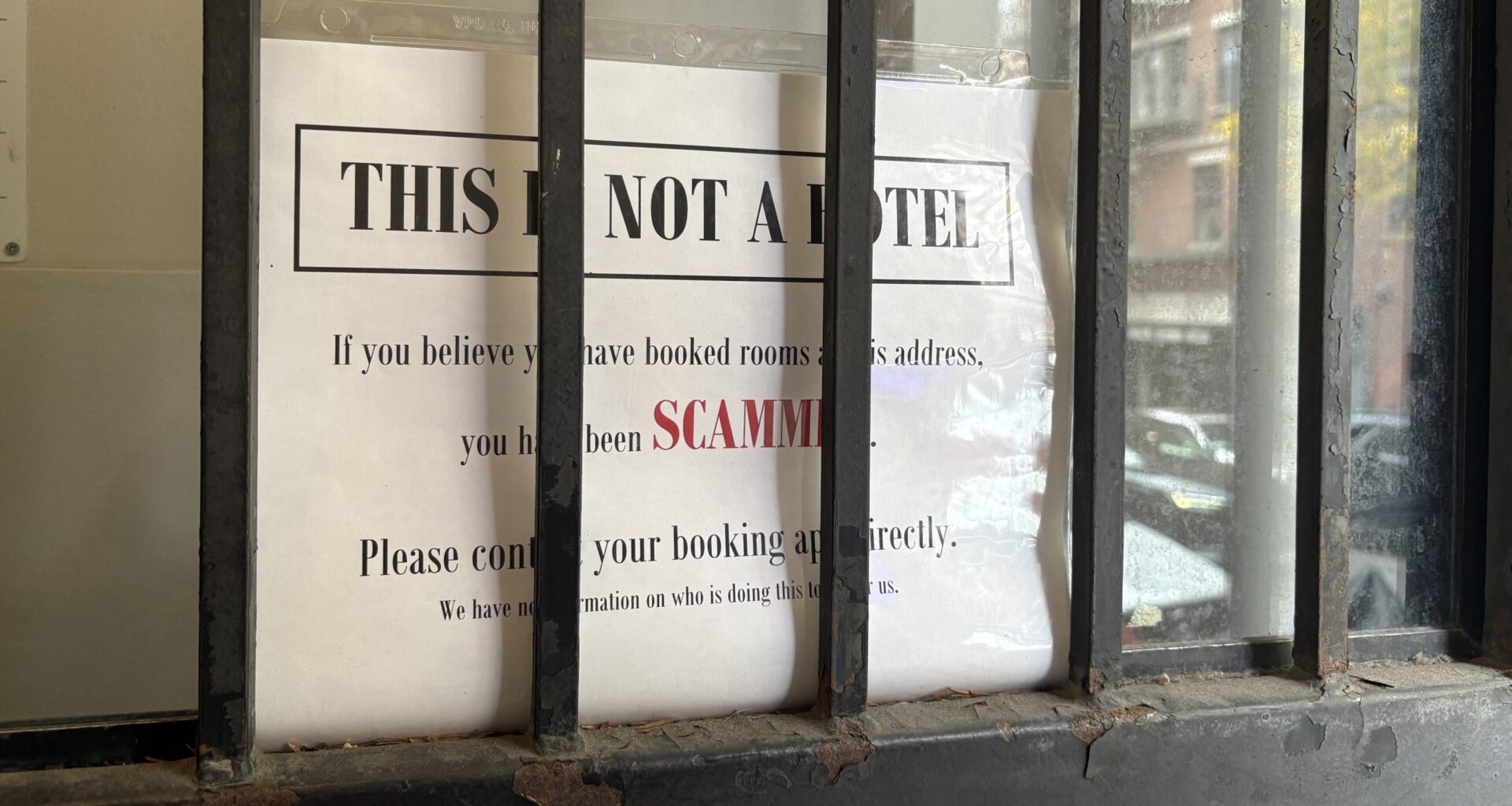
A new City Council bill that would allow homeowners to rent out their properties on a short-term basis has sparked a renewed debate over Airbnb in New York City — and raised alarms in Hell’s Kitchen, where illegal hotel conversions have reshaped blocks and housing stock for more than a decade.
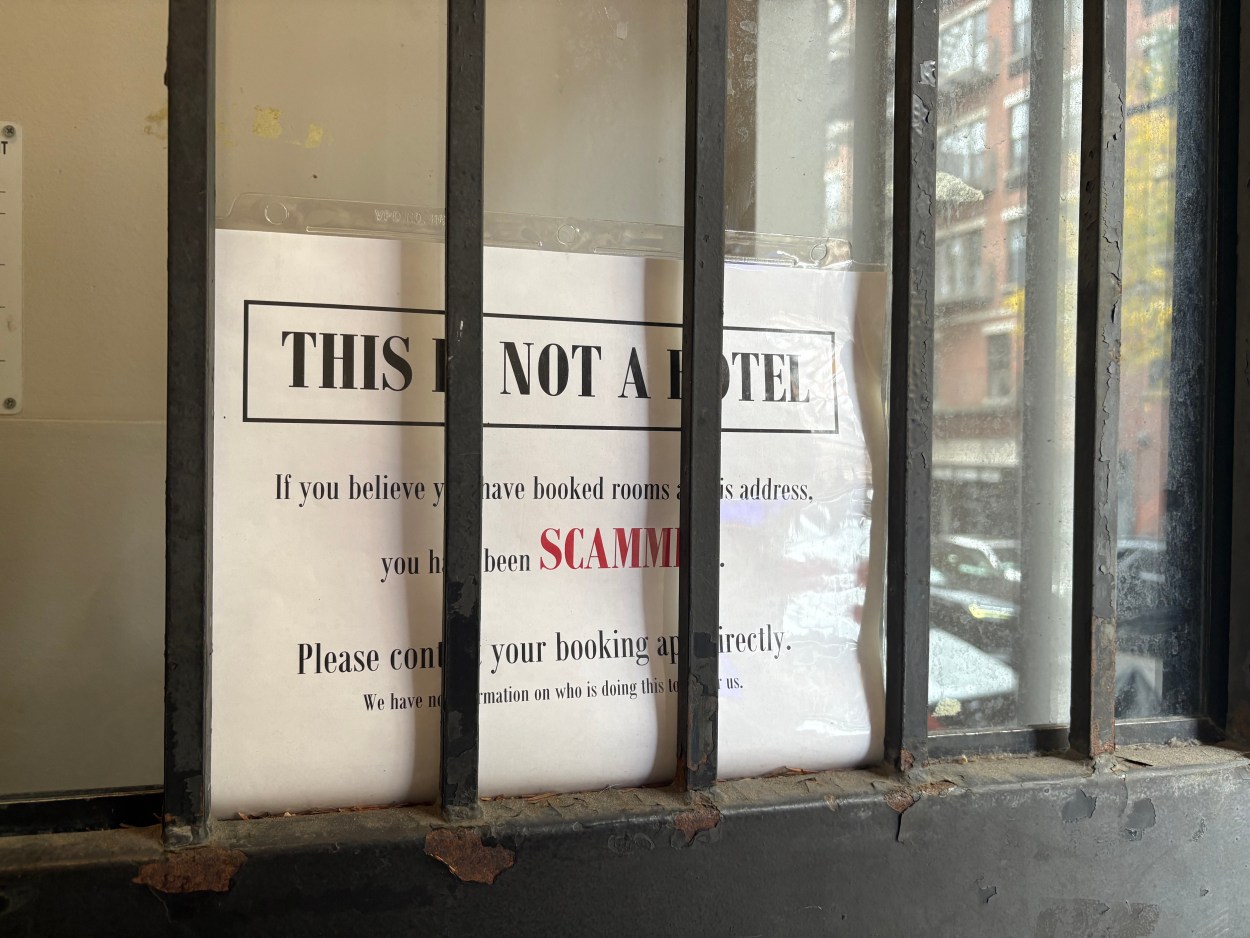 A sign on a W48th Street building advises tourists that the property is not a hotel and any room they believe to have booked there was a scam. Photo: Catie Savage
The proposal, Intro 948, introduced by Brooklyn Councilmember Mercedes Narcisse, would roll back portions of Local Law 18, the 2022 regulation that effectively shut down most short-term rentals by requiring hosts to register with the city and be physically present in the home during any stay under 30 days. The rule drove a reported 90% decrease in Airbnb listings citywide and was widely seen as closing the final loophole that allowed residential apartments to be used as de facto hotel units.
The new bill would allow owners of one- and two-family homes to rent out their properties to up to four adult guests (plus children) without the host present. Supporters say the bill is aimed at homeowners — especially in outer-borough neighborhoods — who rely on rental income to offset rising housing costs.
Airbnb praised the new measure as “a balanced fix,” arguing it would not meaningfully affect the long-term rental market. The company has been pushing the Council for broader reforms as recently as September, when it backed Intro 1107 — a separate proposal that sought to loosen parts of Local Law 18 — but faced sharp opposition from the hotel industry and ultimately stalled in committee.
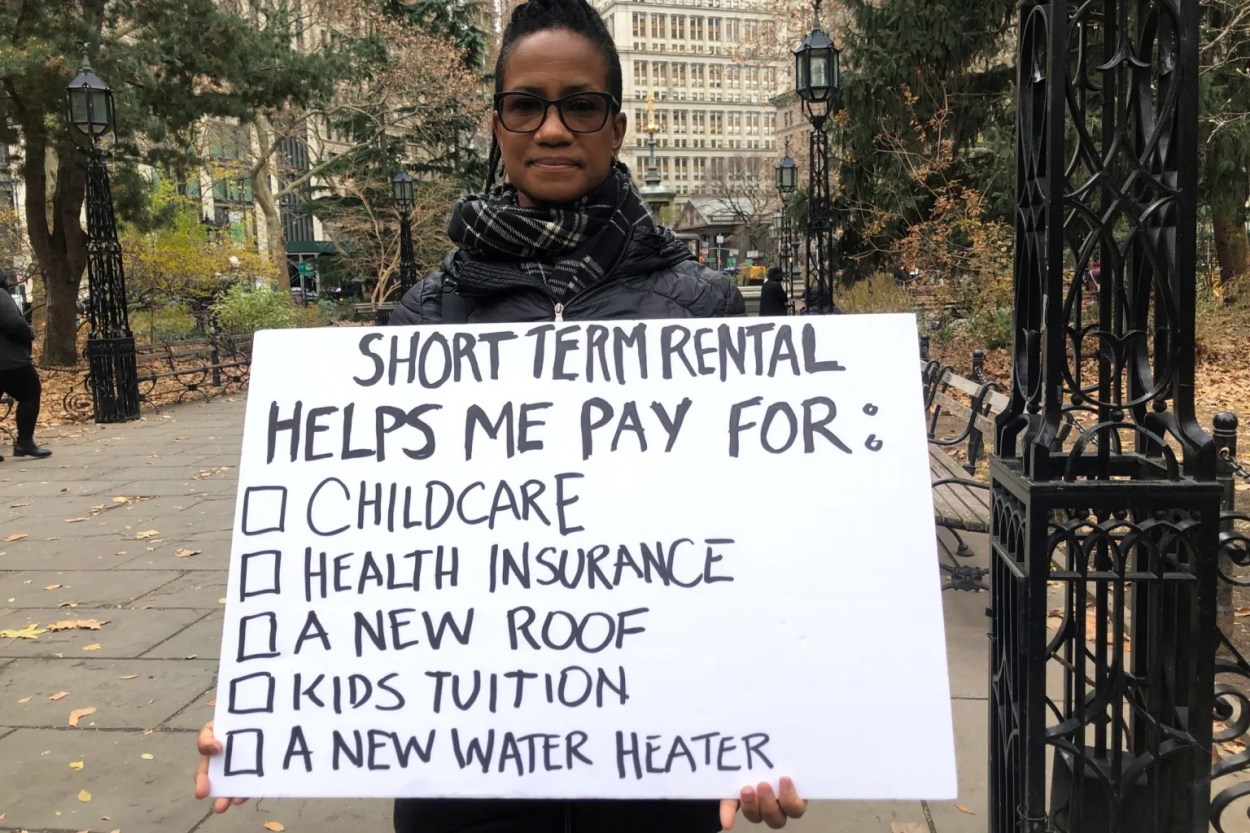 Homeowners rallied to pass similar legislation in December 2024, which ultimately stalled in committee. Photo: Samantha Maldonado/THE CITY
At the time, Airbnb said the city’s strict regulations had failed to deliver promised affordability gains, pointing to rising rents, stagnant vacancies and mounting pressure on homeowners who once relied on hosting income. While Intro 1107 never advanced, Airbnb says the latest bill reflects the same idea: that targeted changes can support homeowners and neighborhood businesses “without taking any housing off the market.”
Tenant advocates, housing groups and the hotel workers’ union strongly oppose the legislation, arguing that any rollback risks reopening the very loopholes Local Law 18 was designed to close.
Those concerns are deeply rooted in Hell’s Kitchen.
Earlier this year, the City sued LuxUrban Hotels — a Miami-based operator accused of running dozens of illegal short-term rentals in Midtown — for allegedly failing to make payments on a $1.2 million settlement it agreed to in March 2024. The City said LuxUrban illegally operated 67 short-term rental units across 29 buildings, including 11 residential properties on W49th Street, where neighbors long complained about security risks, noise, stranger turnover and hallway congestion in buildings designed only for long-term tenants.
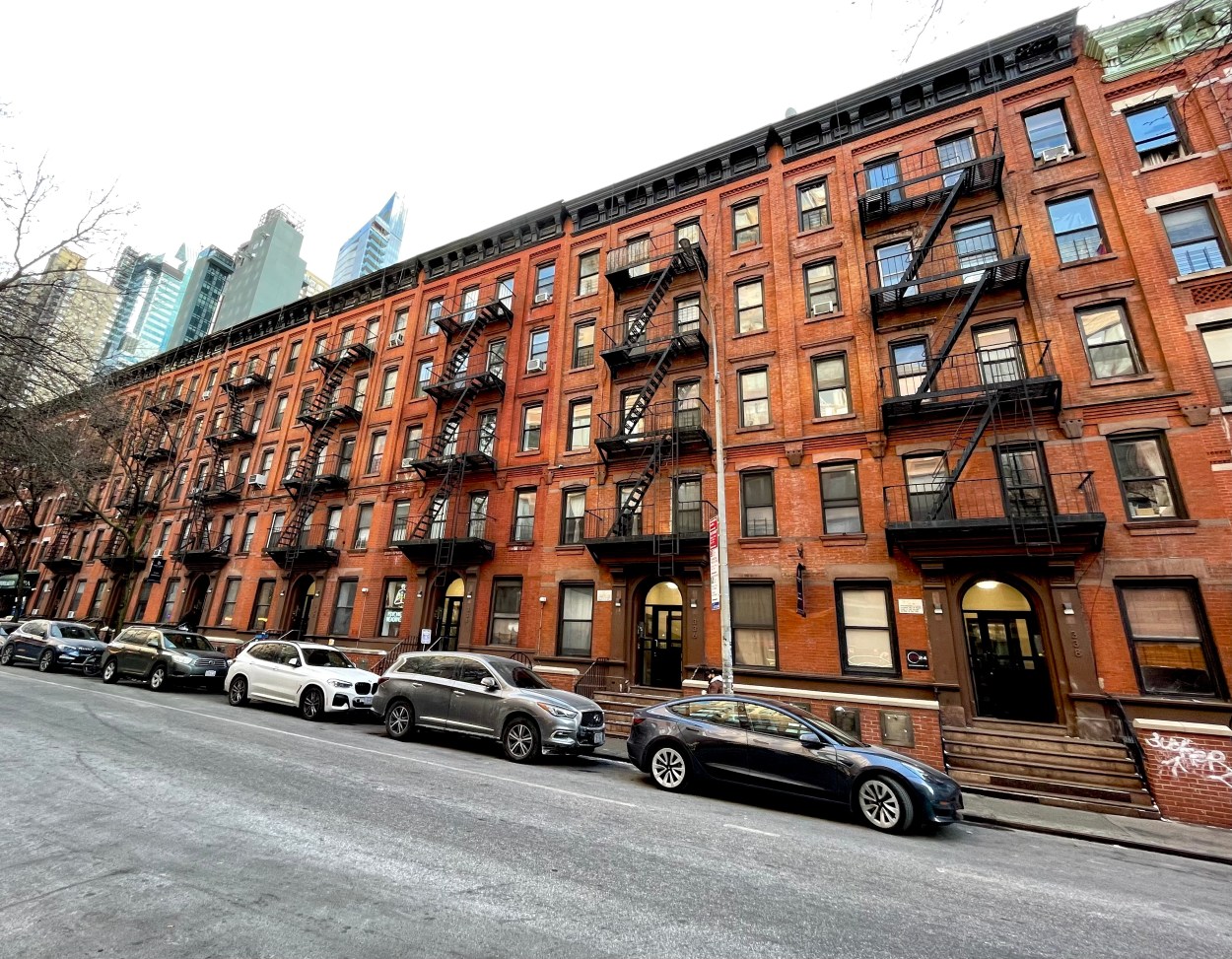 LuxUrban listed illegal short-term rental at 11 residential properties on W49th Street between 8th and 9th Avenues. Photo: Catie Savage
Officials have repeatedly described these illegal hotel conversions as “displacement in slow motion,” removing apartments from the residential market while destabilizing the surrounding blocks.
Tom Cayler, a longtime Hell’s Kitchen resident and member of the Coalition Against Illegal Hotels, argues that Intro 948 is not a narrow homeowner relief bill but a structural weakening of residential protections.
“This bill would allow every dwelling unit in NYC to become a permanent short-term rental,” Cayler said. His concern centers on the removal of the host presence requirement, which he calls “the only guardrail preventing an apartment from becoming a hotel room.”
 Tom Cayler, a longtime Hell’s Kitchen resident and member of the Coalition Against Illegal Hotels. Photo: Catie Savage
Cayler also points out that the bill allows up to four adult guests with no limit on the number of children under 18, and does not require any adult renter or host to actually be on site during the stay. The amended definitions also allow interior rooms like kitchens or living spaces to be locked off from guests, meaning a unit could be rented with access only to a bathroom and sleeping area, raising questions around safety, fire egress and overcrowding.
He warns that, taken together, these provisions amount to “a back-door reversal of Local Law 18” by making it possible to operate a residential apartment as a full-time short-term rental. Without the on-site host requirement, Cayler says private equity firms and commercial operators would once again have the incentive to buy up smaller homes and convert them into de-facto hotel units, especially in neighborhoods where housing demand is already high. The risk, he argues, is that the city could slide back into a pattern where residential buildings function like transient lodging facilities — the very dynamic Local Law 18 was created to curb.
Hell’s Kitchen Councilmember Erik Bottcher said the legislation risks undoing progress made under Local Law 18 and “moving the city in the wrong direction.” He framed the debate in the context of the ongoing housing crisis, noting that “every single unit of housing we can protect for long-term tenants matters.” Bottcher added that Hell’s Kitchen has already seen the damaging effects of unregulated short-term rentals — from rent-stabilized tenants living alongside transient guests, to rising rents and the loss of affordable apartments. “Our focus must remain on keeping people housed, protecting tenants, and ensuring that every available apartment contributes to solving, rather than worsening, our city’s affordability crisis,” he said.
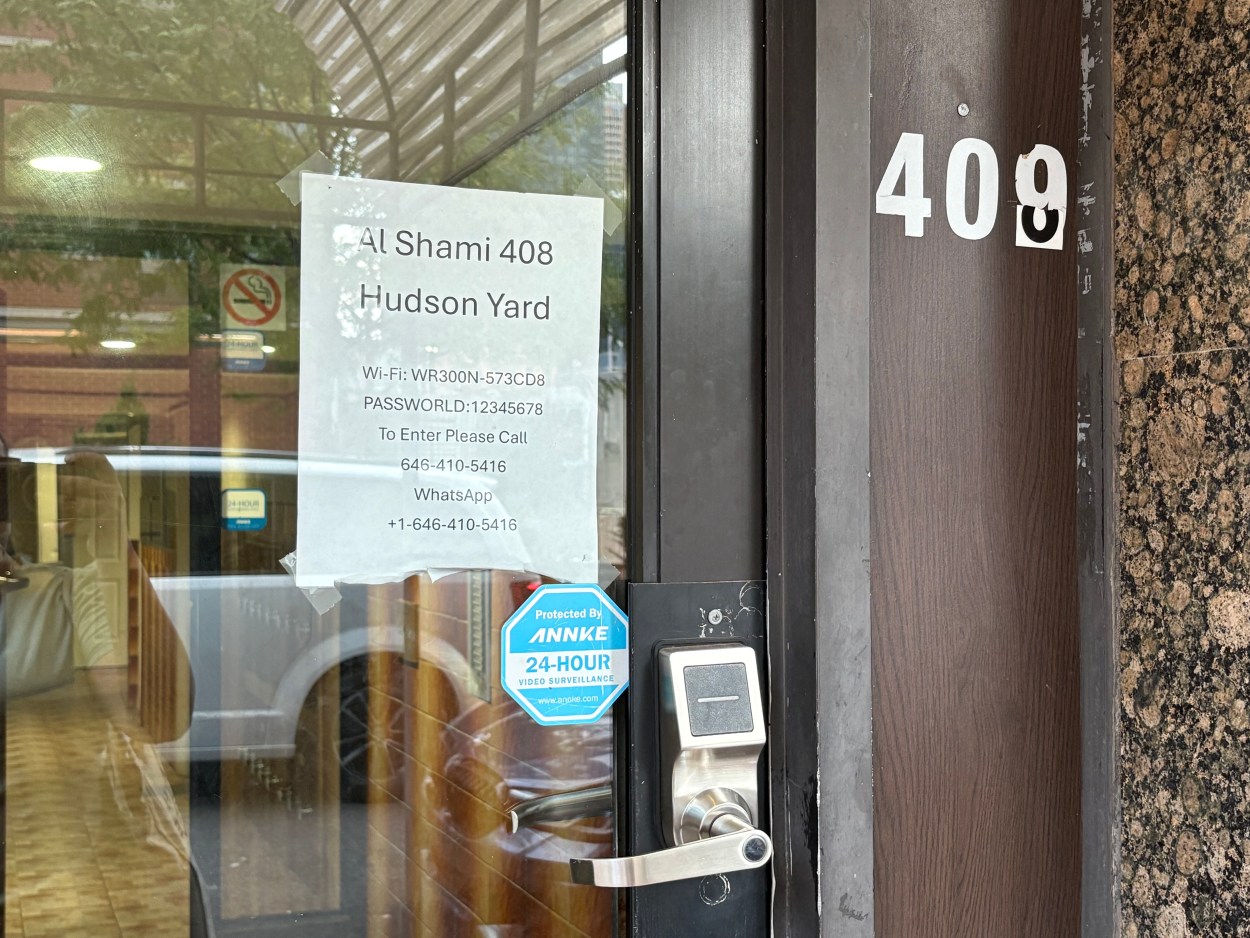
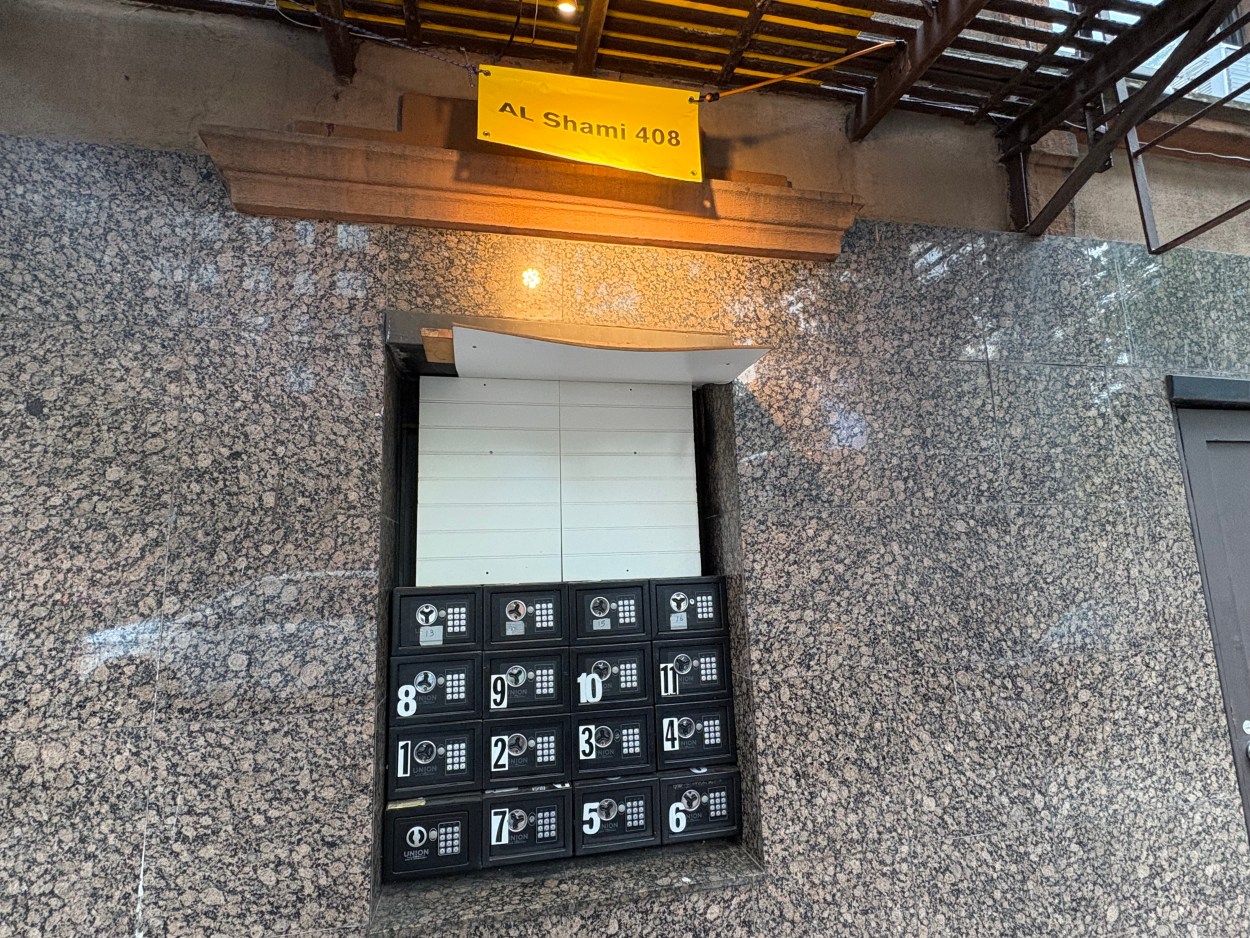
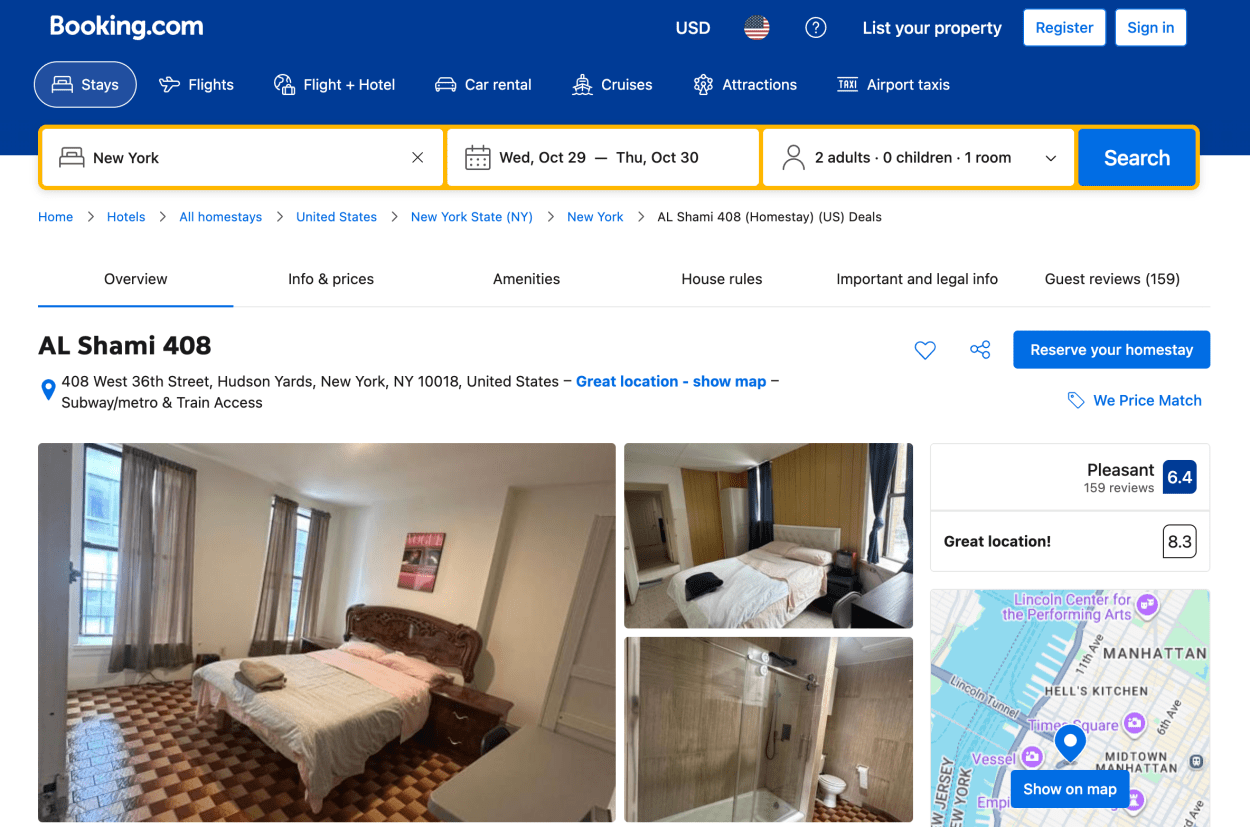
The residential property at 408 W36th Street is currently listed on Booking.com for short-term rentals. Photos: Catie Savage and Booking.com
Throughout Hell’s Kitchen, signs of a renewed short-term rental market are already visible. At 408 W36th Street, a walk-up just west of 9th Avenue, a property calling itself “Al Shami 408 Hudson Yard” is currently listed on Booking.com for about $175 per night. Sixteen lockboxes are mounted to a boarded-up ground floor window beside a printed sign advertising WiFi access and a phone number for check-in — a setup commonly associated with unsupervised rentals. Recent online reviews describe shared bathrooms, dirty linens and “minimal facilities and services,” with one guest writing that the property felt “more like an apartment building” than a hotel.
“This is a major change in NYC housing policy being pushed in a lame-duck period,” Cayler said. “The impacts on neighborhoods like ours would be immediate.”
The bill’s sponsors — Narcisse, fellow Brooklyn Councilmembers Farah Louis and Chris Banks and Bronx Councilmembers Kevin Riley, Oswald Feliz and Althea Stevens — represent districts where short-term rentals have been framed as pathways to intergenerational stability for Black and brown homeowners.
Tenant advocates counter that the city’s housing shortage is now too severe to treat housing as supplemental income.
The bill has not yet been scheduled for a public hearing, and with a new Council speaker and a new mayor incoming, its future is uncertain. But in Hell’s Kitchen — where residents have been through repeated cycles of “Airbnb buildings,” illegal hotel crackdowns and neighborhood turnover — the stakes feel familiar.