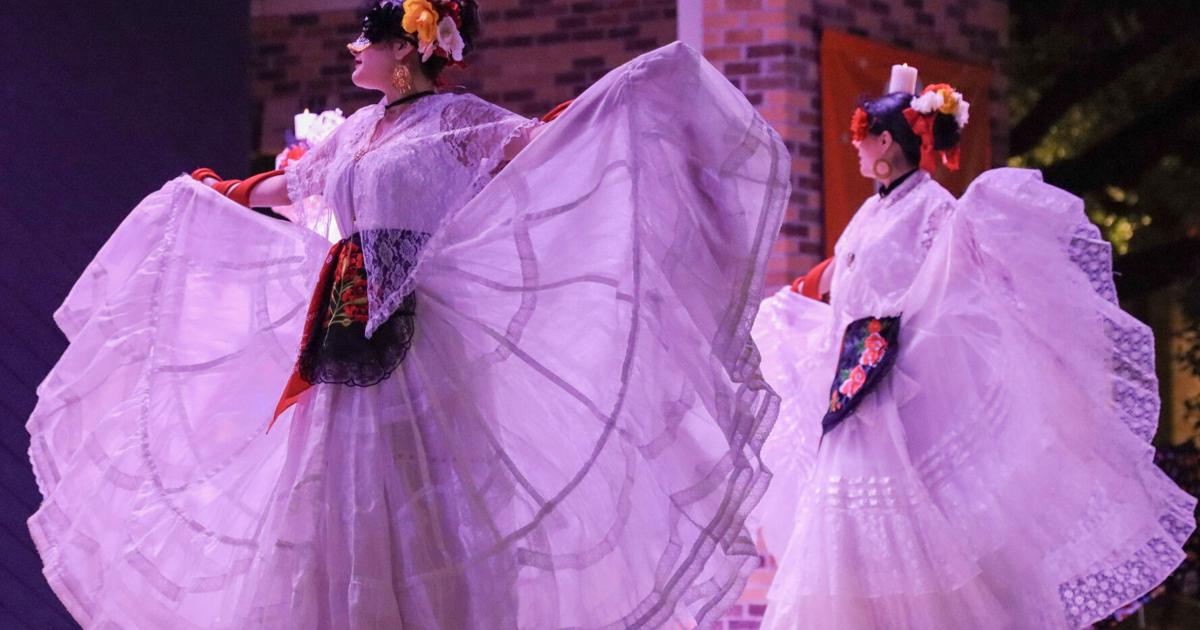


Dancers from Ballet Folklórico Maseguani de Don Jose Avila perform during the Día de los Muertos celebration Nov. 3 at Brazos Park. Ballet folklórico styles change from region to region in Mexico, having unique variations.
By Lucia Campos
Dozens of attendees brought life to Brazos Park as students gathered Monday evening to honor the departed for Día de los Muertos — not with sorrow, but with colorful dances, music and laughter.
Hosted by the Hispanic Serving Institution Initiatives and the Center for Mexican American Studies, the event started with a variety of food being served, from traditional flautas and rice and beans to hot chocolate.
Anna Mercado, nursing junior and president of the Association of Mexican American Students, was a lone competitor in the altar contest and asked members of the center to share pictures of loved ones they would like on the altar.
The altar included Mercado’s maternal grandparents and her dog, and the grandparents and pets of other organization members, she said.
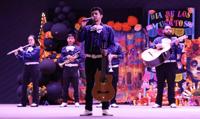
Andres Torres, a member of Mariachi Los Jinetes, sings at the Día de los Muertos celebration Nov. 3 at Brazos Park. Mariachi Los Jinetes is a UTA student-led mariachi band.
By Lucia Campos
Decorated with tissue paper marigold flowers, artificial candles, photos of deceased loved ones, candy and a Mexican flag draped over the table, Mercado said the altar competition gave organizations the chance to bring their loved ones to the event.
For Mercado, it was more than decoration; it was a way to transform mourning into celebration.
“Grief is such a strong thing; you can be grieving all year, but this one specific holiday, it’s kind of like levity,” she said. “It’s not as serious, because we’re happy that we get the chance to see our loved ones again.”
Computer science freshman Jose Carvajal, who moved to the United States six years ago, said he wanted to connect to his roots through the event.
“It’s a special day, because death is not the end for us,” Carvajal said. “We know there’s a little bit more, and when we die, they’re going to be waiting for us.”
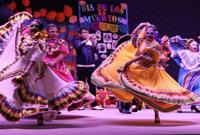
Ballet folklórico dancers perform alongside Mariachi Los Jinetes during the Día de los Muertos celebration Nov. 3 at Brazos Park. Folklórico is traditionally performed alongside live music.
By Lucia Campos
In Carvajal’s hometown, Zacatecas, Mexico, there are no altars, but his family comes together and cleans their loved ones’ graves or visits the cemetery, he said.
The celebration continued with a burst of movement and color as Baile Folklórico Macehuani stepped into the spotlight.
For Alexandra Patino, public relations freshman and a member of the folklórico group, folklórico is about using dance to bring people together.
“Just by dancing or showing stories of my culture through dance, people are able to understand that a lot more than just having, let’s say a pep talk or just talking or having a speech,” Patino said. “It’s just an entertaining way to do it, not just to connect with my own roots, but to also to share it around the community.”

The Association of Mexican American Students prepared an altar for the Día de los Muertos celebration Nov. 3 at Brazos Park. The event featured a contest for the best altar.
By Lucia Campos
Patino said she joined the group following her youngest sister, and then her mom and other sister followed.
As Mariachi Los Jinetes took the stage, Brazos Park transformed into a swirl of sound and color — the heartbeat of Spanish music rippling through the night and pulling attendees to their feet.
The mariachi band and folklórico dance team gathered attendees into a dance line as they continued performing.
Jovany Covarrubias, choral music education junior and a member of Mariachi Los Jinetes, said the band played songs that represented what the event needed and brought a more celebratory atmosphere.
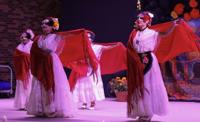
Ballet folklórico dancers perform during the Día de los Muertos celebration Nov. 3 at Brazos Park. Dancers dressed in traditional attire, usually vibrant in color with ruffles to exaggerate the effect of swirling.
By Lucia Campos
“A huge population of us is Hispanic, and to be able to host this event is amazing in itself, representing a big chunk of us, but also being able to participate in it,” Covarrubias said. “It’s kind of like I’m representing my own culture, and I am promoting it, which is a great opportunity.”
He said his family doesn’t really celebrate Day of the Dead in the U.S. because of how the holiday coincides with Halloween, but in Mexico, they give ofrendas and visit and respect their deceased loved ones.
He said being able to give the culture the level of outreach the event had felt amazing.
“Día de los Muertos, I don’t think it should be just for Mexican people, it’s for everybody,” Patino said.
@_.lexlie_