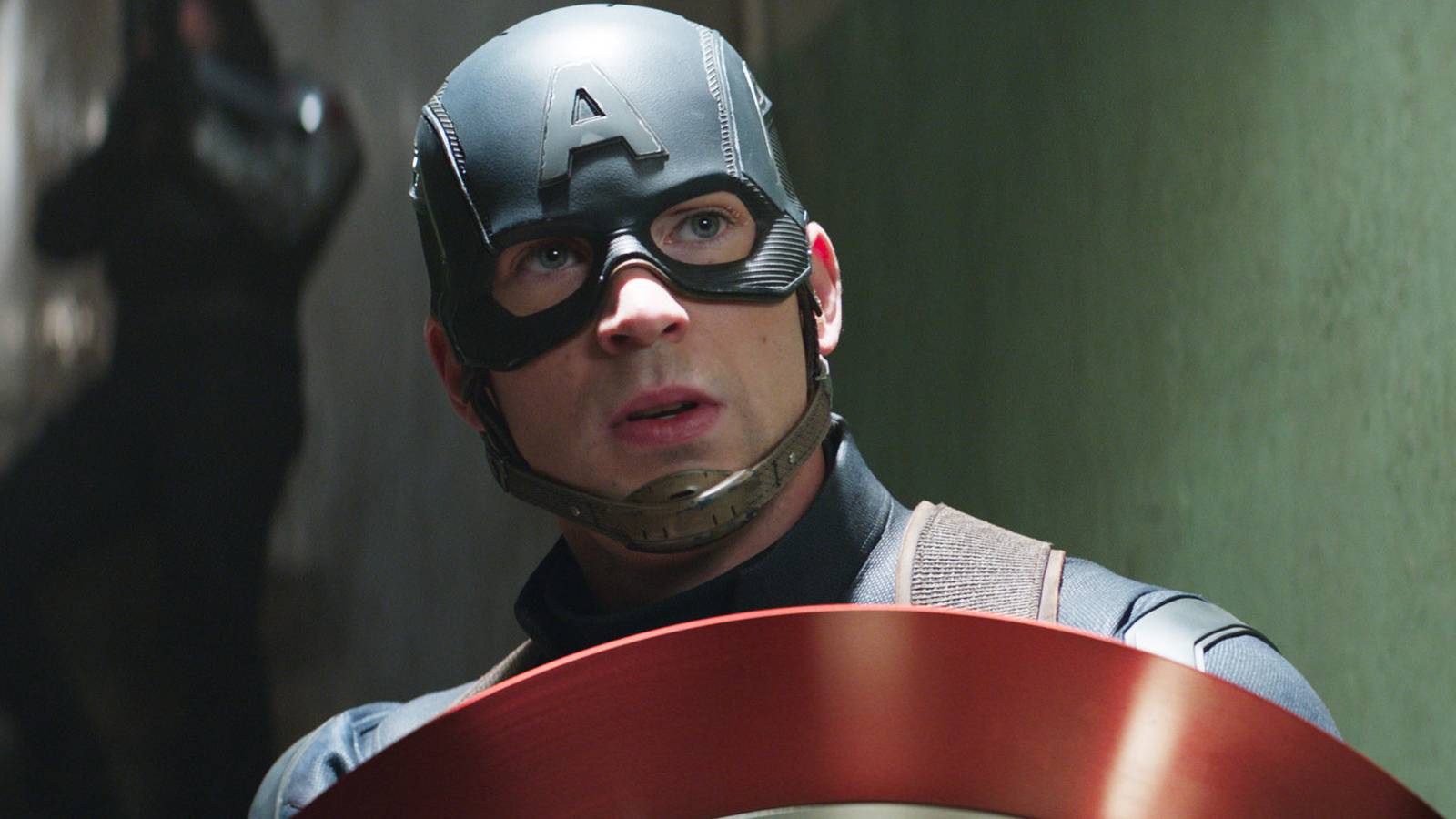
In Captain America: Civil War, when Steve Rogers attends Peggy Carter’s funeral, Sharon delivers a powerful speech that inspires Steve to choose the right side of the fight. But many people in the audience might not realize that Sharon’s words come from the famous “you move” Captain America monologue from The Amazing Spider-Man #537. While the Marvel Cinematic Universe introduced this dialogue as Sharon quoting her aunt Peggy, in the comics, it is Captain America himself who delivers these emotional words.
The MCU didn’t just change the author of the quote; it also changed the situation and the delivery. While the words are similar, and it’s an obvious reference to the comic book dialogue, the differences are enough to make both moments entirely distinct. The MCU took the “you move” quote and turned it into a softer, more relatable moment.
Captain America Educates Spider-Man During Civil War
The “No, you move” monologue from Captain America is one of the most important Captain America quotes in the Marvel universe. Captain America is the living incarnation of morality, and he always stands for what he believes is the right thing to do. This speech became the Super Soldier’s anthem, inspiring plenty of discussion and memes among the fandom.
The quote appeared during the Civil War event in The Amazing Spider-Man #537 (2007), written by J. Michael Straczynski. After a superhero vs. villain event kills more than 600 people, including children at a school, Tony Stark allies with the United States government to ensure that all heroes and villains register their identities under the Superhuman Registration Act, giving the government official control over superhumans.
As Tony Stark’s mentoree and incited by his aunt May, Peter Parker becomes pro-registration and reveals his identity to the world, putting himself and his family in great danger. However, things get even worse for Spider-Man when Tony forces him to become part of a registration enforcer team. Parker, then, has to fight some of his heroes, including Captain America.
Doesn’t matter what the press says. Doesn’t matter what the politicians or he mobs say. Doesn’t matter if the whole country decides that something wrong is something right. This nation was founded on one principle above all else: the requirement that we stand up for what we believe, no matter the odds of the consequences. When the mob and the press and the whole world tell you to move, your job is to plant yourself like a tree beside the river of truth, and tell the whole world–‘No, you move.’
Soon enough, Peter realizes he made a grave mistake. He asks Tony to take him to Prison 42, in the Negative Zone, and realizes the authoritative agenda of the government. Heroes who oppose the trial are not taken to trial but are taken straight to the Negative Zone, where they have no rights.
Peter confronts Iron Man and makes a public statement to educate the entire world on the real implications of the Superhuman Registration Act. He is conflicted and scared, and he asks Captain America for advice, just as Steve delivers the iconic speech. After quoting Mark Twain on civil duty, he tells Peter that people have the obligation to stand by their truth no matter what, even against the law.
The MCU Significantly Changed Captain America’s “You Move” Speech
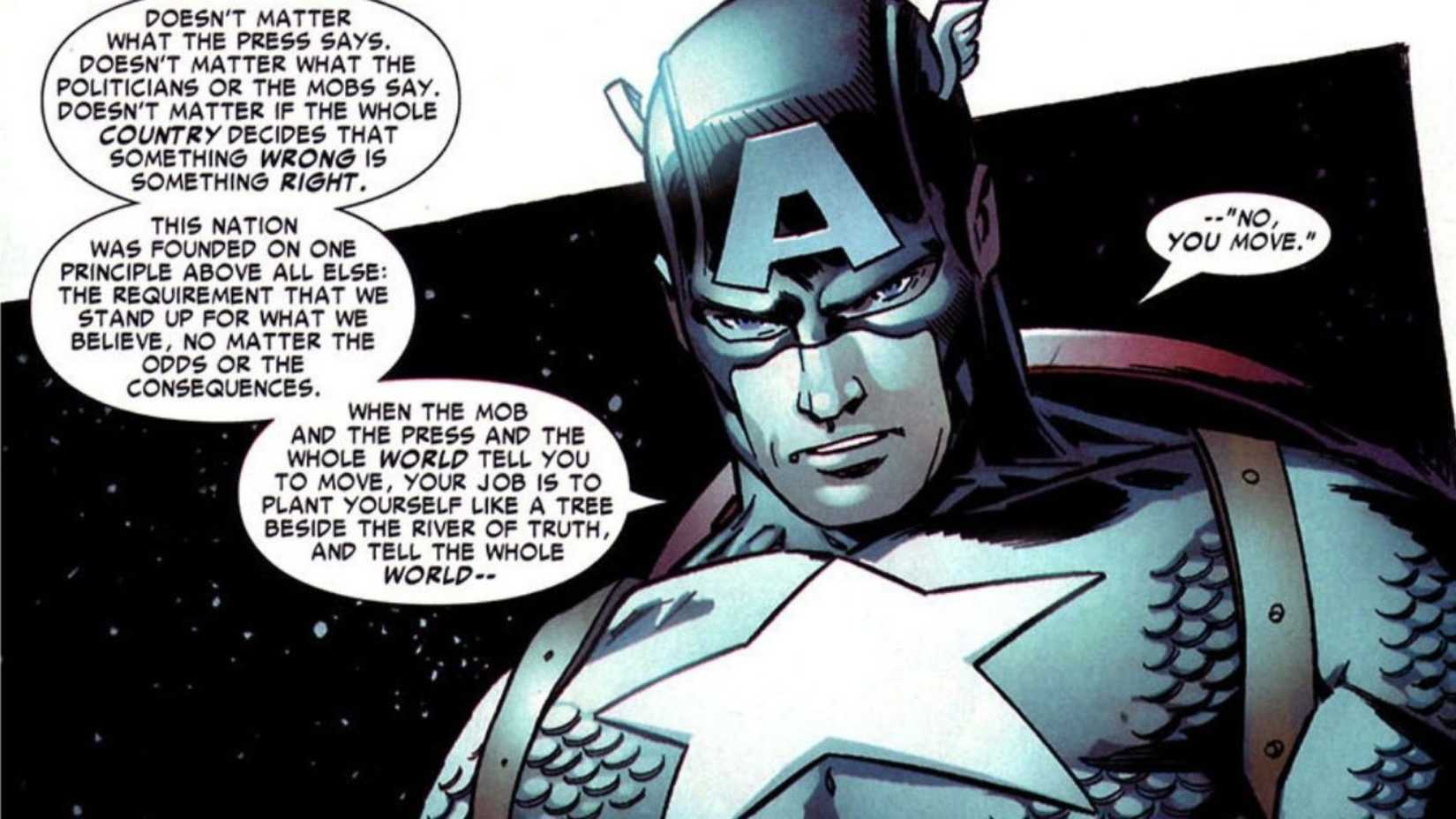
Image via Marvel Comics
Instead of Captain America delivering this inspirational speech, it is Sharon Carter. During Peggy Carter’s funeral, she talks about her aunt and her courageous role as an S.H.I.E.L.D. agent and director. An agent herself, Sharon says that it was hard to live up to people’s expectations of her as Peggy’s niece. Conflicted, she asked her aunt how she managed to survive diplomacy and espionage as a woman. Peggy replied with this wise quote, which Sharon shared with her loved ones at her aunt’s funeral:
Compromise where you can. Where you can’t, don’t. Even if everyone is telling you that something wrong is something right. Even if the whole world is telling you to move, it is your duty to plant yourself like a tree, look them in the eye, and say, ‘No, *you* move.’
As fans can see, it does quote the exact words from Captain America’s speech in The Amazing Spider-Man #537, but it adds a little more nuance while quoting other parts of the monologue. It, of course, removes everything about Mark Twain and the more political areas of the speech when Steve refers to the nation. In fact, the speech now speaks of “everyone” rather than just the country.
More importantly, it adds the quote about compromise, giving more nuance to the whole speech. Where Captain America’s speech in the comic is more self-righteous and categorical, Peggy’s in the MCU makes for a more relatable and powerful statement. Not only did the MCU change the author of the quote, but the whole idea behind it. Peggy’s is about humanity, feminism, and human rights, while Captain America’s is more about national identity and orthodox idealism.
The quote is made even more interesting in the context of the MCU because it inspires Steve Rogers to do the right thing. After the funeral, he decides to oppose the Sokovia Accords and try to protect Bucky. This makes for a more three-dimensional Captain America, who also needs a push to follow his principles. As a powerful Super Soldier, it makes sense that Steve Rogers would need a more regular person’s perspective to understand what it truly means to be a superhero. It seems that one from a woman who had to defy patriarchal corporations to make something of herself would be a fantastic source of what it means to stand your ground.
The MCU Improved On Captain America’s Most Famous Quote
Captain America is the All-American superhero. The “you move” quote from the comics reflects not only Steve Rogers’ strict set of principles but also his deep nationalism. He clearly refers to the nation’s foundation, in this case, the United States. While the idea of not moving in the face of a challenge to a person’s beliefs is wholesome, Captain America also stands for national identity and pride. On top of that, the quote can be misinterpreted and can become a villainous statement under the wrong circumstances. The MCU changed it to make it more relatable for a broader, international audience. But also, made it more human and nuanced.
By adding “Compromise where you can. Where you can’t, don’t,” the MCU transformed an already powerful quote into an impressive piece of wisdom. Captain America’s quote is inflexible and doesn’t add room for negotiation or dialogue. In fact, Steve commands to stand “beside the river of truth” as if truth were universal. By removing that part, Peggy’s quote becomes more flexible and allows for subjectivity. Following beliefs blindly can lead to more problems, and Steve’s speech can easily go wrong if a person stands on the wrong side of an issue. A superhero should always be open to hearing the other side, balance opinions, and have enough perspective to decide which battles are worth fighting.
In the Civil War event, Captain America was fully right, but that might not always be the case, especially if people decide to live by this quote. Peggy Carter, with fewer words, adds another dimension, with more compassion and intelligence, making it a much better quote. But then, she agrees with Captain America: when you can’t negotiate, you don’t. And that’s when people need to be stubborn and unmovable, when there are no other options.
Another aspect that makes Peggy’s quote better is that it removes its national elements, making it easier to resonate with all types of audiences. Captain America’s speech seems to refer more to the United States’ way of life, even though the theme of freedom is universal. However, in Peggy’s case, the quote can be used for many different types of social and political fights.
Lastly, it was an interesting change to make Peggy Carter the owner of the statement. Peggy was one of the few women in a male-dominated work environment. While Steve Rogers might not have suffered much discrimination in either of his lifetimes, Peggy did. The feminist speech might have resonated with Captain America because the shift in perspective might have been a reminder that not everyone is as privileged as he is. It intensifies the fact that Captain America always protects those who can’t defend themselves.
This doesn’t mean the original quote is bad or wrong. On the contrary, that moment between Captain America and Peter Parker was epic, and it inspired many comic readers. It’s a truly amazing dialogue that still gives chills to fans. However, 10 years later, it makes sense that the MCU turned the quote into a more compassionate statement.
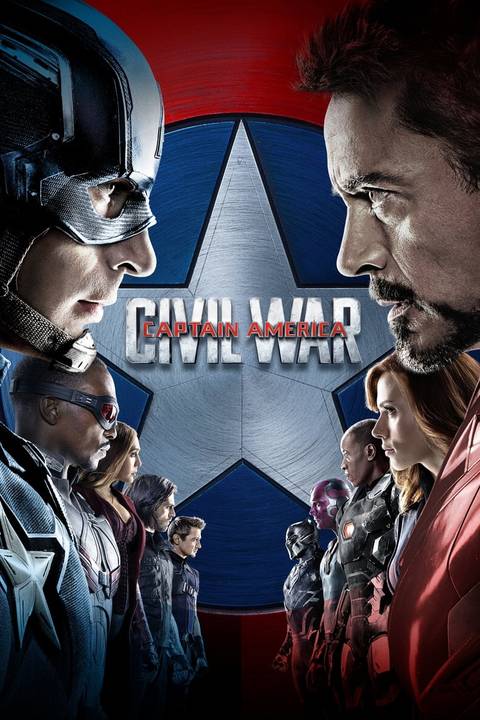
- Release Date
-
May 6, 2016
- Runtime
-
147 minutes
-

Steve Rogers / Captain America
-

Robert Downey Jr.
Tony Stark / Iron Man