In the year since voters approved Proposition S — stripping Dallas of its governmental immunity if it violates the charter, city ordinance or state law — just one lawsuit filed against it cites the new measure.
The effort was driven by Dallas Hero, a nonprofit that introduced two other propositions that are widely viewed as disruptive to the way the government conducts its business.
Former and current elected officials banded together and urged voters to consider the unintended consequences before approving the proposition. After its passage, the city released a statement that responding to and defending resulting lawsuits would “require substantial legal and financial resources.”
However, according to the city attorney’s office, Dallas has only been party to one lawsuit that directly cites the proposition.
Political Points
Impact of Prop S
The full-scale impact of the proposition is hard to map.
Earlier this year, state Sen. Nathan Johnson, D-Dallas, filed a bill that would have guaranteed governmental immunity at the state level, overridden Proposition S and prevented “opening the floodgates to frivolous lawsuits.”
The bill didn’t go far.
The proposition gives residents a tool to compel the city to adhere to local or state laws. To do so, they must give the city a 60-day legal notice that clearly outlines a violation of a statute.
Though Dallas is currently dealing with a single lawsuit, more 60-day notices have been issued.
Dallas Hero has sent two notices flagging the city’s noncompliance with another charter proposition that mandates the city have a police force of 4,000 officers, as well as a state law that targets homelessness and bans unauthorized camping.
There have also been instances where residents have used the potential impacts of the proposition to forewarn the city about things that could invite litigation.
In December last year, a group of over 100 residents banded together and urged Tony Shidid, the former chair of the City Plan Commission, to step down, citing rules in the city’s charter that set term limits for board members and commissioners.
Shidid, who was first appointed in 2013, had been the commission’s chair since 2019. It was not until September this year that Shidid stepped down, nearly two years past the end of his term.
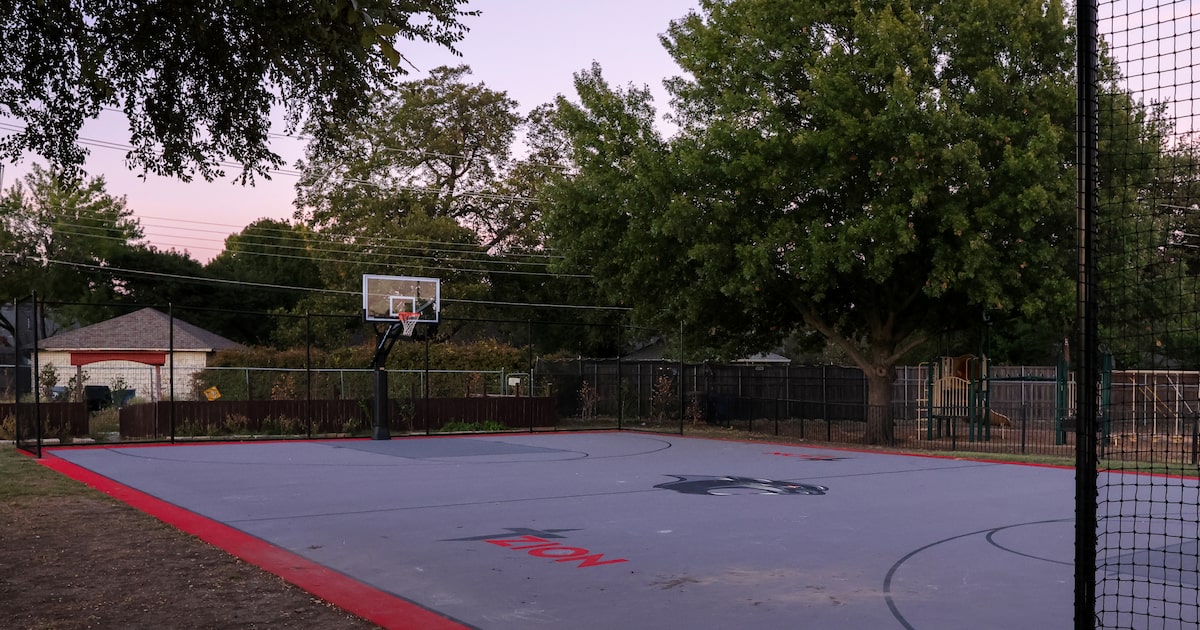
As for the one lawsuit that directly cites Proposition S, North Dallas residents Alevtina Sarno and Joseph Sarno filed the suit after a nearby church built a basketball court near their backyard. They are alleging the city did not follow its permitting and zoning rules.
The homeowners said the church failed to obtain proper permits before starting construction of the court and violated permitting and zoning laws. They said city officials did not consider noise regulations and the potential impact of the basketball court on adjacent residential properties before approving the construction.
The Sarnos filed their lawsuit before the proposition passed in November last year. They later amended their petition to say the liability from the alleged violations was enough to waive the city’s immunity.
The city argued the Sarnos had “failed to plead facts that would support a valid constitutional claim sufficient to waive governmental immunity.” Dallas said the proceedings at the board of adjustment provided enough detail to justify the city’s actions. City attorneys also said the Sarnos failed to file a required 60-day notice prior to filing a claim.
On Sept. 24, records show the court sided with the city in part and dismissed the Sarnos’ claims that cited Proposition S. Other claims, including the Sarnos’ appeal over the board of adjustment’s decision, still needed to be decided. A nonjury trial is set for March 3, 2026, though the Sarnos appealed the judge’s September order in the Fifth Court of Appeals.
Lawsuits stemming from Prop S have no takers
For some, the proposition’s mission may not align with its effectiveness.
Hal Barker and his brother Ted Barker, two longtime Dallas residents and advocates for improved conditions in and around White Rock Lake, sent a 60-day notice to the city earlier this year.
City officials, they said, were not notifying residents about the times officials were spraying herbicides and other chemicals, often in areas frequented by children, to tackle invasive plant species at the lake. Hal Barker said officials had initially not disclosed the types of chemicals they were using and residents were generally frustrated by the lack of clear answers.
When the pair sent in a notice, the city responded that it was in compliance with all rules and regulations.
“The whole concept was that you would give the city notice of an issue and give them 60 days to fix it, and I think that was more of a utopian theory because under no circumstances will they fix something unless they go to court,” Barker said.
Barker said he didn’t anticipate many lawsuits, as it would be hard to find an attorney willing to fight this type of case. An attorney would cost him $20,000, and Barker’s had experience with lawsuits. He’s successfully fought and won a better part of six to seven litigations. In all of them, he fought in court on his own behalf without a lawyer.
Taking the matter to court would require repeated trips to court for hearings, depositions, and interrogatories. If city officials don’t answer the interrogatories, then there would be motions to compel them. “So what I’m saying is, basically, unless you’re rich, you will get nowhere,” Barker said, adding that for an average person, it’s unlikely a legal notice would ever evolve and get to court.
But Barker says the proposition isn’t a complete failure. It’s a start.
“Somewhere along the line, somebody’s going to come up with something that’s substantive enough to get an attorney,” he said.