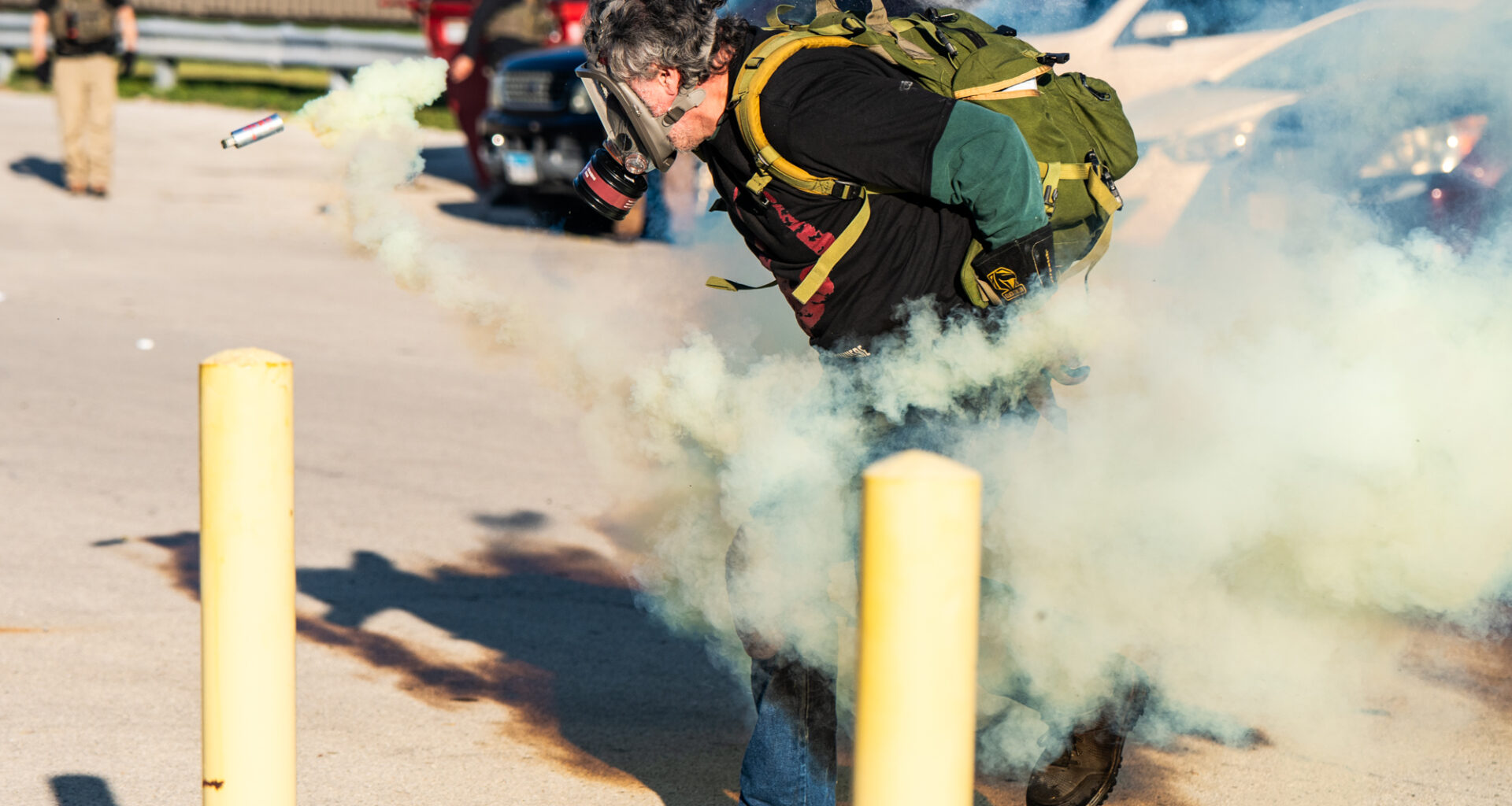
CHICAGO — On Thursday, a federal judge issued a court order that limits federal immigration agents’ use of force and crowd control tactics in the Chicago area. Now the Trump administration is trying to block it.
Attorneys for the U.S. Department of Justice on Monday filed an emergency motion asking the U.S. Court of Appeals for the Seventh Circuit to stop the order immediately, arguing the “overbroad and unworkable injunction has no basis in law, threatens the safety of federal officers, and violates the separation of powers.”
The government’s motion claims U.S. District Judge Sara Ellis exceeded her authority — and infringed on the powers of the executive branch — by granting the “sweeping” order, which imposes restrictions on federal immigration agents’ use of force “based solely on past incidents of alleged misconduct that they only speculate many recur.”
“What began as a complaint by journalists and protestors alleging that DHS officers targeted them with crowd-control devices at a handful of protests in September and early October has transformed into an instrument for judicial micromanagement of federal law-enforcement operations in the Chicago area,” the motion reads.
The appeal is the latest in an ongoing lawsuit filed to protect the First Amendment rights of peaceful protesters and journalists from tear gas, pepper balls and other uses of force. Block Club Chicago is a plaintiff along with other media organizations and journalists.
At a key hearing last week, U.S. District Judge Sara Ellis granted an injunction in the lawsuit, which means the temporary restraining order she issued last month will remain in place until a full trial takes place or a settlement is reached.
The extended order limits federal immigration agents’ uses of force except when they’re faced with violence themselves. It also mandates that agents wear badges or display other visible identification and requires that most agents use body cameras.
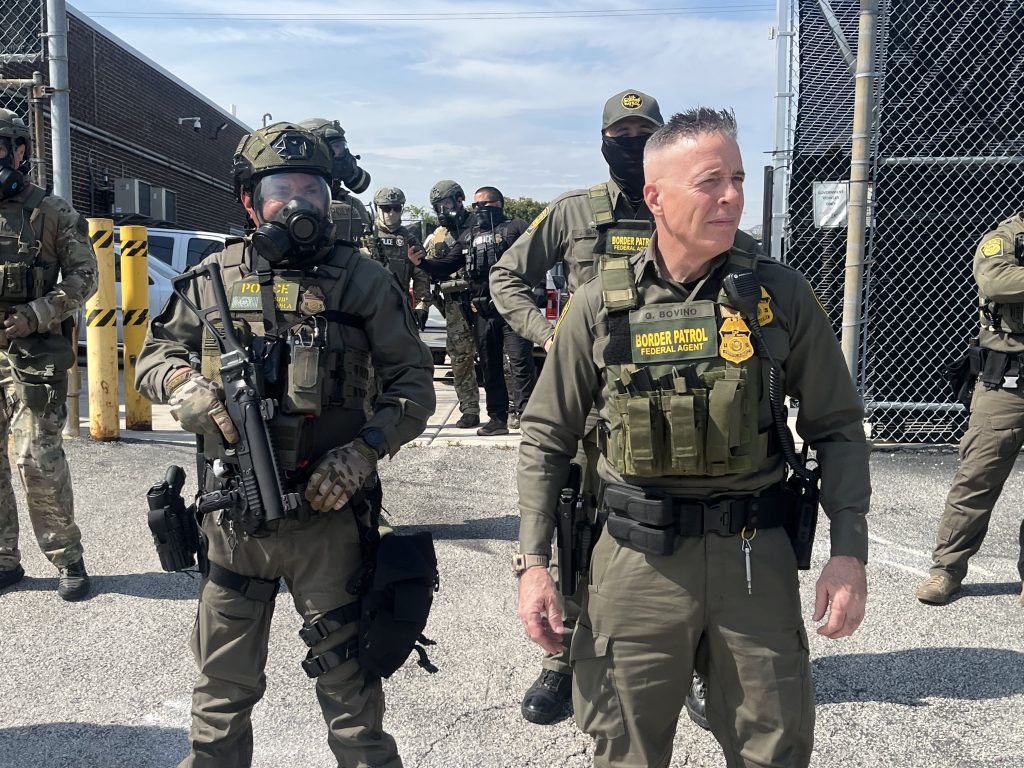 Gregory Bovino, commander-at-large of the U.S. Border Patrol, looks on in Broadview on Sept. 19, 2025. Credit: Charles Thrush/Block Club Chicago
In her ruling, Ellis gave a litany of examples of federal immigration agents’ using excessive force against rapid responders, neighbors, clergy and bystanders as well as other protesters and journalists in neighborhoods across the city and in the suburbs.
Ellis also cited instances when the claims of federal authorities didn’t hold up. She said Border Patrol Chief Gregory Bovino, leader of the immigration crackdown in Chicago, admitted to lying when he claimed he was hit by a rock before tear-gassing people in Little Village last month.
The federal government has said agents have used justified force to respond to “rioters,” “agitators” and violence. But Ellis said she couldn’t find any evidence of “violent rioters” in Chicago in the 500 hours of body camera footage and videos provided by government attorneys.
In her ruling, Ellis read Carl Sandburg’s poem “Chicago” aloud and described the city as a place “brimming with vitality and hope” as it works to move past a history that includes segregation and violence, with “everyday people standing watch to protect the most vulnerable among us.”
“The government would have people believe, instead, that the Chicagoland area is in a vise-hold of violence, ransacked by rioters and attacked by agitators,” Ellis said. “That simply is untrue. And the government’s own evidence in this case belies that assertion.
“After reviewing all of the evidence submitted and listening to the testimony, I find the defendants’ evidence simply not credible.”
With their latest filing, government attorneys asked the appeals court to halt Ellis’ order while the case proceeds, saying it puts the district judge “in the untenable position of superintending day-to-day law-enforcement activities.”
Attorneys for the plaintiffs responded with their own filing to the appeals court, arguing that the government failed to show any sudden “emergency” that would justify stopping Ellis’ order.
Federal government officials “have stated repeatedly — including during arguments and under oath — that their operations are not hindered by complying with the injunctive relief that the district court has ordered.”
The attorneys also highlighted that Ellis found federal immigration authorities have “outright lied” on multiple occasions.
“In addition, Defendants did not tell the truth under oath during sworn testimony in the case,” the plaintiffs wrote in their filing. “This Court should not intervene in a manner that inures to the benefit of executive actors acting lawlessly and disrespecting judicial authority.”
Listen to the Block Club Chicago podcast: