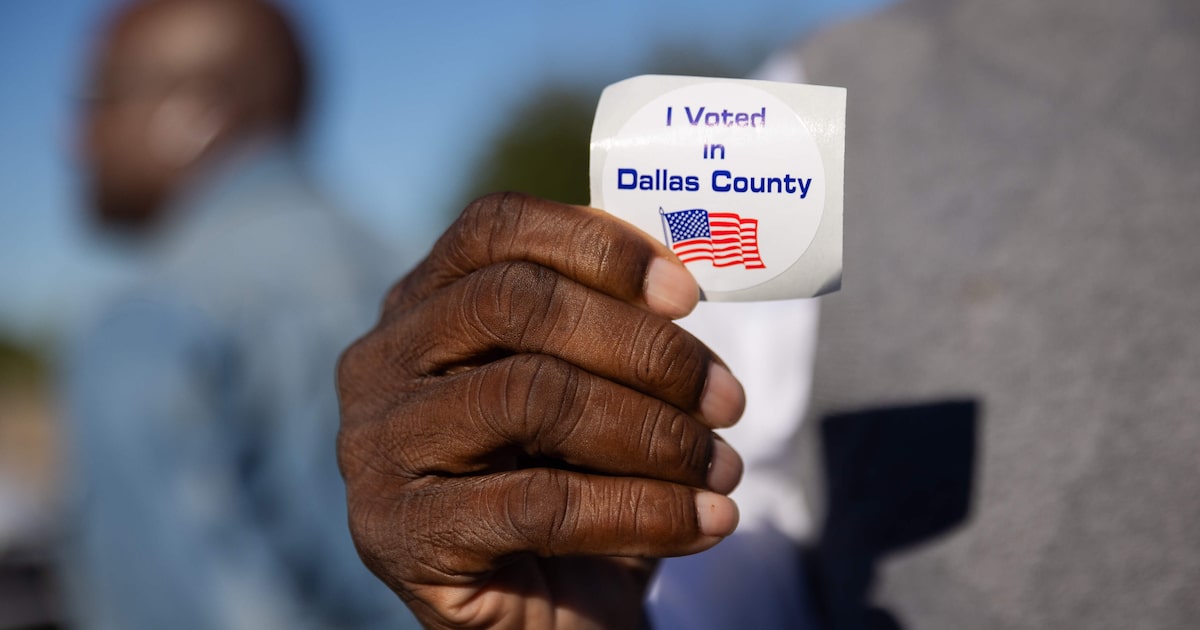
Dallas officials are one step closer to moving elections from May to November in odd years.
The City Council will vote on the measure Wednesday. If approved, regular elections will be held on a Tuesday in November, ending the trend of back-to-back elections in a single year.
Runoffs, however, will be held on Saturdays, unless local entities work together to find another date.
The council ad hoc committee on administrative affairs discussed the pros and cons of the measure Monday, a year after a majority of the city’s voters, about 65%, gave a resounding seal of approval to moving elections. The Texas Legislature followed suit by passing Senate Bill 1494, which gives local governments the avenue to move their elections.
Political Points
Council member Chad West, an early proponent of the measure, spoke in favor of it Monday. His appointee to the charter commission, David de la Fuente, led efforts to amend the city’s charter to strike a provision requiring all elections to be held in May. The efforts were further bolstered by support from North Dallas Chamber of Commerce officials such as Jeff Kitner, former officials such as Mayor Mike Rawlings and state lawmakers such as Sen. Nathan Johnson, Sen. Royce West and Rep. Rafael Anchía, who represent Dallas.
The city has had a dismal voter turnout rate for years. Routinely, fewer than 10% of the city’s registered voters determine the makeup of the primary government. West said Dallas’ numbers often rank among the lowest among the country’s largest cities.
“I don’t know about you, but lowest voter turnout is not where I think Dallas should be leading the nation,” West said.
Last year, Dallas voters cast their ballots in March during primaries for presidential, state and other federal races. They returned in May to approve the 2024 bond program and then later voted in the November general elections. This year, voters participated in local municipal elections in May and statewide elections in November.
The last May elections cost the city $1.1 million. If it had been moved to November, it would have cost the city about $500,000 because the county would have covered about 65% of the cost.
Council member Laura Cadena asked questions about the effect on the city’s ability to pick polling locations. She said she had seen a growth in voter turnout in her district and didn’t want the progress to be harmed. Johnson clarified the city activates 274 sites in a May election. In November, Dallas County will use all 452 locations.
A change to November elections also means that a termed-out council member may have to work in a holdover status for five months next year until their successor is elected, City Secretary Bilierae Johnson told council members.
This means the work of appointing board members and commissioners, who serve in influential bodies such as the Park Board or the City Plan Commission that control key services and development patterns in the city, will be handled by the outgoing council member because most of these appointments occur at the beginning of the new financial year in October.
Johnson said another recently adopted charter provision gives council members the flexibility to reappoint or remove their representatives. However, many committee members appeared uneasy about it.
Mayor Pro Tem Jesse Moreno questioned whether it would appear self-serving for the council to extend its terms by five months. The next City Council election will be held in 2027, and council terms end in June.
Council member Kathy Stewart wondered whether it might be prudent to discuss a new charter amendment sooner rather than later because it may be awkward for new elected officials to feel they didn’t have a say in selecting their appointees.
“It’s not insurmountable, but I think it would be just something to clean up in the charter as soon as we possibly can,” Stewart said.