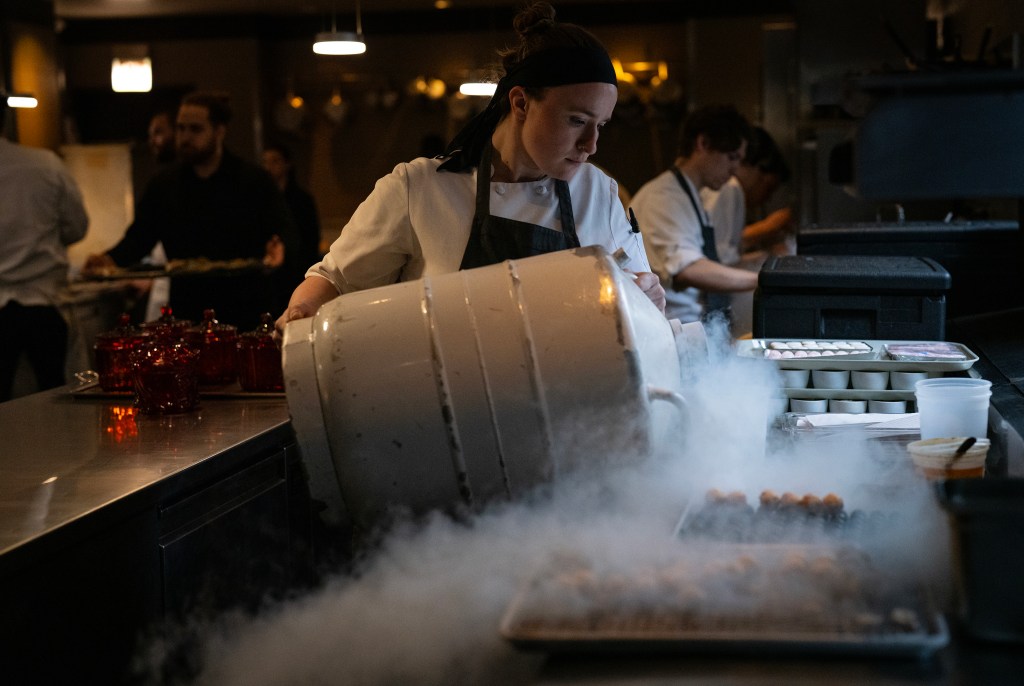
In 2004, the chef Grant Achatz left the stellar restaurant Trio to found his own eatery in Lincoln Park, Alinea. Even before it opened the buzz was loud: Chicago, it was said, would soon have a second place worthy of the free-spending “gastronauts,” the global travelers who book vacations based on where they would like to eat. Charlie Trotter had led the local way.
Alinea exceeded even the loftiest expectations and critic plaudits from this newspaper and many others were immediate. Achatz’s partnership with Nick Kokonas, who would go on to disrupt how restaurants used data and how diners made reservations, redefined fine dining in too many ways to list here, especially in the world of prix fixe, where the customer essentially placed total trust in the chef. Achatz didn’t even describe his dishes when Alinea opened; he merely listed the primary ingredients and placed his own trust in aroma, texture and, of course, taste to woo his customers. Alinea was hardly cheap, of course, but it still served as the locus for many Chicagoans’ most important celebrations. We know people who saved up just to be able to go there once.
Now the Michelin Guide has removed the coveted third star held by Alinea ever since the guide started covering Chicago in 2011. (Alinea was the only three-star Chicago restaurant for 11 years.) The guide did not say why, of course, merely that restaurants (more specifically, the food on the plate) were constantly evaluated using the criteria of the quality of ingredients; the mastery of flavor and cooking techniques; the personality of the chef in their cuisine; the harmony of flavors; and consistency over time and across the entire menu.
The restaurant announced its own demotion before the guide, a typically smart move. The demotion, although hardly unique to Alinea, comes at a tough time for Chicago restaurants, as we’ve often written. And cynics might say that the Michelin Guide can only retain its relevance, and its place in editorials like this one, by making a few such moves. Promotion and relegation keeps soccer fans enthused; the same goes here.
Then, of course, Chicago is different from 2005. The media and critics have changed, and fine-dining now is more frequently dismissed as fussy elitism, especially fine dining that has been around for two decades on North Halsted Street. The famously obsessive Kokonas stopped actively managing the restaurant and became a passive investor. Neighborhood simplicity has been having a moment. And, as fans of the TV series “The Bear” well know, it is tough to keep anything going at the same level on a long-term basis.
Shiny newcomers nip at your heels. Those who throw rocks will try to break the windows of the establishment. One easily can become tired or fail to see new directions. Or one can just say to hell with that, and just carry on doing what one does.
So, chin up, Mr. Achatz, say we. You’ve represented the pinnacle of Midwestern dining artistry for two decades. We don’t expect reservations at your place to suddenly get any easier. And if a city should praise its great resident artists at their peak, it should also have their back through a few of the inevitable valleys.
Submit a letter, of no more than 400 words, to the editor here or email letters@chicagotribune.com.