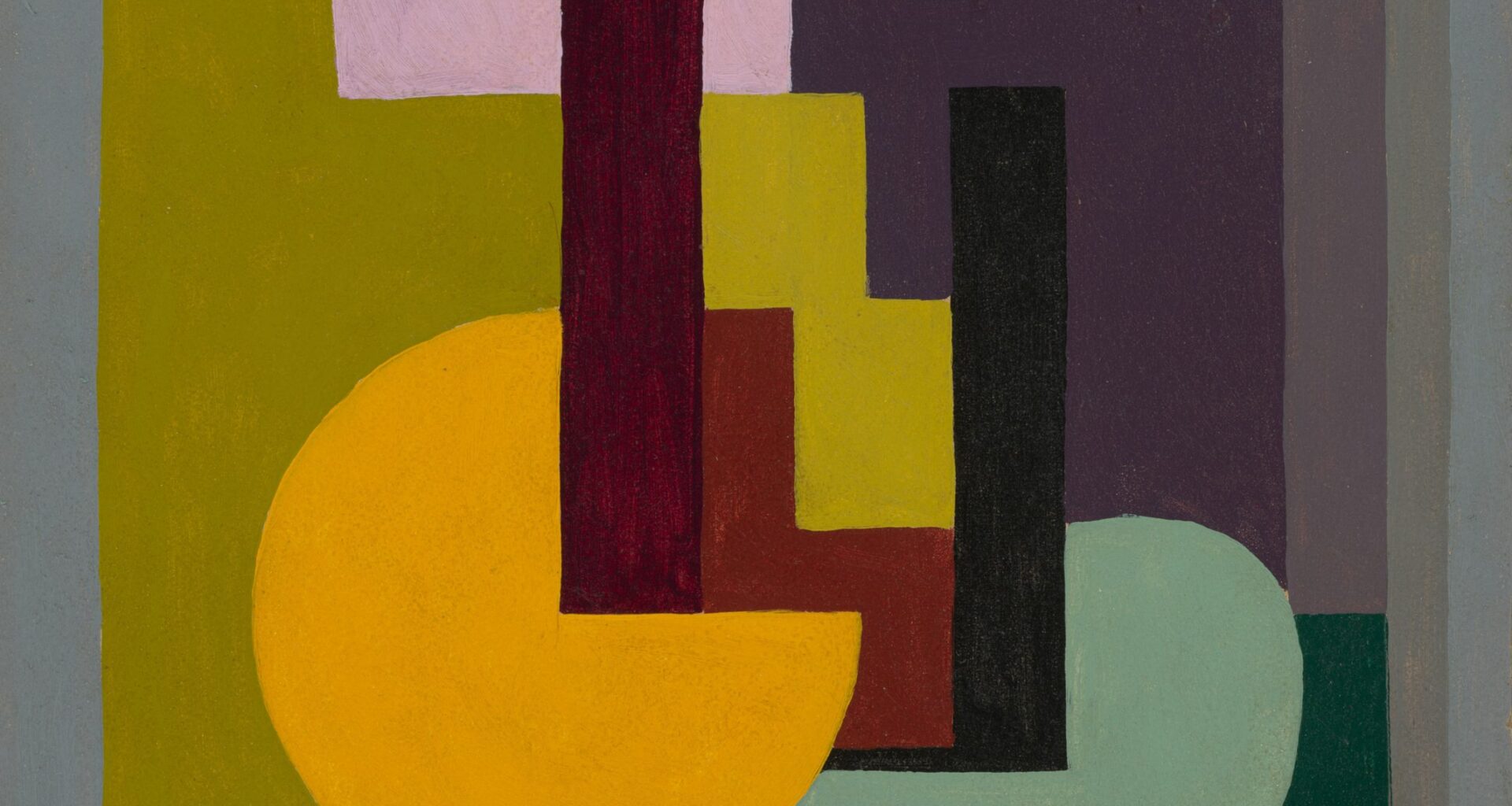
For the first time ever, Texas businessman and philanthropist Charles Butt is sharing his private collection of American art with audiences in the Lone Star State. The exhibition debuted at the Carter and is traveling exclusively to venues in Texas. American Modernism from the Charles Butt Collection represents the collector’s love letter to his home state.
Though a vibrant presentation of over eighty paintings by luminaries such as Winslow Homer, Alice Neel, Joan Mitchell, and Andrew Wyeth, alongside Texas artists Mary Bonner and Everett Gee Jackson, visitors will discover the groundbreaking visions of artists who transformed the trajectory of Modern art in the United States.
The story of American Modernism is central to the Carter’s own mission, and this exhibition reveals fresh perspectives on some of the Carter’s and America’s most celebrated artists, including Stuart Davis, Arthur Dove, Marsden Hartley, John Marin, and Georgia O’Keeffe, expanding our understanding of twentieth-century American art in surprising and deeply personal ways.
The exhibition unfolds through four thematic sections. The first section, “Intimate Perspectives,” explores the deep human connections that radiate through so many of the artworks on view—from portraits of family members to quiet views from artists’ windows to paintings shaped by the influence of close friends and mentors. The bond between Guy Pène du Bois and Edward Hopper is especially evident in three remarkable figural scenes. On public view together for the first time, these paintings reveal how Hopper’s contemplative approach to depicting everyday life inspired du Bois to reimagine his own.
The next section, “The Language of the Sea,” reflects Charles Butt’s lifelong passion for maritime subjects. Having grown up in Corpus Christi, spending part of the year in Maine, and being a mariner himself, Charles Butt has assembled an extraordinary range of coastal and oceanic scenes. These works span from representational depictions of the perils of sea travel to bold, abstract interpretations of the ocean’s vastness. Two works by George Bellows of Maine’s coast act as compelling counterpoints to a masterful work in the Carter’s collection and one of Bellows last known depictions of the sea, The Fisherman, 1917, featuring the radiant waters and coast of Carmel, California.
🔍 Fuel in-depth news for your community
In-depth journalism takes time, resources and community support. Your gift powers reporting that helps Tarrant County make sense of complex issues. Help us reach our $400,000 goal and keep this work going in 2026.
“Land Progressions” explores a range of artists who drew creative and spiritual inspiration from the American landscape. Some envisioned new symbolic or conceptual uses of land, while others responded to industrialization’s impact, evoking environmental tension and uncertainty in their work. Arthur Dove’s landscape paintings—on view both in this exhibition and in the Carter’s collection—exemplify the artist’s ceaseless fascination with nature’s spiritual and expressive potential.
The final section, “Geometric Utopias/Dystopias,” showcases urban and rural scenes alongside nonobjective compositions, where artists like Charles Demuth translated their environments into intricate geometric forms. These works reflect both the liberating promise and underlying fragility of modern American life, offering new visual worlds and reimagined identities.
American Modernism from the Charles Butt Collection features paintings, drawings, and watercolors that range in date from the turn of the twentieth century to the late 1970s. Some of these artworks have never before been publicly exhibited, while many others have not been seen in over half a century.
This is a rare and extraordinary moment for art lovers in Texas: a once-in-a-generation chance to experience masterpieces from one of the nation’s most remarkable private collections. Seen only in Texas and currently only at the Carter, this exhibition invites audiences to discover the heart and vision of a collector whose passion for art—and for his home state—has made possible an exhibition that few will ever forget.
Related
Fort Worth Report is certified by the Journalism Trust Initiative for adhering to standards for ethical journalism.
Republish This Story

Republishing is free for noncommercial entities. Commercial entities are prohibited without a licensing agreement. Contact us for details.