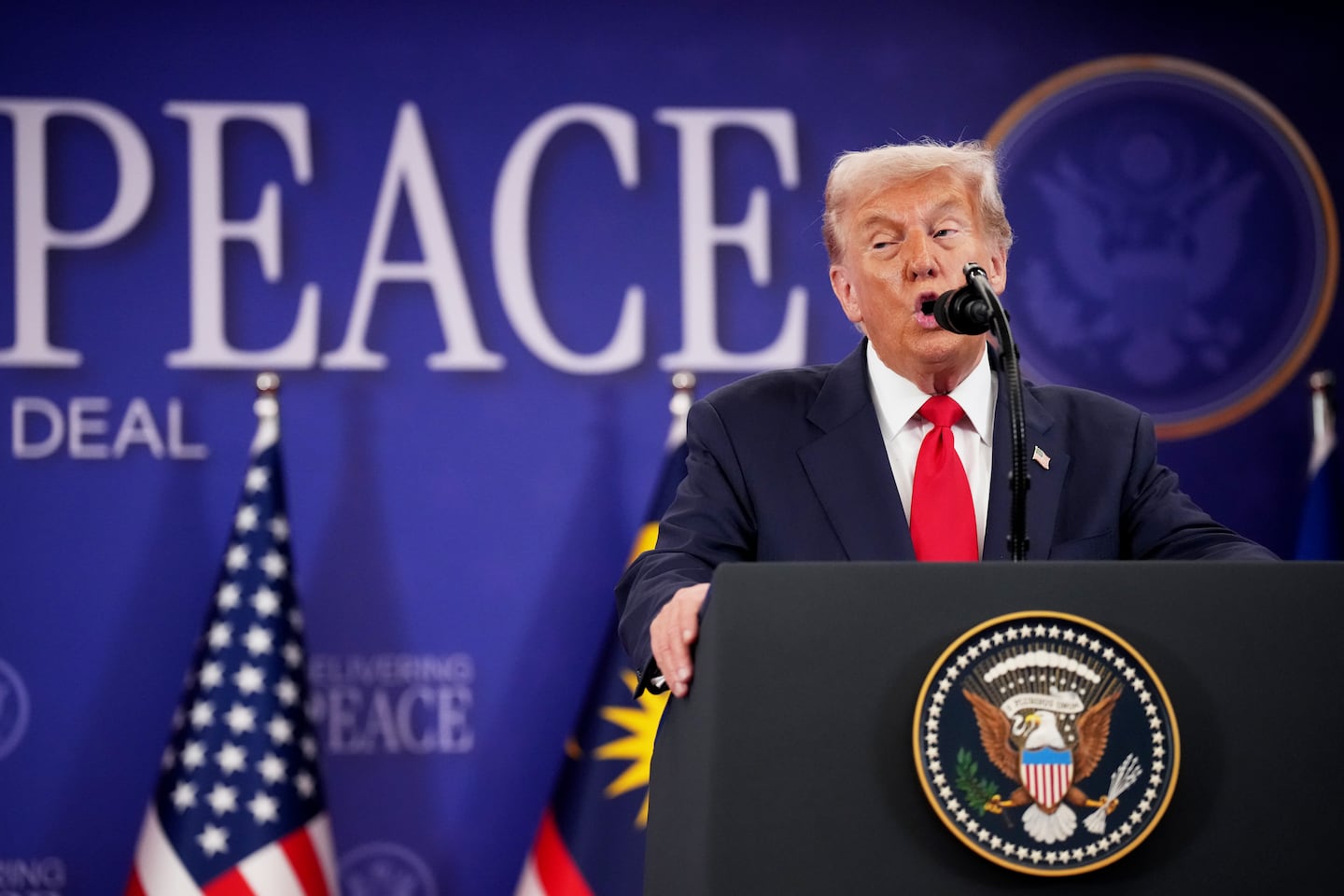
🫣 Inflation? What inflation?
The White House says it feels Americans’ pain from the high cost of living. But delivering real relief will require more than words of sympathy.
In the aftermath of the pandemic-era inflation shock, household budgets remain under pressure from high housing costs and rising prices for essentials such as food, child care, and medical services. The economy continues to reward wealthier households far more than everyone else.
Yet tools to ease the affordability crisis are limited. Steps the Trump administration has taken will need time to make an impact — if they work at all. President Trump himself seems reluctant to acknowledge that a problem even exists.
Why it matters: Voters blamed former President Joe Biden for the country’s worst inflation in 50 years. It was a big reason Trump won the White House in 2024. Now he and the GOP are under pressure as attention turns to next November’s midterm elections.
Consumer sentiment is sinking and polls show declining confidence in Trump’s ability to manage the economy. Democrats scored high-profile wins in recent state and local elections with campaigns centered on affordability.
The drop in consumers’ purchasing power is “something that we’re going to fix, and we’re going to fix it right away,” Kevin Hassett, the director of the National Economic Council, told reporters Thursday.
Recap: Since Republicans’ poor showing at the polls, Trump has proposed sending out $2,000 tariff rebates and creating 50-year mortgages that would reduce monthly payments for homebuyers. On Friday, he canceled tariffs on coffee, bananas, beef, and other items.
Still, the president continues to describe inflation as a thing of the past.
“Our energy costs are way down. Our groceries are way down. Everything is way down and the press doesn’t report it,” told reporters earlier this month at the White House. In a recent interview with Fox News host Laura Ingraham, he blamed lingering frustration with prices on “a con job by the Democrats.”
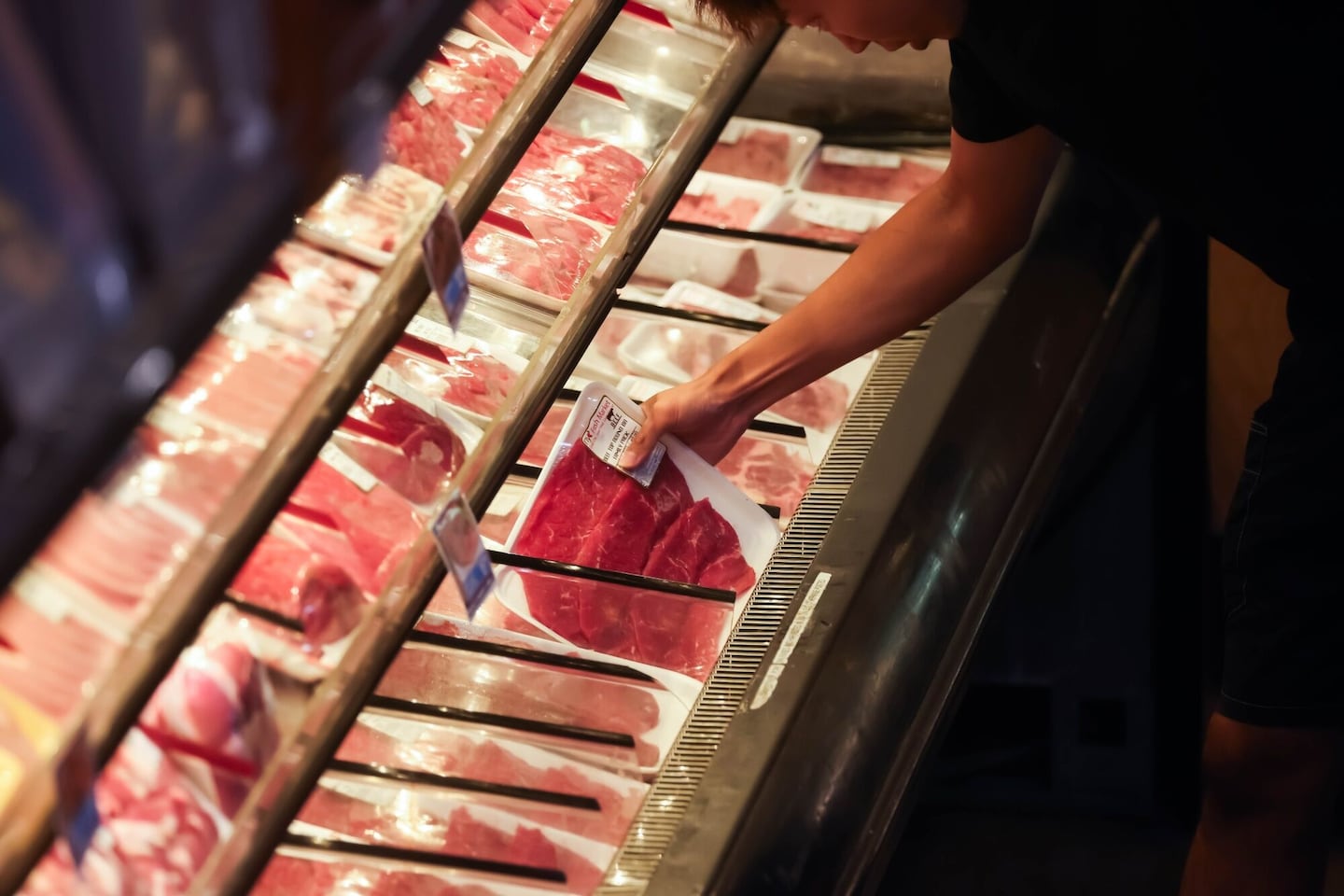 Meat prices continue to climb.Michael Nagle/Bloomberg
Status report: Inflation had cooled sharply from its 2022 peak by the time Trump returned to office.
Price growth slowed further early in his second term but has since ticked up as new tariffs work their way through the economy. From February through September, the Consumer Price Index rose at an annualized rate of 3.4 percent, compared with 2.9 percent for all of 2024.
Bad vibes: Even as the economy grows at a healthy clip, Trump is confronting a downbeat consumer sentiment similar to one Biden faced in 2023-2024.
Many Americans remain skeptical and feel little relief in their daily lives.
Prices are rising, albeit at a slower pace, on top of a roughly 25 percent jump since early 2020, while wages haven’t kept up.
Gasoline is cheaper under Trump, but electricity and natural gas bills are climbing. Some groceries cost less, but overall food prices — along with medical and child care costs — are still growing faster than overall inflation. Homeownership remains out of reach for many.
The economy’s K-shaped pattern — with wealthier households buoyed by rising stock prices while lower- and middle-income families struggle with higher prices and tighter budgets — has deepened dissatisfaction.
Tool box: Presidents, meanwhile, have limited power to combat inflation.
The main anti-inflation tool — interest rates — sits with the Federal Reserve. Housing costs, wages, and energy markets move largely beyond presidential control.
Trump has used the levers available to him: tax cuts, deregulation, efforts to boost domestic energy production, and pressure on companies to invest in the US and drug makers to lower prices. But the centerpiece of his economic agenda — tariffs — is increasingly working against his goal of easing living costs.
Tariffs raise prices for consumers and businesses. Many companies initially absorbed the added costs by drawing down existing inventories, but economists expect price increases to accelerate next year as firms rebuild stockpiles and pass along higher costs to protect profit margins.
Final thought: I’m not sure how much Trump cares about reducing living costs for low- and middle-income Americans.
Tariff rebate checks sound appealing but make little economic sense, returning money that consumers effectively paid upfront through higher prices while leaving the underlying cost pressures intact.
Fifty-year mortgages would lower monthly housing payments but increase total borrowing costs and slow the buildup of equity. Policies that expand the housing supply remain the most effective way to make homes more affordable.
Most of all, would a president truly concerned about overburdened consumers fight to cut off food assistance during the government shutdown and block the extension of tax credits for health care premiums while hosting a “Great Gatsby”-themed Halloween gala?
I suppose the F. Scott Fitzgerald novel’s Tom and Daisy Buchanan — who “smashed up things and creatures and then retreated back into their money or their vast carelessness” — would not have a problem with that.
“Marshmallow on sweet potatoes is disgusting. Do people still do this? Just gross.”
— Kim Suga, of Newton, in his annual list of Thanksgiving rules and “gentle” suggestions.
🧠 Artificial Intelligence
Join the club: Billionaire Amazon founder Jeff Bezos is launching an AI startup where he will be co-CEO.
Attention shoppers: Novo Nordisk is lowering direct-to-consumer prices of its blockbuster weight loss drug Wegovy and diabetes counterpart Ozempic to $349 a month from $499 for existing cash-paying patients.
Proceed with caution: The Food and Drug Administration will add a new warning and other limitations to Elevidys, a gene therapy for Duchenne’s muscular dystrophy made by Cambridge-based Sarepta Therapeutics that’s been linked to two patient deaths.
Request denied: Former Federal Reserve Governor Adriana Kugler abruptly resigned earlier this year after Chair Jerome Powell refused to grant her a waiver to address financial holdings that ran afoul of the central bank’s ethics rules, according to a Fed official.
On hold: Boston-based community lender BlueHub Capital halted its controversial “shared appreciation mortgage” program for distressed homeowners amid a court battle.
Going elsewhere: UMass Boston made a big bet on international students. Now, fewer are coming.
14
— The number of students from New England colleges and universities selected as 2026 Rhodes scholars, out of 32 winners from US schools and more than 100 globally.
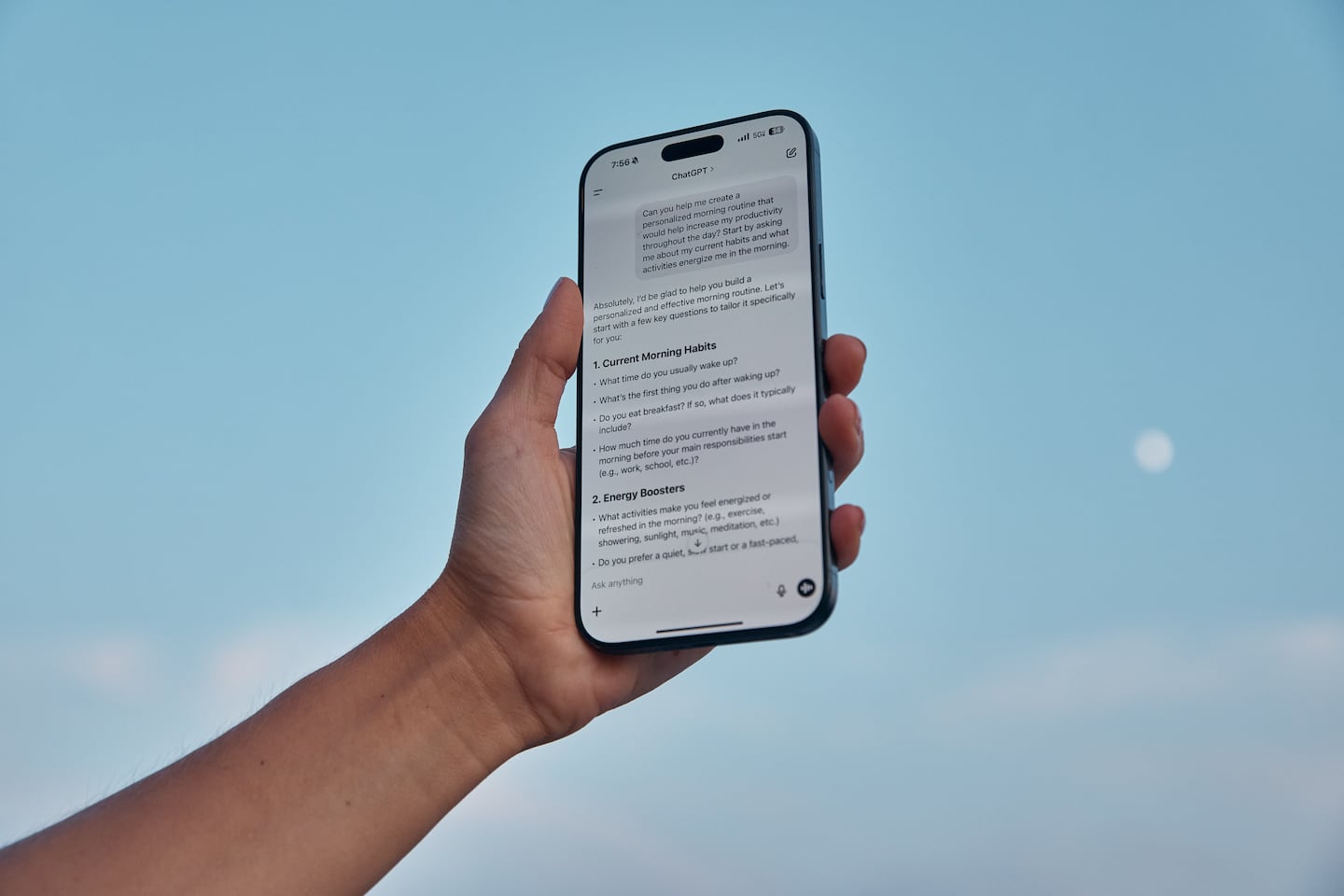 The Washington Post analyzed 328,744 publicly shared messages from ChatGPT in English to find patterns in how it uses language.ANDRES KUDACKI/NYT
Machines are writing more than we realize. A recent analysis by the The Washington Post of more than 328,000 publicly shared messages from ChatGPT’s GPT-4o model reveals tell-tale linguistic patterns that may betray AI authorship — even when the writing appears convincingly “human.”
The study found that ChatGPT’s language has evolved but still bears markers distinct from typical human writing.
For instance, the bot’s use of emojis is striking: By July 2025, 70 percent of its messages included at least one emoji, with the white check mark in a green box appearing 11 times more often than it did from humans in those chatbot conversations. It also loves em dashes (—). Starting in 2025, more than half its responses included one.
Vocabulary choices remain telling: the word “core” appeared five times more often than a year earlier, and “modern” surfaced in over 8 percent of messages. Conversely, terms like “ensure,” “various,” “crucial” and “approach” are used less.
The chatbot’s embrace of contractions such as “you’re” and “isn’t” suggests a bid for casual tone.
The researchers caution that these indicators aren’t foolproof — chatbots are learning from humans, after all, who have their own language tics — which can make it difficult at times to distinguish between AI and human writing.
DISCLAIMER: I asked ChatGPT to write this item by summarizing the Post’s story. An editor and I fact-checked its work. We fixed a few errors involving ChatGPT’s interpretation of the original story. Still, with each use of AI, I feel like I am training my own replacement.
📆 On this date in 1928, the original Boston Madison Square Garden opened. The venue was built for boxing, and its name was later shortened to Boston Garden.
👋 Thanks for reading. Trendlines will be back on Thursday.
✍🏼 If someone sent you this newsletter, you can sign up for your own copy.
Larry Edelman can be reached at larry.edelman@globe.com.