Food retailers say months of higher-cost inventory will likely delay any impact on consumer prices.
PORTLAND, Oregon — President Donald Trump rolled back tariffs on more than 200 imported food items Friday in an effort to reduce grocery prices. The list includes coffee, cocoa, bananas, beef, avocados and tea.
The administration said the executive order does not signal a retreat from using tariffs as “economic drivers.” Still, small business owners and shoppers say they do not expect immediate relief.
“We’ll believe it when we see it!” said Ali Shaw, co-owner of Bold Coffee and Books in Southwest Portland.
Shaw said wholesale coffee costs for her first-year business have risen nearly 9% since January. Prices for milk and other staples have jumped another 5% since August.
“For these prices to be going up and down, it’s been a real challenge to find where our foothold is,” Shaw said. She added that raising prices was a last resort.
“Gut punch! You don’t want to have to do that, you don’t want to pinch your community when you’re also feeling pinched, so we put it off as long as we possibly could,” she said.
Shoppers say they are feeling the strain as well. Christina Barron of Portland said even small outings with her children have become expensive.
“Oh, at least $20 every time,” Barron said. “We actually went out to breakfast the other day and paid nearly $200 for my husband and I and four kids.”
RELATED: Portland business owners reveal how tariffs have hiked store prices
Economists say rising grocery bills reflect real increases in food costs.
“I went to the store the other day, and I can’t believe how expensive beef is,” said economic consultant Eric Fruits. “We are now a beef-free house for a while.”
Fruits said that even with the tariff rollbacks taking effect, consumers are still feeling the impact of earlier rounds that pushed prices higher.
“It takes a while for those to kick in, and it takes a while for people to register those price increases,” he said.
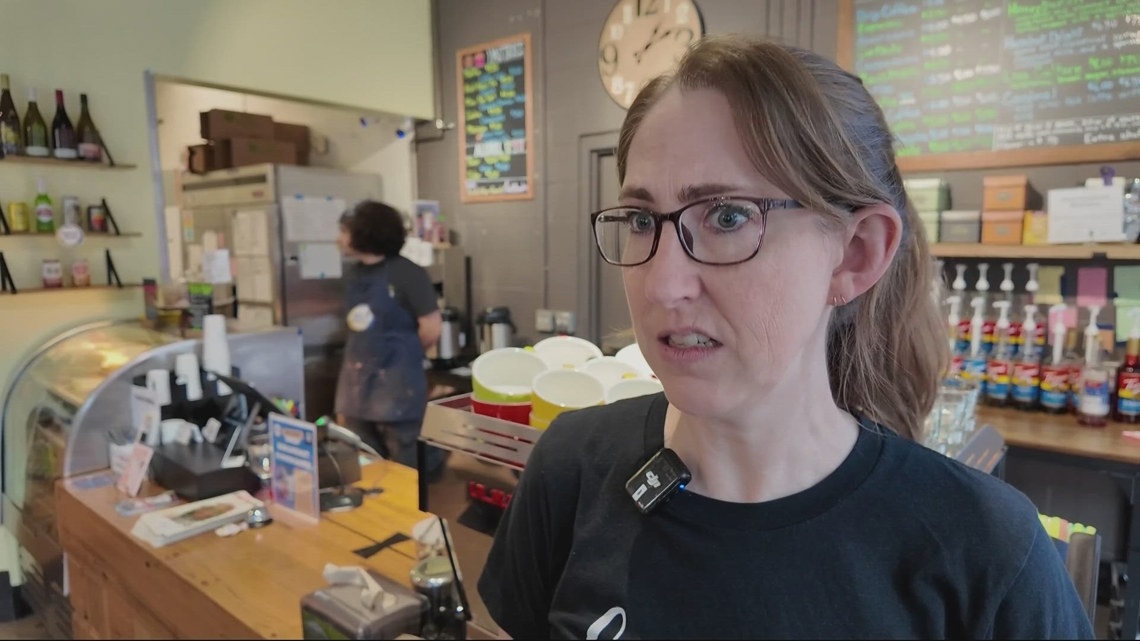
At Providore Fine Foods in Northeast Portland, co-owner Kaie Wellman said she does not expect any immediate price changes.
“Even if it rolls back, I don’t know whether our distributors will be able to roll it back,” Wellman said. She explained that invoices for fruit, meat, tea and other imported items shift constantly — and many products were purchased months ago at higher tariff levels.
“So many of these things have been bought months in advance, so they’re not going to change the prices of what they sold us months and months ago,” she said.
Economists say consumers should brace for a shorter holiday shopping season and elevated prices through the end of the year.
“We’re in this very strange time for our economy, and I think a lot of it has to do with the uncertainty for what the future holds,” Fruits said.